DIY Lip Care Remedies That Heal Without More Irritation
The best home remedy for chapped lips is usually a bland ointment, lip SPF and fewer irritants. Learn when persistent cracking needs medical care.
In this guide
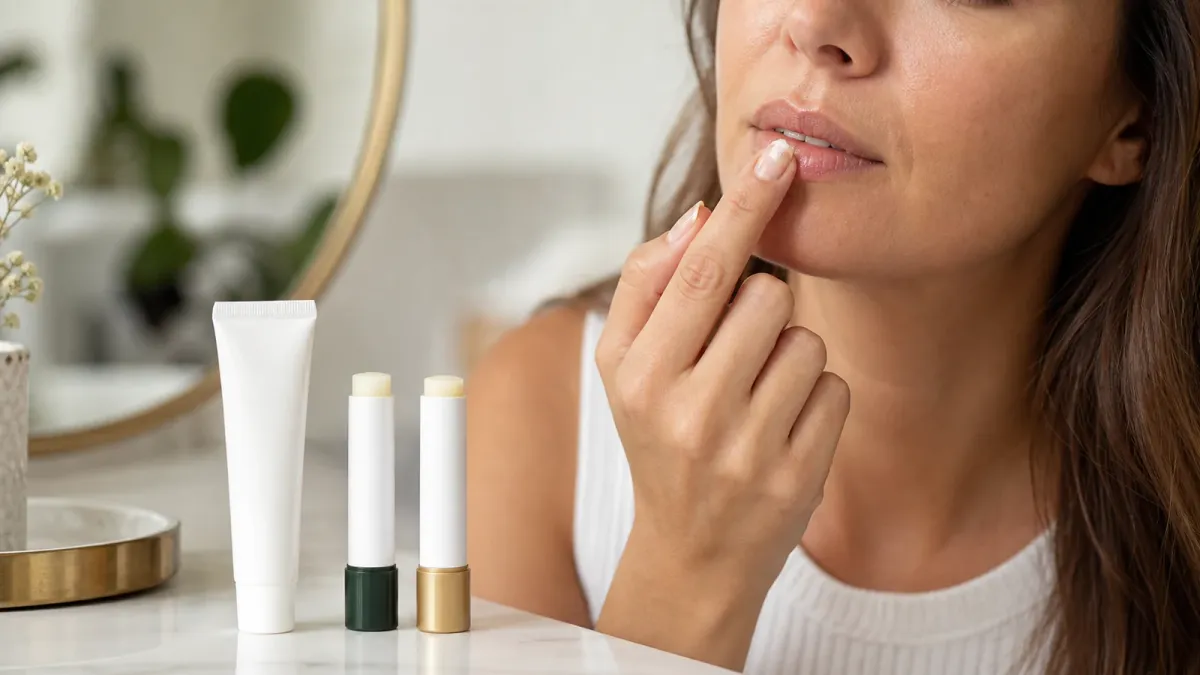
For most uncomplicated chapped lips, apply a fragrance-free balm or plain petrolatum several times daily and before bed, use broad-spectrum SPF 30+ outdoors, and stop licking, biting, picking and scrubbing.
Avoid menthol, camphor, mint, cinnamon, citrus flavor and fragrance while lips heal.
Seek care when symptoms do not improve within two to three weeks or when a rough, bleeding or infected-looking area persists.
Content substantially revised: . Originally published October 18, 2024 (UTC). This date reflects the documented content revision, not a new article.
Quick Summary
- Use one bland fragrance-free ointment instead of rotating remedies.
- Stop tingling flavors, lip scrubs, licking, biting and picking.
- Apply broad-spectrum lip SPF 30+ and reapply outdoors.
- Persistent corner cracks, rash or rough sun-exposed patches need diagnosis.
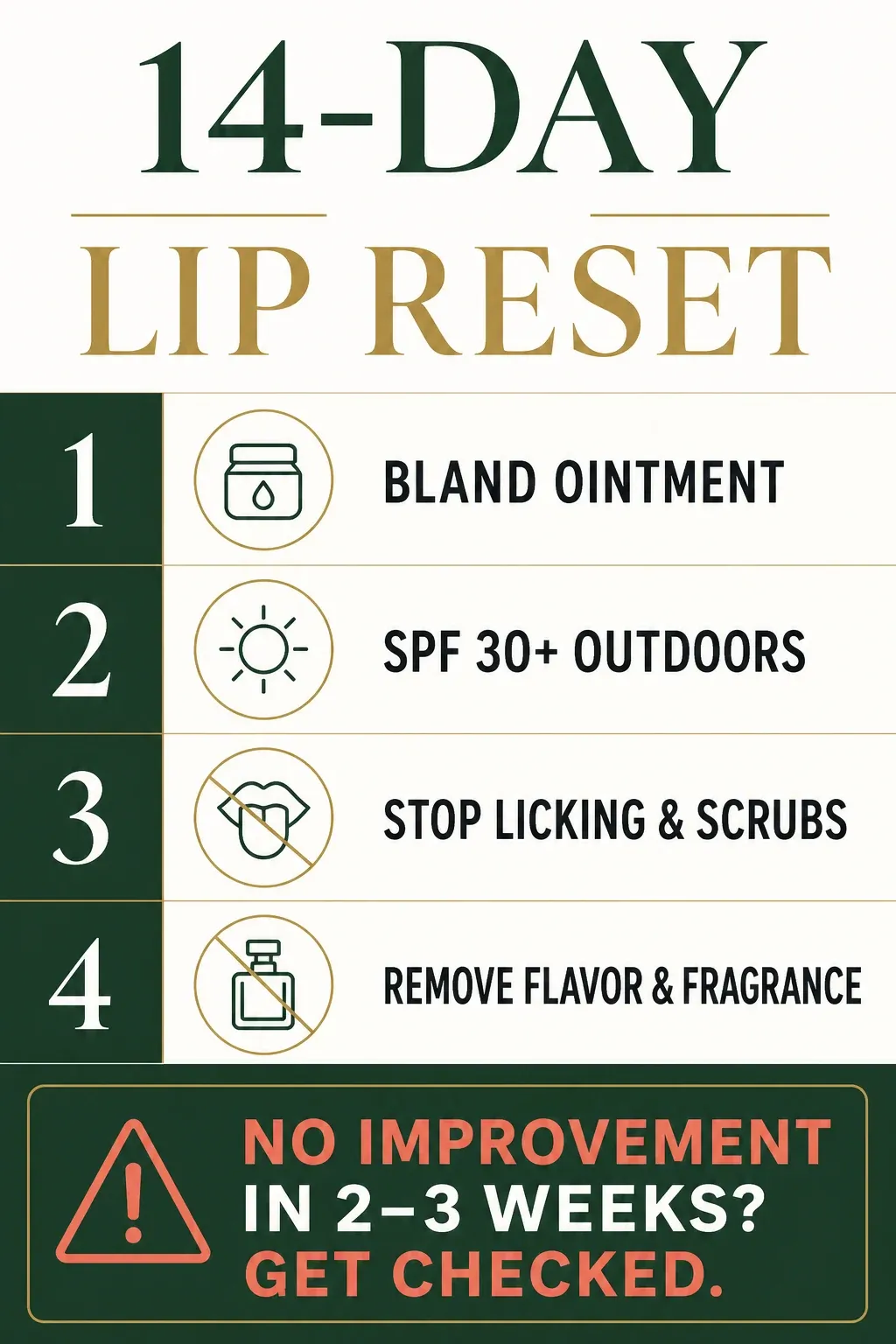
Chapped lips often persist because the product used to soothe them also contains flavor, fragrance or cooling agents. This guide turns DIY care into a controlled barrier reset: one bland ointment, sun protection, behavior changes and clear escalation rules for allergy, infection and actinic damage.
Why Lips Stay Chapped
Lips have a thin barrier and are exposed to weather, saliva, food, toothpaste and repeated product contact. Dryness is often maintained by licking, biting, picking or an irritating balm. Persistent scaling can also reflect contact dermatitis, infection, medication effects or sun damage.
The American Academy of Dermatology lip guidance recommends a non-irritating balm or thick ointment several times daily and before bed. Improvement should be noticeable within two to three weeks when the trigger is removed.
"DIY" does not need to mean mixing food. The most useful home remedy is often plain petrolatum from a clean container, applied consistently. A short ingredient list makes reactions easier to identify.
| Lip pattern | Likely contributor | First move |
|---|---|---|
| Dry and tight in cold weather | Water loss and exposure | Bland ointment plus wind protection |
| Burns after flavored balm | Irritant or allergy | Stop the product; use fragrance-free petrolatum |
| Cracks at mouth corners | Saliva, irritation or infection | Protect and seek care if persistent |
| Peels after licking | Wet-dry cycle | Stop licking; reapply ointment |
| Rough persistent sun-exposed patch | Possible actinic damage | Dermatology assessment |
The Simple Petrolatum Remedy
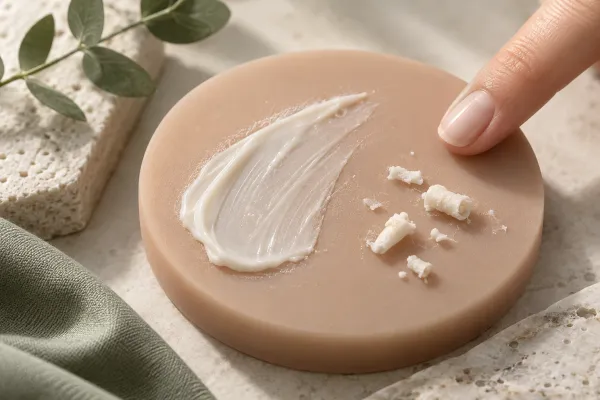
Apply a thin layer of plain white petrolatum to slightly damp lips after washing and whenever they feel dry. Use a thicker layer before bed.
Petrolatum reduces water loss; it does not add water by itself, so applying after a sip and gentle blot can improve comfort.
The AAD lists petroleum jelly as useful for dry skin and minor barrier protection. Choose a product you have already tolerated and keep fingers clean. Do not share pots when infection is possible.
Petrolatum is not automatically comedogenic around every mouth, but heavy migration may bother some acne-prone users. Apply precisely to the lip surface. The persistent chapped-lip guide helps investigate triggers.
Ingredients to Avoid While Lips Heal
The AAD advises avoiding ingredients that commonly irritate chapped lips, including camphor, eucalyptus, menthol, phenol, salicylic acid, fragrance and mint, cinnamon or citrus flavor. Tingling and cooling are sensory effects, not repair signals. Lanolin can also trigger contact allergy in some people.
Stop any balm that burns, stings or makes lips feel tighter. "Medicated" on the label does not guarantee a gentler formula. Essential oils and plumping agents are especially poor fits during an active crack or rash.
Review toothpaste, mouthwash, lipstick and dental products as well as balm. Flavor, fragrance and foaming agents can reach the lip border. The AAD contact dermatitis guide explains how brief repeated contact can matter.
Use SPF 30+ on the Lips
Choose a broad-spectrum lip product with SPF 30 or higher for outdoor exposure. The AAD suggests mineral filters such as zinc oxide or titanium dioxide for chapped lips. Reapply at least every two hours and after eating, drinking or wiping.
Sun protection matters during winter, at altitude and around reflective surfaces as well as in summer. A hat adds shade but does not replace a wearable lip sunscreen. Keep one where reapplication actually happens.
A persistent rough or scaly area on a sun-exposed lip can represent actinic cheilitis and needs evaluation. Do not repeatedly exfoliate it. The complete lip-care guide covers daily prevention.
Stop the Lick-Bite-Pick Cycle
Saliva evaporates and leaves lips drier, while enzymes and repeated wetting can irritate the border. Licking provides seconds of relief but maintains the cycle. Apply bland ointment instead and keep it within reach.
Picking removes cells that are still attached and can create bleeding cracks. Trim only a fully detached flap with clean tools if necessary; do not pull. Avoid brushing lips with a toothbrush or rough towel.
Habit cues help: apply balm after brushing teeth, before going outside and before sleep. A humidifier may improve comfort in a dry room. Hydration supports general health, but drinking extra water does not replace a topical barrier.
Are Sugar Scrubs a Good DIY Remedy?
No scrub is needed while lips are cracked, burning or actively peeling. Sugar crystals add uncontrolled friction and flavor can encourage licking. The temporary smooth feeling may be followed by more irritation.
Once lips are completely comfortable, a damp soft cloth used with almost no pressure may remove only loose surface flakes, but this is optional. Moisture and protection are the treatment priorities. Do not make exfoliation a daily habit.
Acids, retinoids and facial exfoliants should stay off the lips unless a clinician directs otherwise. Protect the lip margin when applying strong actives nearby. The matte lipstick routine explains preparation without aggressive scrubbing.
Honey, Coconut Oil and Other Kitchen Remedies
Honey is sticky, flavored and not equivalent to a preserved lip product. Food-grade honey is not sterile medical-grade honey and should not be placed on infected or open lesions. People with relevant allergy should avoid it.
Coconut oil can act as an emollient, but it is less occlusive than petrolatum and can migrate around the mouth. A familiar plain oil may be tolerated, yet it is not necessary. Edible does not mean allergy-free.
Avoid lemon, cinnamon, peppermint oil and undiluted essential oils. These are common "plumping" or brightening suggestions that can worsen cheilitis. Use the natural remedy myth guide before experimenting.
Cracks at the Corners of the Mouth
Angular cheilitis can be maintained by saliva and irritation, but yeast, bacteria, dental fit and nutritional or medical factors may contribute. Plain petrolatum can protect the area while waiting for assessment. Do not assume every corner crack is simple dryness.
Seek care when cracks recur, spread, ooze, crust or fail to improve. Antifungal or antibacterial treatment should match a diagnosis. Repeated steroid use without guidance can mask or worsen infection.
Children, older adults, people with dentures and people with diabetes or immune problems may need earlier evaluation. A lip-care article cannot determine the cause from appearance alone.
Allergic Contact Cheilitis
Lip allergy can come from fragrance, flavor, preservatives, sunscreen filters, lanolin, propolis, lipstick, toothpaste or dental materials. A product used for years can still become a problem. The rash may extend beyond the vermilion border.
Stop optional lip products and use one bland ointment. Keep a list of everything that touches the area, including food, instruments and oral-care products. Reintroduction without a plan can restart the reaction.
A dermatologist may use medical patch testing when the trigger remains unclear. Home product testing is different and does not diagnose an allergy. Persistent swelling, itch or recurrent scaling deserves professional review.
A 14-Day Lip Reset
| Time | Routine | What to monitor |
|---|---|---|
| Morning | Bland ointment plus SPF 30+ outdoors | Burning and sun exposure |
| After food or drink | Blot gently and reapply | Licking and wiping friction |
| Daytime | Use only one fragrance-free balm | New rash beyond the lip line |
| Bedtime | Thicker petrolatum layer | Morning cracks and flakes |
| Day 14 | Review trend | Clear improvement or need for care |
When Lip Symptoms Need Medical Care
See a clinician when lips do not improve after two to three weeks of bland care, or when symptoms repeatedly return. Seek earlier care for significant swelling, spreading redness, pus, fever, severe pain or difficulty eating and drinking.
A persistent rough patch, ulcer, bleeding area or color change on the lower lip needs evaluation for sun damage or another condition. Cold sores, impetigo and oral yeast require different management. Do not cover every lesion with the same DIY mixture.
Breathing difficulty, throat tightness or rapid facial swelling is an emergency. Stop the suspected product and follow local emergency guidance. Keep the packaging for ingredient review.
Common Lip-Care Mistakes
- Using tingling balm: sensation can maintain irritation.
- Licking between applications: saliva restarts the wet-dry cycle.
- Scrubbing attached flakes: friction creates new cracks.
- Skipping lip SPF: ultraviolet exposure can maintain damage.
- Rotating many remedies: allergy triggers become impossible to identify.
- Ignoring persistent lesions: not every rough patch is simple dryness.
How Weather, Indoor Air and Medication Change the Plan
Cold wind, low humidity and indoor heating increase evaporation from the lip surface. Reapply ointment before exposure rather than waiting for cracking. A scarf or face covering can reduce wind contact when used comfortably and kept clean.
Retinoids, acne medication and some systemic medicines can increase dryness. Keep facial actives away from the lip margin and discuss severe or persistent symptoms with the prescriber. Do not stop prescription medicine solely because of an online lip-care article.
A bedroom humidifier may improve comfort when air is very dry. Clean it according to manufacturer directions to prevent microbial buildup. The winter lip-care guide coordinates exposure protection and barrier repair.
Lipstick, Plumpers and Overnight Masks
Long-wear matte lipstick can increase tightness and highlight flakes. Stabilize the lips first, apply a thin bland layer, blot excess and use less drying color when possible. Remove makeup gently rather than scrubbing with a towel.
Lip plumpers commonly use irritants such as cinnamon, capsicum or menthol to create temporary swelling. Do not use them on chapped or reactive lips. Repeated burning is not a safe route to lasting volume.
Overnight lip masks can work mainly through occlusion and emollients. Fragrance and flavor are still possible triggers. Compare them with plain petrolatum before paying for a complex formula; the overnight lip guide provides that framework.
Home Product Testing Versus Medical Patch Testing
The AAD small-area product test can reveal obvious irritation before a new balm is spread repeatedly. It does not identify which ingredient caused a reaction. Do not test an actively swollen or blistered lip.
Medical patch testing exposes the back to standardized allergens and includes delayed readings. It may be appropriate for recurrent cheilitis, eyelid rash or reactions to many products. Bring lip balms, toothpaste, lipstick and dental-product lists to the visit.
When simplifying at home, change one category at a time. A bland ointment, unflavored oral care and no optional color products create a cleaner baseline. The hyaluronic acid lip guide explains why humectants still need an occlusive layer.
Special Situations: Children, Pregnancy and Cold Sores
Children may lick products and need age-appropriate formulas and supervision. Persistent mouth-corner rash can have several causes, including irritation and infection. Ask a pediatric clinician rather than cycling flavored balms.
Pregnancy does not make every natural remedy appropriate. Review medicated ingredients and persistent lesions with a clinician. Plain petrolatum is a simple cosmetic barrier, but individual allergy and medical context still matter.
Tingling followed by grouped blisters can indicate a cold sore, which is contagious and has specific treatment options. Do not share products or apply a communal jar. The clinical overview of cheilitis patterns illustrates why diagnosis changes care.
How to Reintroduce Lip Products
Wait until lips have been comfortable for several days before reintroducing optional products. Add one lipstick, balm or toothpaste change at a time and keep a dated note. A delayed rash can appear after the first successful application.
Use each reintroduced product for several days before adding another, unless symptoms return sooner. Stop at the first clear reaction and return to the bland baseline. Do not keep retesting a product that caused significant swelling or blistering.
Choose fragrance-free over unscented when possible because unscented products may contain masking fragrance. Favor short ingredient lists and avoid the same flavor across balm, toothpaste and mouthwash. The goal is to identify a stable routine, not to prove that every product can be tolerated.
The Bottom Line
The most effective DIY lip remedy is usually a consistent, bland barrier: plain petrolatum or another fragrance-free ointment, plus SPF 30+ outdoors. Remove flavored, fragranced and tingling products, and stop licking or picking.
Lips should trend better within two to three weeks. Persistent corner cracks, recurrent rash, a rough sun-exposed patch or signs of infection need diagnosis rather than another kitchen recipe.
Frequently Asked Questions About DIY Lip Care Remedies That Heal Without More Irritation
What is the fastest home remedy for chapped lips?
Apply plain petrolatum or another fragrance-free ointment repeatedly, especially after eating and before bed. Stop licking and remove flavored or tingling products.
Is Vaseline good for dry lips?
Plain petrolatum reduces water loss and is a useful bland option for many people. Apply it to slightly damp lips and use a separate SPF 30+ lip product outdoors.
Should I exfoliate peeling lips?
Do not scrub cracked, burning or actively peeling lips. Pulling attached flakes can create bleeding and prolong healing; focus on ointment and trigger removal.
Why do lip balms make my lips burn?
Menthol, camphor, mint, cinnamon, citrus flavor, fragrance, lanolin or other ingredients can irritate or trigger contact allergy. Stop the product and simplify.
When should chapped lips be checked by a dermatologist?
Seek care if there is no improvement after two to three weeks, or sooner for persistent ulcers, bleeding patches, infection signs, repeated corner cracks or significant swelling.
This article is for informational purposes only and does not replace professional dermatological advice.