Best Drugstore Eye Creams: Compare US Formulas and Value
Compare US drugstore eye creams by exact formula, labeled amount and current price. Check grams versus milliliters, retinol limits and reasons to skip each.

In this guide
Quick answer
At the recorded October 22 brand prices, e.l.f. Holy Hydration! had the lowest upfront cost. Choose CeraVe Eye Repair for a moisturizing tube or RoC Line Smoothing when you specifically want retinol.
Choose one role for this purchase. Before using any formula near your eyes, check that it is intended for that area; choose the texture and packaging you prefer.
Quick summary
- Choose the job first: ordinary moisturizing or an optional retinol step.
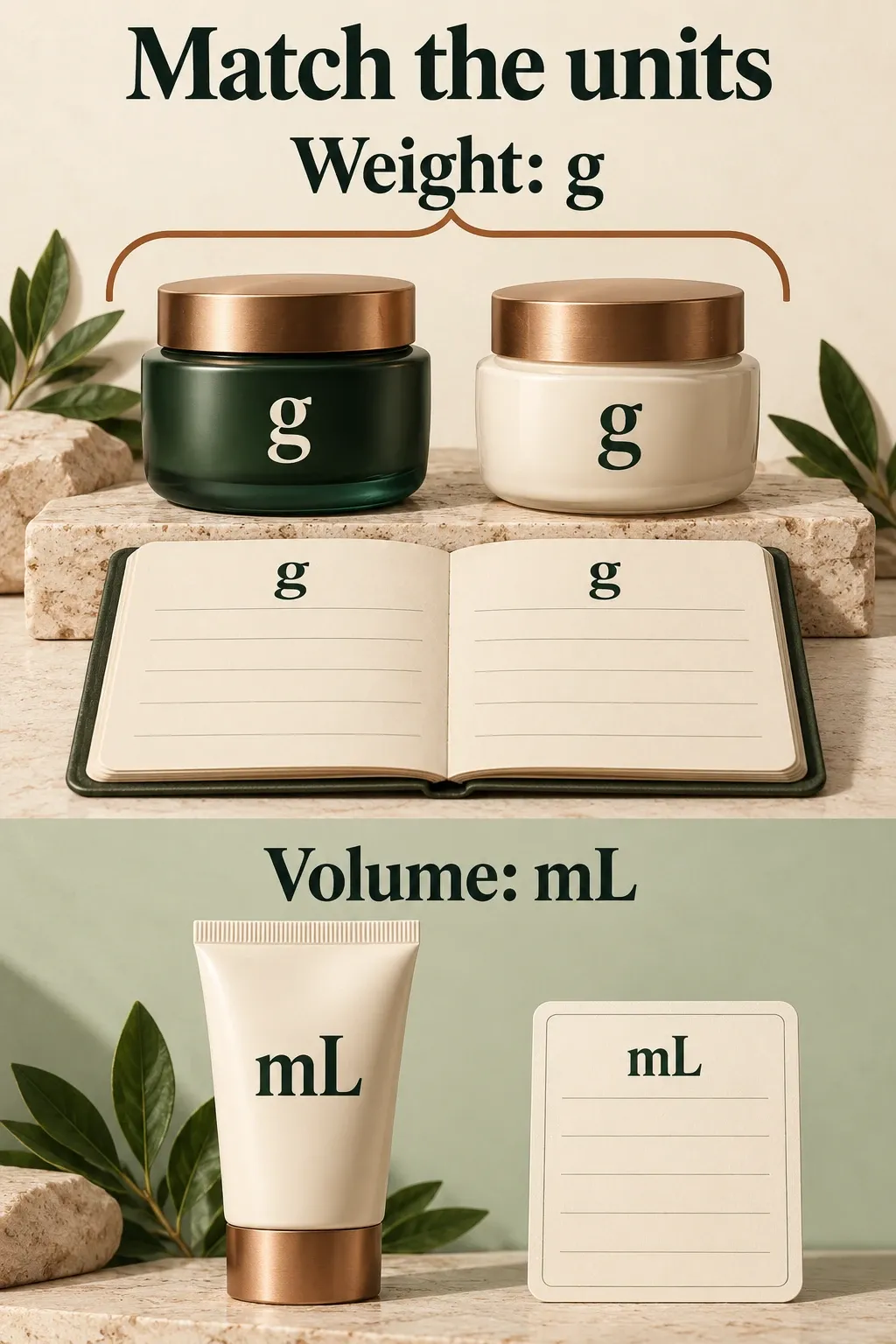
- Compare grams with grams and milliliters with milliliters. A half-ounce jar and half-fluid-ounce tube use different measurements.
- Check RoC's current formula and directions before relying on an older review.
- Bags can have several contributors. Choose by formula, texture and cost rather than treating a peptide name or brand as a result guarantee.
A budget eye cream can be a sensible purchase when a different texture makes your routine more comfortable. Choose that difference before buying several jars that do essentially the same job.
This shortlist separates non-retinol e.l.f. Holy Hydration! and CeraVe Eye Repair from RoC's retinol eye cream. Choose between moisturizing and a specifically wanted retinol step before comparing purchase cost.
Three drugstore eye creams with different reasons to buy
Choose one role before choosing a brand. Someone seeking a comfortable moisturizer has a different shopping problem from someone who wants to introduce a retinoid near the eyes.
For a broader look at the category, our guide to anti-aging eye creams explains common ingredient groups. A longer ingredient list still needs a clear reason to fit your own routine.
e.l.f. SKIN Holy Hydration! Eye Cream: lower upfront cost
The regular Holy Hydration! Eye Cream was $11 for 15 g on the US brand page. It is the lowest manufacturer item price among these three choices.
The regular e.l.f. jar lists glycerin, jojoba esters, sodium hyaluronate and peptides, with no retinol listed.
Buy it if: You want a non-retinol eye moisturizer, like a cream from a jar and want to limit the first purchase cost.
Skip it if: You prefer a tube, exclude an ingredient in its full list or want a treatment for persistent bags.
Use the regular Holy Hydration! Eye Cream's received-package directions for placement; the current brand page and a previously checked Target Q&A gave different eyelid advice. Do not transfer an eye cream's instructions to another product; follow FDA eye-cosmetic precautions.
Affiliate link.
CeraVe Eye Repair Cream: a moisturizing tube
CeraVe Eye Repair Cream was $19.99 for 14.2 g on the brand page on October 22. The Target listing checked that day was $14.49, so compare your actual checkout cost.
The Eye Repair formula lists niacinamide, three ceramides, glycerin and hyaluronic acid, plus sweet almond oil and extracts. Select Eye Repair rather than assuming another CeraVe eye product has the same formula.
Buy it if: You want a non-retinol cream in a tube and its complete ingredient list fits your exclusions.
Skip it if: You exclude a listed ingredient, prefer jar packaging or specifically want retinol.
CeraVe describes Eye Repair as fragrance-free and ophthalmologist-tested. Those descriptions do not guarantee your individual tolerance; check the ingredient list for known exclusions.
Affiliate link.
RoC RETINOL CORREXION Line Smoothing Eye Cream: optional retinol
The current RoC Line Smoothing Eye Cream was $21.99 for 15 mL. Its manufacturer ingredient list contains retinol, but does not disclose the concentration.
Consider it only when you want a retinol product and understand the irritation precautions. It is a different decision from replacing a comfortable basic moisturizer.
Buy it if: You specifically want optional retinol, can follow the current directions and have no reason to avoid it.
Skip it if: You are pregnant, have irritated or reactive skin, or already use a retinoid near the area without professional guidance on adding another. Read the AAD's retinoid precautions.
The buying link goes to RoC's current product page so you can check its formula and directions. Confirm the supplied package's ingredient list before use.
Compare the actual pack and source price
The amounts below come from the selected US packages. The two gram-labeled creams can support a same-mass calculation; RoC's volume label belongs in a separate comparison.
| Exact product | Labeled amount | Brand price, Oct. 22 |
|---|---|---|
| e.l.f. Holy Hydration! regular eye cream | 15 g / 0.53 oz | $11 |
| CeraVe Eye Repair Cream | 14.2 g / 0.5 oz | $19.99 |
| RoC Line Smoothing Eye Cream | 15 mL / 0.5 fl oz | $21.99 |
These are one-time item prices, excluding shipping and tax, without subscription discounts or coupon assumptions. Check the current basket total before buying, particularly if delivery costs more than the difference between two products.
What the same-mass calculation tells you
At the October 22 e.l.f. brand price, $11 buys 15 g. Using CeraVe's $19.99 for 14.2 g, $19.99 ÷ 14.2 × 15 gives approximately $21.12 per equivalent 15 g.
At the checked Target price of $14.49, CeraVe's equivalent is approximately $15.31 per 15 g. That calculation compares purchase cost for equal mass, not the effectiveness of equal amounts.
- The equivalent 15 g figure is a calculation, not a CeraVe pack sold in that size.
- No product density was measured, so there is no justified conversion from grams to milliliters here.
- We cannot estimate months of use without knowing your amount, frequency and waste.
RoC may be the right purchase for a specific retinol preference even though its item price is higher. It cannot enter the gram comparison simply because its tube also says “0.5” on the front.
Check the basket before adding a backup
A low item price can encourage an unnecessary second purchase. For example, buying two $11 jars costs $22 before tax, even when the second jar has no role in your current routine.
That arithmetic does not make a more expensive single product better. It simply separates the price of one useful item from the price of everything you put in the basket.
Check delivery thresholds carefully. If you add an unwanted product to obtain free shipping, compare the final totals rather than counting the shipping charge alone as money saved.
For a first purchase, access to the ingredient panel and a clear retailer return policy may matter more than a small discount. Read the actual policy, including opened cosmetics, rather than assuming every store accepts a used eye cream.
- Keep the comparison to the exact single pack you intend to order.
- Exclude subscriptions unless you want the recurring order and understand its terms.
- Save the receipt and package details for your own records.
Decide whether another eye product is useful
The AAD's budget skincare guidance favors a simple routine built around cleansing, moisturizing and sun protection. An expensive or elaborate routine is not a requirement.
Decide which texture or package you prefer before adding an eye product. Check its intended area of use rather than assuming that comfort elsewhere on your face establishes suitability near the eyes.
| Your situation | Reasonable first choice | Do not assume |
|---|---|---|
| Current routine feels comfortable | Consider keeping it | A separate jar is essential |
| You dislike the current texture | Try one alternative texture | More ingredients improve comfort |
| You want a retinoid | Check suitability and directions first | Every budget eye cream needs retinol |
Our eye cream versus face cream comparison covers that purchase decision in more detail. It does not give permission to use every facial acid, fragranced lotion or retinoid on eyelids.
For dark circles, name the concern before spending. A shadow, pigment and a dry-looking surface are different observations; our dark-circle routine discusses that distinction without promising one cream can address every cause.
Compare the same kind of amount
Match the formula before trusting a review
Keep the product name, size and ingredient list together. A review of an older package may describe a formula that is no longer the one shown on the manufacturer's site.
Use RoC's current ingredient panel as the reference when checking the supplied package. If a particular ingredient matters, ask the brand to confirm the version before use.
- Open the exact US product page rather than an overseas or similarly named version.
- Compare the complete ingredient panel with any known exclusions.
- Read the received package before first use, including placement and frequency.
- Keep a photo of that panel if you later need to identify the formula you used.
A change in packaging can accompany a formula change, or simply a design update. Neither the front-label color nor a familiar review date answers that question on its own.
Read e.l.f.'s complete ingredient panel when checking known exclusions. A retailer search filter is a shortcut, so use the actual panel for the selected product.
Retinol is a separate choice from basic hydration
The AAD's retinol guidance includes irritation precautions and pregnancy avoidance. General retinoid guidance does not establish RoC's exact concentration or a promised result from its finished formula.
Check your current routine before adding RoC. AAD recommends discussing retinoid suitability with a dermatologist, particularly when skin is irritated or you already use prescription treatment.
- Follow the current package's introduction and placement directions.
- Keep cosmetics out of the eye and use them only in their intended area.
- Discuss suitability with your dermatologist before adding another retinoid to a prescription routine. An “eye” label does not settle the combination.
- Maintain daytime sun protection when using retinoids; the selected e.l.f., CeraVe and RoC products do not carry an SPF claim.
If retinol is the reason for your purchase, read our eye-area retinol guide before introducing it. You can choose a non-retinol moisturizer without treating that choice as a less complete routine.
Check comfort with the routine you already use
The AAD recommends small-area product testing before a new product joins your routine. Its home check uses a small arm area under normal contact directions for seven to ten days; it is not a diagnostic allergy test or a guarantee of eyelid tolerance.
Use the AAD's small-area skin check rather than the eye, and avoid cosmetics on inflamed skin around the eye. Follow the selected product's own placement directions after introducing it.
Keep your usual moisturizer, sunscreen and concealer steady while introducing one eye product. Judge whether its texture feels comfortable within that routine rather than comparing it only on its own.
- Choose the texture you want to wear, not the thickest-looking formula.
- Stop an eye cosmetic that causes irritation rather than adding another active.
- Seek medical advice for persistent or worrying eyelid symptoms.
Our sensitive-eye selection gives more detail on tolerance-focused shopping. If you also use patches, the eye-mask layering guide covers order; patches remain optional.
Age does not require an automatic upgrade to a stronger product. The questions in our eye care by age guide are more useful when they reflect current comfort and preferences rather than a birthday shopping rule.
Questions about affordable eye creams
Community question discovery included Reddit discussions about affordable choices without retinol, ordinary retail options and different RoC versions. Those threads informed the questions; the answers use product labels and the authority guidance linked above.
What is a good drugstore eye cream without retinol?
Regular e.l.f. Holy Hydration! and CeraVe Eye Repair do not list retinol in their checked formulas. Choose the e.l.f. jar or CeraVe tube by your preferred format, ingredient exclusions and checkout cost.
What should I check before using face moisturizer near my eyes?
Check the label's intended use first. FDA advises using cosmetics near the eyes only when intended for that use; a face moisturizer's comfortable feel alone does not establish interchangeability.
Where can I buy these eye creams in the US?
Use the marked Amazon links for the exact e.l.f. 15 g and CeraVe 14.2 g options. For RoC, use the current manufacturer page to check its formula and directions before buying.
Does a new package mean the formula is unchanged?
A new package does not confirm an unchanged formula. Compare the supplied ingredient list with the current RoC panel and ask the brand when a specific ingredient matters.
How do I compare value when jars use grams and tubes use milliliters?
Compare the e.l.f. 15 g jar with the CeraVe 14.2 g tube by equal mass. Keep RoC's 15 mL volume separate; grams cannot be converted to milliliters without density.
This article is for informational purposes only and does not replace professional dermatological advice.