Exfoliation for Teenage Skin: A Safe Acne-Friendly Guide
Teen skin does not automatically need a scrub. Learn when exfoliation helps, which active fits acne and how to avoid barrier damage.

In this guide
Teenage skin does not automatically need a separate exfoliant. For clogged pores, one low-strength salicylic acid product may help; for inflamed or persistent acne, benzoyl peroxide, a retinoid or professional treatment may fit better. Avoid scrubbing active pimples or stacking acids with retinoids; start one product once weekly, moisturize and increase only when skin stays comfortable.
Quick Summary
- Do not scrub acne or assume oily skin needs daily exfoliation.
- Choose one mechanism for a clear concern, usually salicylic acid for clogged pores.
- Separate acids from new retinoids or other irritating actives.
- Pause for persistent stinging, shiny-raw skin, swelling or cracking.
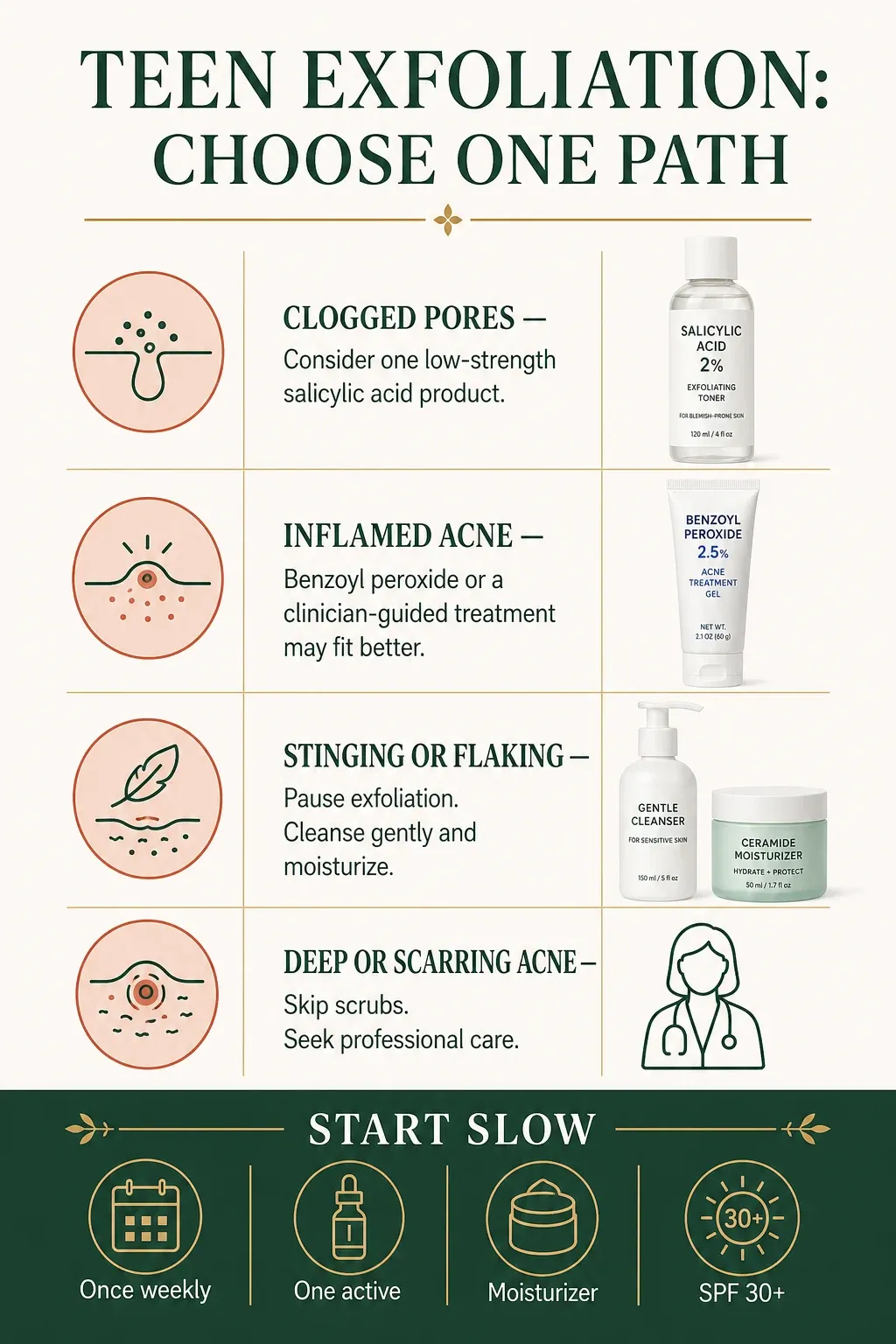
Teen exfoliation advice is dominated by instant-smoothness videos, harsh scrubs and routines that contain the same acid in three products. This guide separates surface polishing from evidence-based acne treatment, shows when no exfoliant is the right choice and gives a slow schedule that protects the skin barrier.
Does Teenage Skin Actually Need Exfoliation?
Teen skin does not need to be scrubbed clean. Puberty can increase sebum and clogged pores, but friction does not remove the biological causes of acne. A gentle routine and one evidence-based acne active usually matter more than a separate exfoliation step.
The word exfoliation covers very different products. A rough scrub removes surface cells by friction, while salicylic acid can enter oily pores and a retinoid normalizes how cells shed inside the follicle. Treating these options as interchangeable leads to unnecessary overlap.
The American Academy of Dermatology acne skin-care guidance recommends gentle cleansing and avoiding exfoliants that dry or irritate acne-prone skin. That is a useful default for teens already using benzoyl peroxide, salicylic acid or a retinoid.
| What a teen sees | Likely need | Better first move |
|---|---|---|
| Blackheads and whiteheads | Pore-normalizing treatment | Salicylic acid or clinician-guided retinoid |
| Red inflamed pimples | Reduce inflammation and bacteria | Benzoyl peroxide or medical plan |
| Flaking and stinging | Barrier recovery | Pause exfoliation; moisturize |
| Rough but comfortable skin | Gentle texture support | Assess cleanser, moisturizer and one mild active |
| Deep painful lumps | Professional treatment | Dermatology assessment, not a scrub |
Physical, Chemical and Treatment Exfoliation
Physical exfoliation includes scrubs, cleansing brushes, textured pads and abrasive cloths. These can make skin feel immediately smooth, but that sensation does not prove that acne is being treated. Inflamed pimples and a compromised barrier are especially easy to aggravate with friction.
Chemical exfoliation commonly means alpha hydroxy acids such as glycolic or lactic acid, or the beta hydroxy acid salicylic acid. Salicylic acid is generally the more acne-directed option because it is oil soluble. The AHA and BHA comparison guide explains why stronger is not automatically better.
Retinoids are usually discussed as treatments rather than exfoliants. They influence cell turnover and help prevent clogged pores, but can also cause dryness during adjustment. A teen using adapalene usually does not need an acid toner and scrub layered on top.
How to Choose One Teen Exfoliation Option
Start by naming the main problem. Salicylic acid may fit persistent blackheads and oily congestion. A mild lactic or glycolic acid may fit surface roughness in skin that is not inflamed, but it is not the first answer for painful acne.
Choose the lowest routine complexity that can do the job. A rinse-off salicylic acid cleanser may be easier to tolerate than a leave-on liquid, although contact time is shorter. A leave-on product may be more targeted but needs a slower introduction.
Fragrance, essential oils and high alcohol content are not required for exfoliation. Look for a clear active percentage, simple directions and packaging that can be used consistently. The sensitive teen skincare guide is the better starting point when products already sting.
A Safe Starting Schedule
Patch test according to the product label and introduce the product on a quiet week. Use it once weekly at night at first, after gentle cleansing. Apply moisturizer afterward and use broad-spectrum SPF 30 or higher during daytime outdoor exposure.
Keep the rest of the routine stable for at least two weeks. Do not add a new cleanser, serum and spot treatment at the same time. If the skin remains comfortable but the concern persists, increase only within label directions.
| Days | Action | Decision signal |
|---|---|---|
| 1 to 3 | Patch test; no full-face use | No persistent burning, swelling or rash |
| 4 to 7 | One evening application | Comfort through the next morning |
| 8 to 14 | Repeat once if calm | No rising dryness or inflamed texture |
| 15 to 21 | Maintain or increase slowly | Benefit without barrier symptoms |
| Any day | Pause when raw or painful | Recovery takes priority over frequency |
What Not to Combine on the Same Night
Avoid stacking a new acid with adapalene, tretinoin or another retinoid until a clinician says the combination fits. Benzoyl peroxide can also add dryness, even though it works through a different mechanism. Separate nights can make tolerance and cause easier to judge.
Do not use an acid immediately after shaving, waxing, picking or a sunburn. Skip cleansing brushes and gritty scrubs on exfoliation nights. The goal is a controlled treatment dose, not the strongest possible sensation.
Vitamin C, acne toners and masks can quietly add irritation. Review the whole ingredient list and not just the product headline. The slow skincare introduction method helps isolate reactions.
How Exfoliation Fits With Acne Treatment
For mostly clogged pores, salicylic acid may serve as the one active. For inflamed acne, benzoyl peroxide may fit better. For mixed acne or recurring lesions, a clinician may recommend a retinoid or combination plan.
Apply acne treatment across the acne-prone area when directed, not only on the visible spot. The AAD notes that treating the full breakout-prone zone can help prevent new lesions. Give a stable plan six to eight weeks for early improvement unless irritation requires a change.
A non-comedogenic moisturizer supports adherence. Dryness is not evidence that treatment is working harder. The teen moisturizer guide helps choose a light barrier-supportive formula.
Signs of Over-Exfoliation
Persistent stinging, shiny-raw skin, cracking, swelling and widespread redness are stop signs. Sudden sensitivity to water or bland moisturizer also suggests barrier disruption. More acne-like bumps after several new actives may be irritation rather than purging.
Pause acids, scrubs and optional serums. Use a gentle cleanser, bland moisturizer and sunscreen until comfort returns. The skin barrier recovery guide gives a more detailed reset.
Seek care for severe swelling, blistering, crusting, eye involvement or breathing symptoms. Deep painful acne, scarring or persistent pigment change also deserves professional treatment instead of repeated exfoliation experiments.
Exfoliation for Different Teen Skin Patterns
Oily skin can still be dehydrated and irritated. A matte feel immediately after washing is not the target. Use a gentle cleanser and let the treatment active address congestion instead of washing more often.
Dry or eczema-prone skin may not tolerate a separate exfoliant. A dermatologist can decide whether a low-frequency retinoid, salicylic acid wash or no exfoliation is appropriate. Fragrance-free moisturizer and sunscreen remain foundational.
Melanin-rich skin has the same acne mechanisms but may develop longer-lasting dark marks after inflammation. Preventing irritation and picking is especially important. Aggressive scrubbing does not fade post-acne marks safely and can make them more visible.
Common Teen Exfoliation Mistakes
- Scrubbing active pimples: friction can increase inflammation.
- Using an acid every day immediately: tolerance needs time.
- Stacking cleanser, toner and serum acids: the total exposure matters.
- Calling burning normal: persistent pain is not a success signal.
- Skipping moisturizer: treatment-related dryness can undermine adherence.
- Chasing instant smoothness: acne prevention takes weeks, not one polish.
A 30-Day Evaluation
Track comfort, number of new clogged pores, inflamed lesions and missed applications. Photos in the same lighting once weekly are more useful than checking the mirror several times a day. Do not interpret every short-term fluctuation as success or failure.
At day 30, keep the routine if it is comfortable and trending better. Reduce frequency if dryness is rising. If acne is painful, scarring or unchanged after a fair trial, use the teen acne treatment guide and seek professional help.
Read the Entire Label Before Choosing Frequency
Find the active ingredient, percentage, intended site and leave-on or rinse-off directions. A cleanser containing 0.5% salicylic acid and a leave-on 2% liquid are not equivalent exposures. The instructions determine whether the product is designed for daily or intermittent use.
Then read every other routine label. Salicylic acid can appear in cleansers, pads, toners, serums and spot products. Glycolic and lactic acid may be hidden behind terms such as resurfacing, peel, glow or renewal.
Look for warnings about sun sensitivity, broken skin and combination with other medications. Follow the label rather than an influencer schedule. Ask a pharmacist or dermatologist when a prescription treatment is already present.
Why Purging Is a Poor Excuse for Persistent Irritation
Some pore-normalizing treatments can bring pre-existing microcomedones to the surface sooner, but the term purging is frequently used to excuse any bad reaction. New bumps in unusual areas, widespread itch, swelling and burning suggest irritation or allergy rather than a useful adjustment.
Track where lesions appear and how they feel. Acne-prone zones may fluctuate, while a rash can spread beyond them. Stop the new product for a severe or escalating response rather than increasing frequency to push through.
The AAD list of habits that worsen acne warns against changing treatments every week. A stable routine is the only way to separate delayed acne improvement from accumulating irritation.
Teen Exfoliation Around Shaving and Hair Removal
Shaving already creates friction and can expose irritated follicles. Do not add a scrub before or after shaving to prevent bumps. Use a clean sharp razor, shaving lubricant and light pressure in the direction that hair grows.
Waxing can remove surface skin when retinoids or strong acids are used. Tell the provider about every topical medication and follow the prescriber's timing instructions. Do not guess a safe pause window for prescription retinoids.
Hair-removal bumps may be ingrown hairs, folliculitis or acne. These conditions overlap visually but need different plans. Persistent painful bumps, pus or scarring warrant a clinician assessment.
What a Dermatologist May Use Instead of More Exfoliation
The updated AAD acne guidelines strongly recommend benzoyl peroxide and topical retinoids, among other therapies. These are treatment choices with defined mechanisms, not cosmetic polishing steps.
A clinician may combine a retinoid with benzoyl peroxide, use azelaic acid for selected acne and pigment concerns, or prescribe oral or hormonal therapy. The decision considers lesion type, scarring risk, skin sensitivity, pregnancy potential and prior response.
The goal is not to collect every recommended ingredient. Combination therapy means coordinated mechanisms at tolerable doses. It does not mean layering every over-the-counter active in one evening.
How to Discuss Exfoliation With a Teen
Avoid describing skin as dirty, clogged with toxins or in need of polishing. That language can encourage compulsive washing and shame. Explain that the follicle is a biological structure and treatment takes time.
Let the teen choose texture and timing between suitable options. Keep reminders neutral and limited. The AAD notes that daily parental reminders about acne medication can feel like nagging and may reduce adherence.
Take distress seriously even when acne appears mild. The AAD early-treatment guidance connects timely care with less scarring and emotional burden. Professional help is not reserved for the most dramatic skin.
Questions to Answer Before Buying
- Which exact concern is this product treating?
- Is the active already present elsewhere in the routine?
- Is it a rinse-off or leave-on exposure?
- What is the lowest label-supported starting frequency?
- What will be paused if burning or rawness develops?
- When will results be reviewed without changing other products?
Set a product budget before shopping. One cleanser, moisturizer, sunscreen and matched treatment should take priority over peel pads, masks and tools. Finishing a tolerable product provides better evidence than opening several discounted actives that expire before a fair trial.
Record the opening date and discard a product that changes smell, color or texture unexpectedly. Keep acids away from heat and direct sunlight according to the package. Do not share jars, pads or applicators across irritated skin.
The Bottom Line
Teenage skin does not automatically need a scrub or acid. When exfoliation has a clear job, choose one gentle option, introduce it slowly and count every other active in the routine. Comfort and consistency matter more than tingling or instant polish.
For acne, treatment should match the lesion type. A simple cleanser, moisturizer, sunscreen and one evidence-based active usually creates a stronger starting routine than multiple exfoliating products.
Frequently Asked Questions About Exfoliation for Teenage Skin
How often should a teenager exfoliate?
Many teens do not need a separate exfoliant. If one has a clear purpose, start once weekly and increase only within label directions when skin remains comfortable.
Is salicylic acid safe for teenage skin?
Salicylic acid can help clogged pores when used as directed. Start with one low-strength product and avoid stacking it with other acids, scrubs or a new retinoid.
Can teens use an exfoliating scrub?
Avoid scrubbing active acne or irritated skin. Friction can increase inflammation, while a gentle cleanser and a matched acne active provide a more controlled approach.
Can a teenager use glycolic acid and adapalene together?
Do not start both together without professional guidance. Each can irritate, and separating them makes tolerance and cause easier to judge.
What does over-exfoliated teen skin look like?
Persistent stinging, shiny-raw skin, cracking, swelling, widespread redness and sudden sensitivity to bland products are warning signs. Pause optional actives and simplify the routine.
This article is for informational purposes only and does not replace professional dermatological advice.