Best Moisturizers With SPF in 2026: 5 Picks by Skin Type
Five current SPF moisturizers matched to dry, combination, sensitive, and mature-looking skin—with the clear answer on when one step is enough.
In this guide
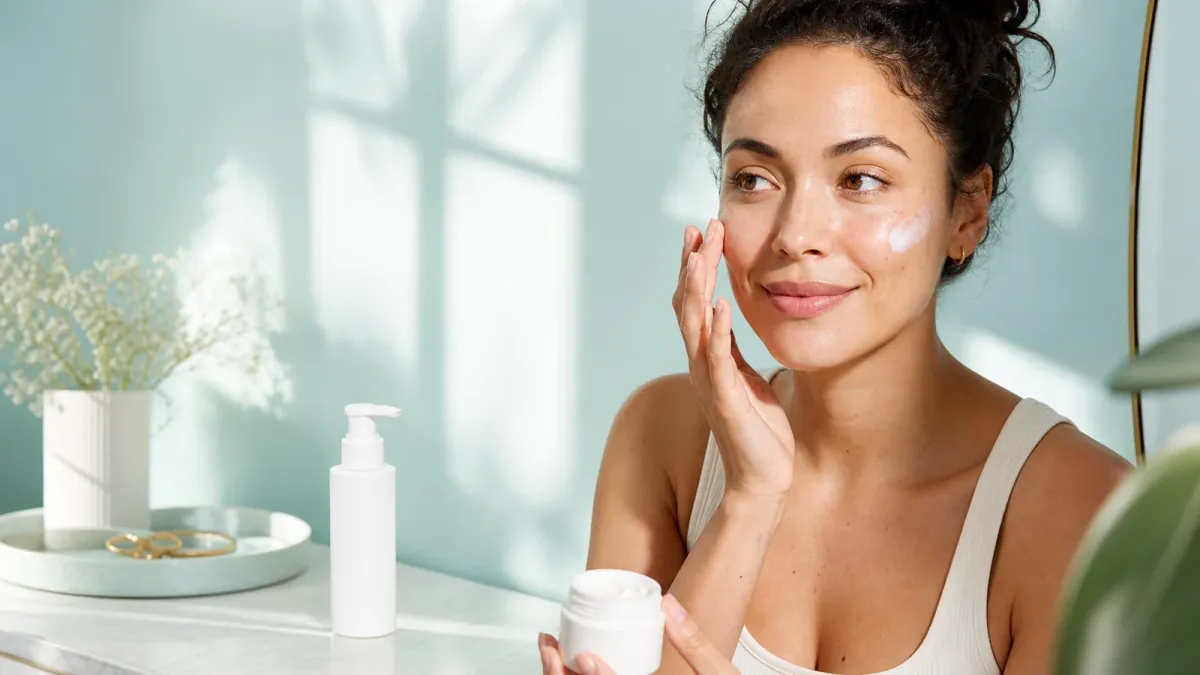
A moisturizer with broad-spectrum SPF 30 or higher can be your sunscreen for a normal day—provided you apply it generously to every exposed area and reapply when you stay outdoors. The word “moisturizer” does not dilute the labeled SPF. The real compromise is usually application: people tend to use a small moisturizer amount, miss the ears and neck, and never reapply. For swimming, heavy sweating, or long outdoor exposure, choose a water-resistant sunscreen rather than assuming every SPF moisturizer can handle it.
- Best overall: CeraVe AM Facial Moisturizing Lotion SPF 30 for a simple barrier-supporting morning step.
- Best sensitive-skin option: La Roche-Posay Toleriane Double Repair SPF 30 for a fragrance-free, richer lotion.
- Best combination finish: Cetaphil Daily Facial Moisturizer SPF 35 for oil-free hydration with a matte-satin target.
- Best higher SPF for dry skin: Neutrogena Hydro Boost SPF 50.
- Best smoothing day cream: Olay Super Cream SPF 30, if fragrance is not a problem.
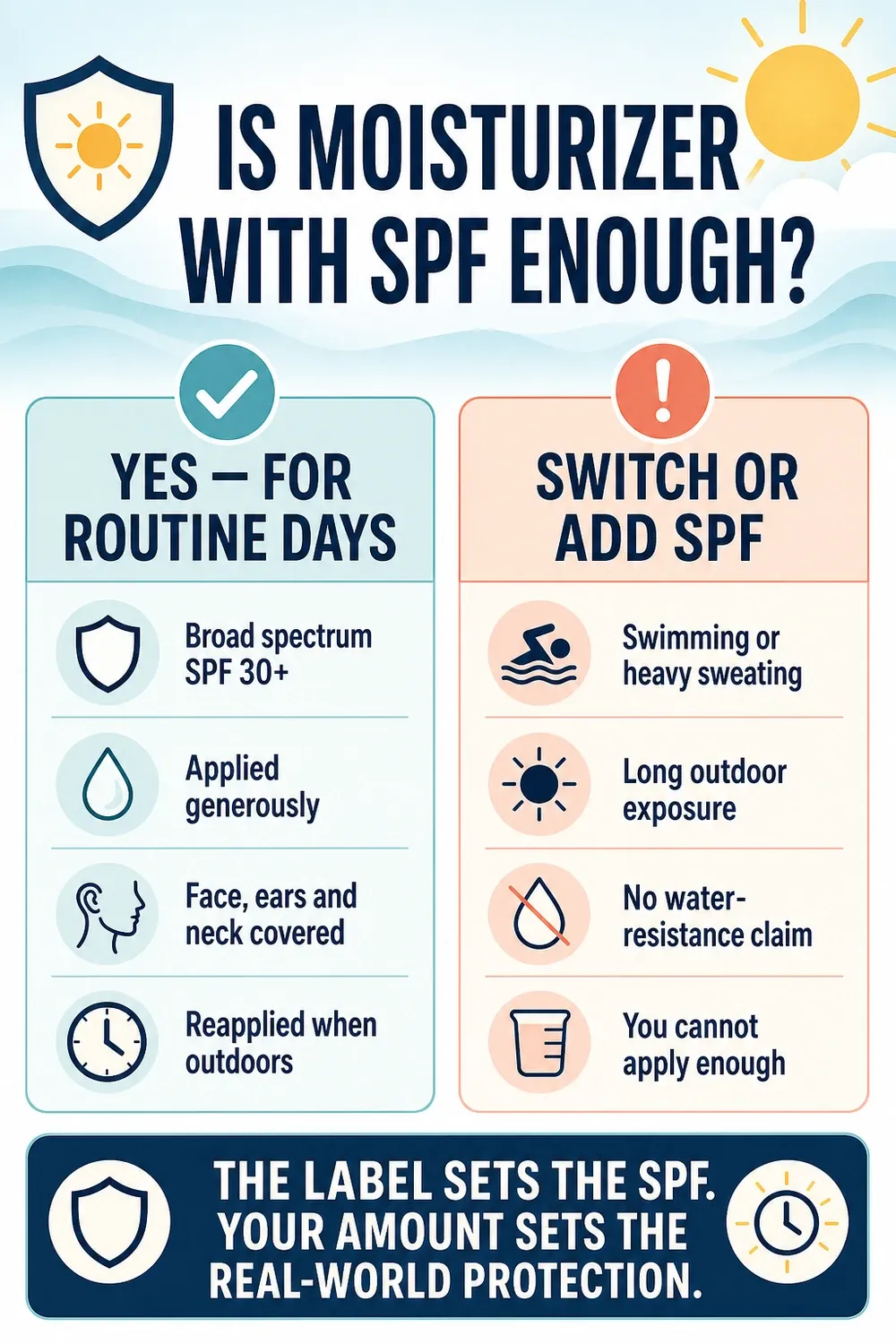
Moisturizer with SPF is one of the few skincare shortcuts that can be genuinely useful. It turns two morning steps into one, reduces the chance that sunscreen is skipped, and gives dry or treatment-sensitive skin a more comfortable base. That convenience matters because the most elegant sunscreen is still ineffective in a drawer.
The category also creates confusion. Some people assume a moisturizer with SPF is weaker than a bottle labeled sunscreen. Others apply a pea-size amount as they would a night cream and expect the protection printed on the front. A better way to think about the category is simple: judge the protection by the sunscreen label and judge the experience by the moisturizing formula. Both have to work for your routine.
This refresh replaces an older generic list and its unrelated lip-balm affiliate link with five current face products. If you prefer a dedicated sunscreen, start with our everyday sunscreen guide. If moisturizer texture is the harder decision, use our guide to choosing the right moisturizer first.
Is Moisturizer With SPF Really Enough?
Yes, a correctly labeled product can provide the protection on its label when it is used according to directions. In the United States, a facial moisturizer that makes an SPF claim carries sunscreen Drug Facts and directions. It does not receive a gentler testing standard because the front of the package also says moisturizer. Broad spectrum means the product is designed to protect against both UVA and UVB; SPF mainly describes protection against sunburn-producing UVB.
The gap between laboratory SPF and daily behavior is the important part. Sunscreen testing uses a standardized, generous application. Many people spread the amount they associate with moisturizer—often a small dab—over the whole face, then forget the ears, hairline, jaw, neck, and chest. A thin film cannot be assumed to deliver the printed number. Mixing sunscreen into serum, foundation, or another moisturizer can also make coverage uneven.
| Situation | Can SPF moisturizer be enough? | Best decision |
|---|---|---|
| Commute, errands, routine indoor/outdoor day | Yes, if broad spectrum SPF 30+, generously applied | Cover face, ears, neck, and other exposed skin |
| Several hours outdoors | Only with reliable reapplication | Carry a sunscreen you can reapply comfortably |
| Swimming or heavy sweating | Not unless the label states water resistance | Use water-resistant sunscreen and follow its timing |
| You dislike the texture at a generous amount | Practically, no | Choose a lighter dedicated facial sunscreen |
| Makeup will prevent reapplication | Initial protection only | Plan a compatible reapplication method and use shade/clothing |
The AAD guidance on sunscreen and moisturizer supports SPF 30+, broad-spectrum protection, water resistance for outdoor exposure, and reapplication every two hours while outdoors. The FDA sunscreen guidance likewise emphasizes generous use, label directions, and reapplication. Shade, clothing, hats, and sunglasses remain part of protection; no face lotion makes exposure unlimited.
Best Moisturizers With SPF: Quick Comparison
| Pick | Best fit | Finish and filters | Main limitation |
|---|---|---|---|
| CeraVe AM SPF 30 | Normal to dry; simple routine | Light lotion; hybrid filters | Can feel substantial at the correct amount |
| La Roche-Posay Toleriane SPF 30 | Normal, dry, sensitive-leaning | Comforting lotion; organic filters | Not the best choice for swimming or heavy sweating |
| Cetaphil Daily SPF 35 | Combination and sensitive-leaning | Matte-satin; organic filters | Eye sting or individual congestion is still possible |
| Neutrogena Hydro Boost SPF 50 | Dry skin wanting higher SPF | Hydrating fluid-lotion; organic filters | Dewier finish may not suit very oily skin |
| Olay Super Cream SPF 30 | Normal to dry, smoothing day cream | Soft matte/dewy cream; organic filters | Standard version contains fragrance |
How We Chose These Five
Every pick had to be a current U.S. facial moisturizer with broad-spectrum SPF 30 or higher and a distinct reason to exist. We checked official pages for SPF level, active filters, texture, fragrance claims, oil-free or non-comedogenic language, highlighted hydrators, and directions. A higher SPF did not automatically win if the formula did not solve a different skin-type need.
We also looked for recommendation honesty. “Dermatologist tested,” “hypoallergenic,” and “non-comedogenic” can help narrow a shortlist, but none guarantees that a specific person will never sting, clog, pill, or break out. Mineral filters are not automatically gentler for everyone, and organic filters are not automatically irritating. The complete formula, the eye area, the amount applied, and individual tolerance matter more than a fear-based ingredient label.
Five Current SPF Moisturizers by Skin Type
1. CeraVe AM Facial Moisturizing Lotion SPF 30
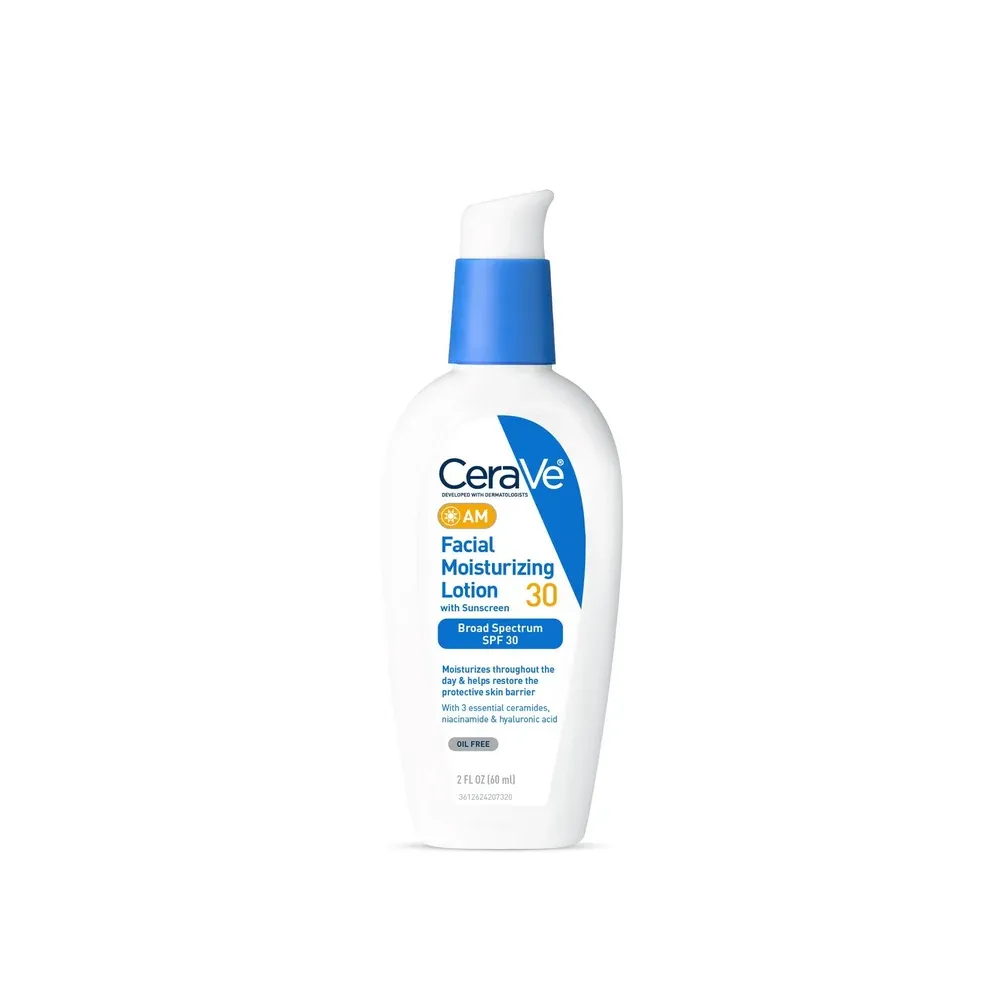
CeraVe AM is the strongest starting point for someone who wants one familiar, affordable step rather than a prestige sunscreen experience. The current SPF 30 formula is positioned for normal-to-dry skin and combines a hybrid filter system with ceramides, niacinamide, hyaluronic acid, and the brand’s slow-release moisturizing technology. It is oil-free, allergy-tested, and non-comedogenic.
The formula’s strength is also its limitation: at the generous amount required for sunscreen, it can feel more present than a thin serum SPF and may pill over too many morning layers. Apply it to clean skin or over one fully settled serum instead of building a five-product stack. CeraVe notes that its separate Hydrating Sheer Sunscreen is water-resistant; AM lotion is the routine-day option. Check the current CeraVe label and directions.
Choose it if: you want barrier-supporting ingredients and SPF in a single drugstore lotion. Skip it if: you will underapply because the correct amount feels too heavy.
Check CeraVe AM SPF 30 on AmazonAs an Amazon Associate, we earn from qualifying purchases.
2. La Roche-Posay Toleriane Double Repair Facial Moisturizer SPF 30
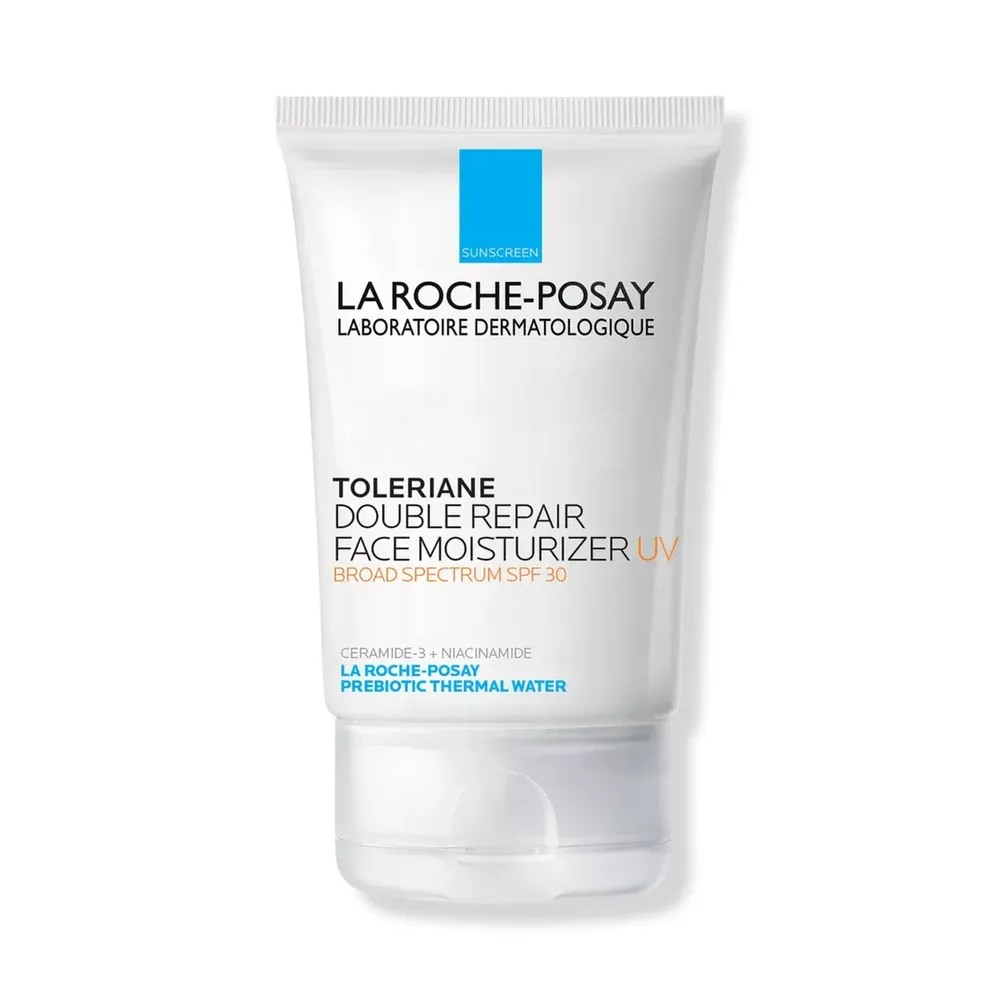
Toleriane Double Repair is the more comforting choice for normal, dry, or sensitive-leaning skin that wants a recognizable moisturizer feel. The fragrance-free, oil-free, non-comedogenic lotion uses glycerin, niacinamide, ceramide NP, dimethicone, and allantoin alongside avobenzone, homosalate, octisalate, and octocrylene for broad-spectrum SPF 30.
Those sensitive-skin claims do not make the product universally sting-free. Organic filters can bother some eyes, and any new formula can trigger an individual reaction. Keep it out of the eyes, patch-test if your skin is reactive, and stop if burning persists. It is designed for daily hydration and protection, not as a sports sunscreen. See the current La Roche-Posay formula and Drug Facts.
Choose it if: fragrance-free comfort and a richer lotion matter more than an invisible serum texture. Skip it if: you need water resistance or know these filters sting your eyes.
Check Toleriane SPF 30 on Amazon3. Cetaphil Daily Facial Moisturizer SPF 35
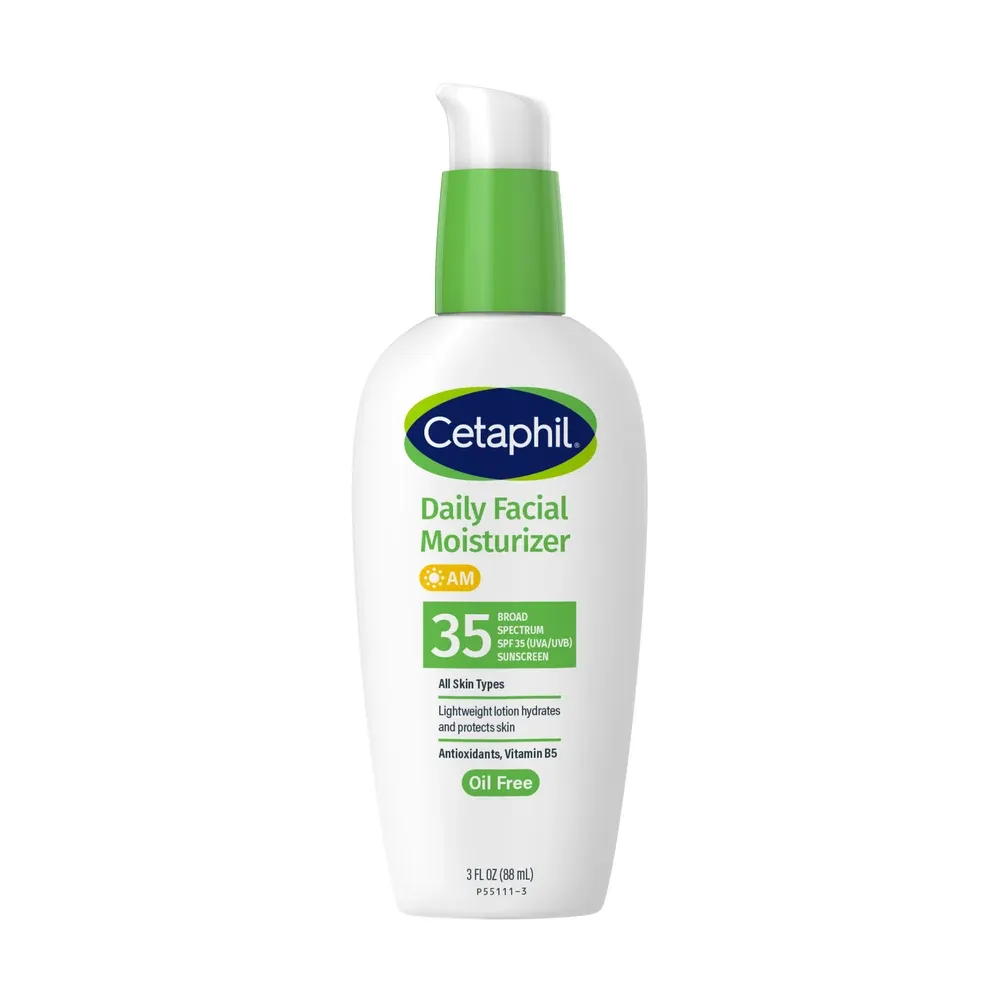
Cetaphil’s current SPF 35 lotion is the combination-skin pick because it aims for immediate oil-free hydration and a matte-satin finish rather than either a powdery dry-down or a rich glow. It is fragrance-free, hypoallergenic, non-comedogenic, and uses glycerin, panthenol, niacinamide, vitamin E, and silica around its organic sunscreen filters.
The balanced label does not remove individual tradeoffs. The formula contains isopropyl palmitate, which many people tolerate but some acne-prone users prefer to avoid based on their own history. Chemical-filter eye sting is also possible. Treat non-comedogenic as a useful screening claim, not a guarantee. The official Cetaphil page lists the current active and inactive ingredients.
Choose it if: combination skin wants a fragrance-free, oil-free daily lotion with slightly more than SPF 30. Skip it if: your own breakout history makes this emollient profile a poor fit.
4. Neutrogena Hydro Boost Hyaluronic Acid Moisturizer SPF 50
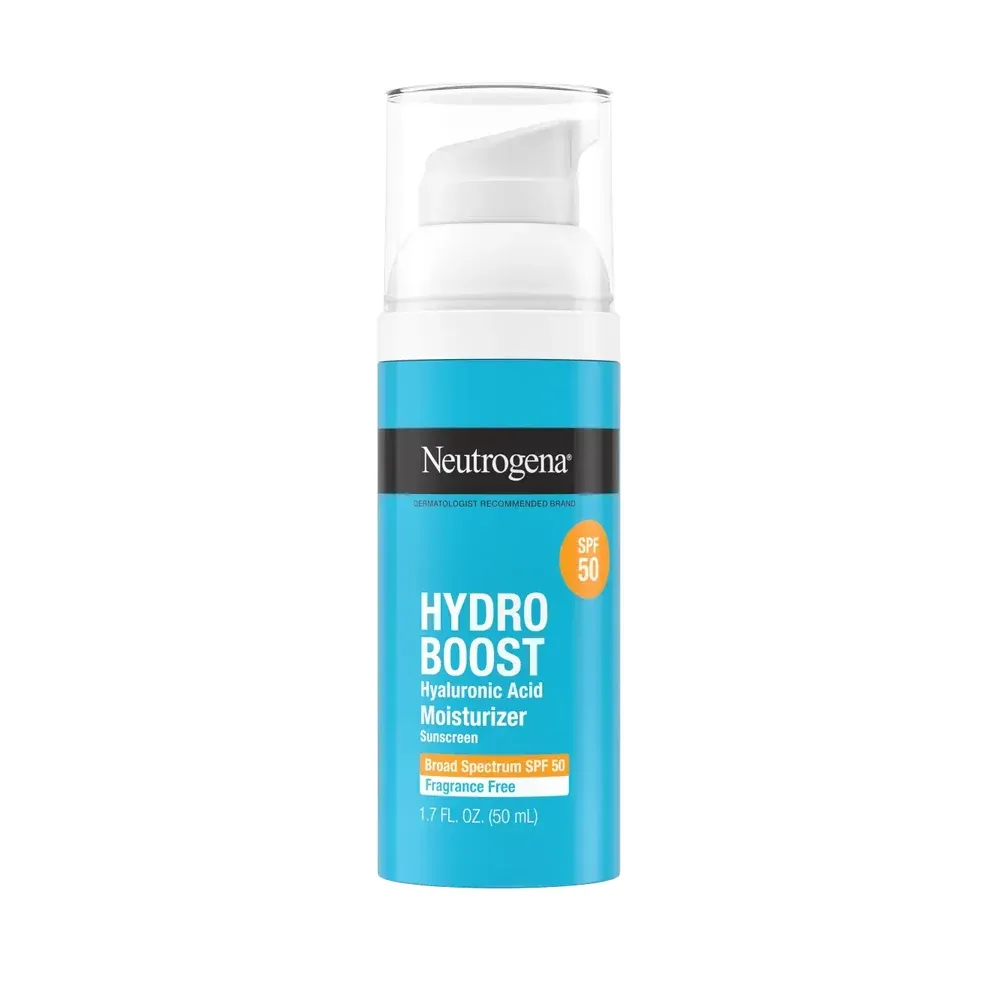
Hydro Boost earns the higher-SPF position for dry or dehydration-prone skin that does not want a mineral cream. The current broad-spectrum SPF 50 moisturizer is fragrance-free, non-comedogenic, and built around hyaluronic acid and glycerin in a lightweight lotion. It offers more labeled UVB protection than the SPF 30 and 35 products without moving into a beach-sunscreen texture.
Expect a more hydrated or dewy finish than a matte combination-skin lotion. Very oily skin may prefer a dedicated fluid sunscreen, while very dry skin may still need a small amount of moisturizer beneath it in winter. Do not add extra moisturizer by mixing the two in your palm; layer separately and let each film settle. Review the current Neutrogena product page.
Choose it if: you want fragrance-free hydration and SPF 50 in one morning product. Skip it if: a dewy finish makes you apply less or you need sport-level water resistance.
Check Hydro Boost SPF 50 on Amazon5. Olay Super Cream With Sunscreen SPF 30
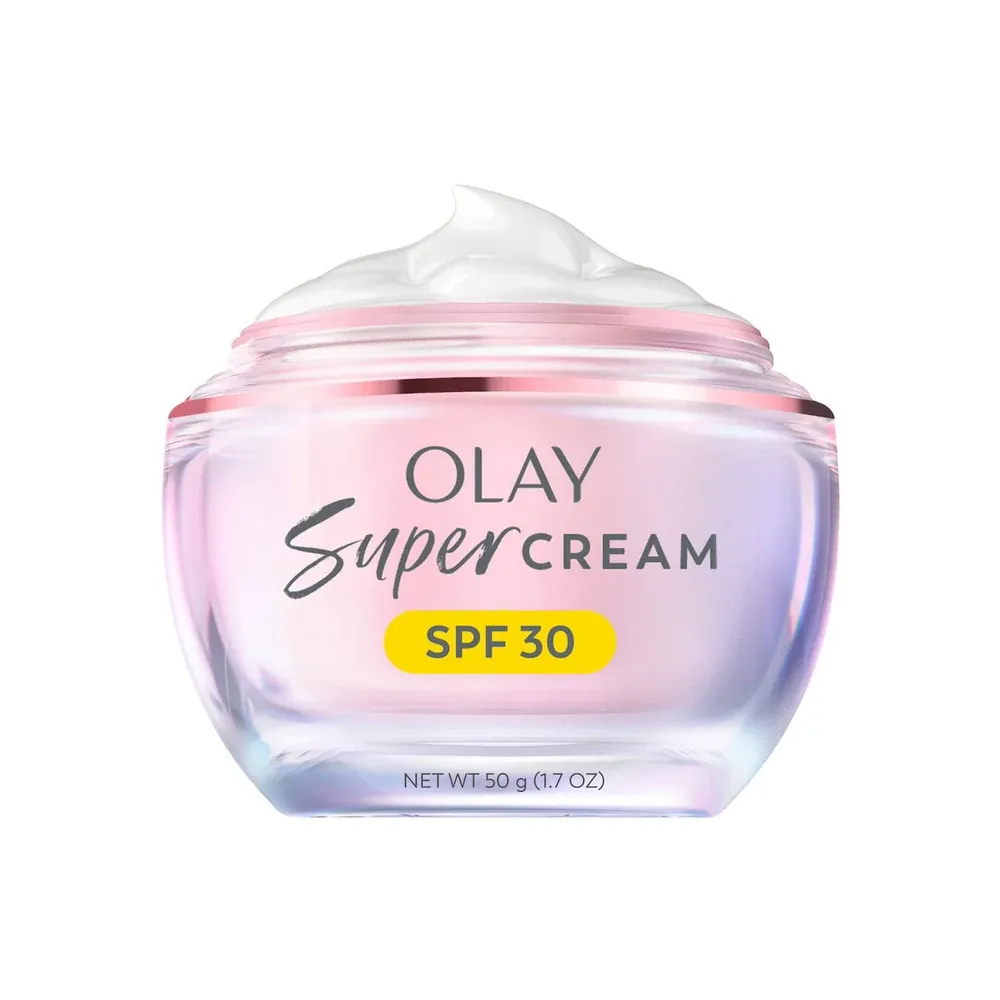
Olay Super Cream is for the reader who wants a day cream to do more cosmetic work under makeup. The standard formula combines SPF 30 with glycerin, niacinamide, an ethylated vitamin C derivative, hyaluronic acid, vitamin E, panthenol, dimethicone, and a peptide. Corn starch and silicone help create the brand’s soft-matte yet radiant positioning.
The formula contains fragrance, so it is not our first recommendation for reactive skin, rosacea-prone skin, or anyone who already knows fragranced face products cause problems. It is also a premium-priced jar compared with the drugstore pumps above. Skincare actives do not compensate for underapplied sunscreen, so use the full protective amount even when it feels like a treatment cream. The official Olay page lists the current standard formula and directions.
Choose it if: you want a smoothing, makeup-ready moisturizer with built-in SPF 30. Skip it if: fragrance sensitivity, price, or a jar format makes a simpler pump lotion more practical.
How to Match SPF Moisturizer to Your Skin Type
Dry skin: look for glycerin, hyaluronic acid, dimethicone, ceramides, and a lotion or cream that remains comfortable at the required sunscreen amount. Neutrogena supplies the highest SPF here; CeraVe and Toleriane add more barrier-focused support. If skin still feels tight, apply a light fragrance-free moisturizer first, let it settle, and then apply sunscreen as a separate layer.
Oily or combination skin: oil-free and non-comedogenic language can narrow the field, but finish decides adherence. Cetaphil aims for matte-satin, while CeraVe is a more moisturizing lotion. Readers with persistent shine can compare our oily-skin moisturizer guide or choose a dedicated light SPF from our acne-prone sunscreen guide.
Sensitive skin: fragrance-free is a useful first filter, not a promise. Toleriane, CeraVe, Cetaphil, and Neutrogena all avoid added fragrance in the versions reviewed, but sunscreen filters and inactive ingredients can still sting. Patch-test and keep the formula away from the eyes. Our refreshed sensitive-skin moisturizer guide explains how to simplify the rest of the routine.
Acne-prone skin: do not decide from one “comedogenic ingredient” chart. Look for non-comedogenic product-level claims, introduce one new item at a time, and observe a repeatable pattern over several weeks. If sunscreen is the only morning layer you can tolerate, a hydrating dedicated SPF may be simpler than forcing a moisturizer-SPF category.
How to Apply SPF Moisturizer Correctly
| Step | What to do | Why it matters |
|---|---|---|
| 1. Finish treatments | Apply serum or prescription treatment first and let it settle | Reduces pilling and uneven mixing |
| 2. Apply generously | Cover face, hairline, ears, jaw, and neck without stretching one dab | The labeled SPF assumes an adequate film |
| 3. Let the film set | Wait before makeup instead of rubbing products together | Helps maintain even coverage |
| 4. Reapply outdoors | Follow label directions, generally at least every two hours outdoors | Protection declines with time, touch, and exposure |
| 5. Escalate for activity | Use water-resistant SPF for swimming or sweating | Most daily SPF moisturizers are not sport formulas |
Do not mix moisturizer and sunscreen together to create a custom texture. If you need both, layer them. Apply skincare from lighter to richer, allow the surface to settle, then use sunscreen as the final morning skincare step before makeup. Our guide to layering serum and moisturizer can help when pilling starts before the SPF even goes on.
Mineral versus organic filters is a preference and tolerance question, not a simple good-versus-bad decision. Zinc oxide can leave a cast or feel thicker; organic filters can provide elegant transparency but may sting some eyes. Our chemical versus mineral sunscreen guide explains the tradeoffs. For a reactive complexion, also compare our sensitive-skin sunscreen picks.
Common SPF-Moisturizer Mistakes
Using a pea-size amount: moisturizer habits do not change sunscreen physics. If a generous layer is intolerable, change formulas. Stopping at the jaw: ears, neck, hairline, and upper chest are easy to miss. Assuming makeup SPF adds neatly: SPF values do not add together, and foundation is rarely applied in a sunscreen-sized film.
Relying on morning application during a full outdoor day: reapplication still applies. Taking “all-day hydration” to mean all-day UV protection: those are different claims. Using a non-water-resistant moisturizer for exercise: choose a water-resistant sunscreen and follow the label after sweating or swimming. Applying less to avoid white cast or shine: that is a product mismatch, not a safe optimization.
Frequently Asked Questions About Moisturizer With SPF
Is moisturizer with SPF as effective as sunscreen?
It can be. A product labeled broad-spectrum SPF 30 is tested as a sunscreen product even when it also moisturizes. The common difference is how people use it: a small moisturizer amount, missed areas, and no reapplication reduce real-world protection. Apply it generously and follow the same directions you would for sunscreen.
Do I need sunscreen after moisturizer with SPF 30?
Not automatically. If the SPF moisturizer is broad spectrum, applied generously, and appropriate for your exposure, a second sunscreen layer is not required. Add or switch to a water-resistant sunscreen for swimming, sweating, or prolonged outdoor time, or when you cannot comfortably apply enough of the moisturizer.
How much moisturizer with SPF should I apply to my face?
Use enough to create an even, generous film over the face, hairline, ears, jaw, and neck, following the product’s Drug Facts directions. Do not rely on a pea-size skincare amount. If the required layer feels heavy, greasy, or pills, choose a lighter sunscreen instead of reducing the amount.
Can I mix moisturizer with sunscreen?
No. Mixing two formulas in your palm can dilute and disrupt the sunscreen film and makes even coverage difficult to judge. If you need extra moisture, apply moisturizer first, let it settle, and then apply sunscreen as its own complete layer. Makeup goes on after the sunscreen film has set.
Should oily skin use a moisturizer with SPF?
Yes, if the texture is comfortable and the formula is suitable for acne-prone or oily skin. Look for oil-free, non-comedogenic, light lotion or fluid textures, but remember that those labels do not guarantee zero breakouts. A hydrating dedicated sunscreen can also replace morning moisturizer when it provides enough comfort.
The Bottom Line
A moisturizer with SPF is not a lesser sunscreen. It is a useful daily sunscreen format when the label says broad spectrum SPF 30+, the amount is generous, and the exposure matches the formula. CeraVe is the best all-around starting point, Toleriane serves sensitive and dry-leaning skin, Cetaphil targets combination skin, Neutrogena adds SPF 50 and hydration, and Olay offers a more cosmetic day-cream experience. For sport, water, or long outdoor days, switch to a water-resistant sunscreen and reapply.
This content is for educational purposes only and is not a substitute for professional medical advice, diagnosis, or treatment. Always seek the advice of a qualified healthcare provider with questions about a medical condition.