Men's vs Women's Skincare: What Changes Your Routine
Compare men's and women's skincare without stereotypes. Learn what skin studies show, how shaving changes care, and how to choose by your skin's needs.

In this guide
Quick Answer
There are measurable average differences between male and female skin, including oil production and the thickness of some skin layers. That does not mean men's and women's skincare needs separate products: choose by your current dryness, oiliness, sensitivity, shaving habits and the product's directions.
For a practical shopping comparison, see our men's skincare brand guide with cleansing, moisturizer and sunscreen examples.
The basics are shared: gentle cleansing, a comfortable moisturizer and sun protection. A gender label cannot tell you how strong a treatment should be or whether your skin will tolerate it.
Quick Summary
- Biology matters, but averages have limits. Skin measurements vary with age, body site and the people studied.
- Keep products that suit you. Compare purpose, ingredients and texture before switching to a men's or women's version.
- Adapt for shaving. Hair removal can change what feels comfortable, regardless of gender.
- Protect exposed skin. Choose broad-spectrum SPF 30 or higher, plus shade and protective clothing.
Four checks before choosing skincare
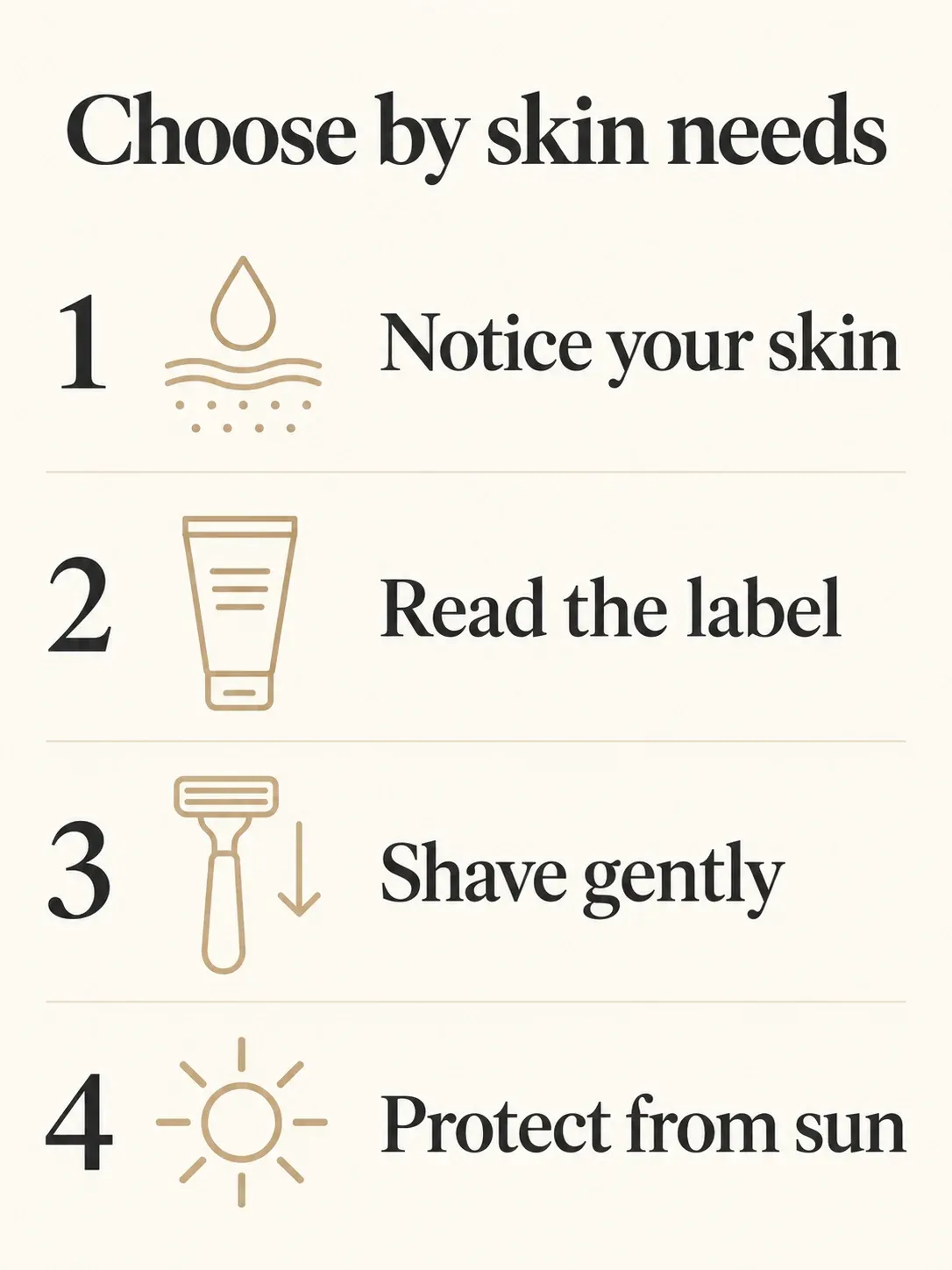
Editorial note: SkinOptimizer provides skincare education, not medical diagnosis. We reviewed original studies, medical guidance and current manufacturer information; we have not conducted a product trial or appointed a medical reviewer.
Updated: . Originally published October 20, 2024. Study limits, routine choices and the optional moisturizer's current formula reviewed.
Two people can share a gender and need very different moisturizers. Two people of different genders may prefer the same simple lotion.
A shiny forehead, uncomfortable cheeks or bumps after shaving can help you decide what to change in your routine. Start with the concern you want to address.
The Skin Insider
A study can report a thicker dermis in one group without showing that its members need stronger skincare. Measuring a skin layer and testing a finished product are different tasks.
Use biology to understand the topic, then use your skin's response and the label to make everyday choices. You do not need to replace a comfortable product to match a marketing category.
Men's vs women's skincare: what studies show
Male and female skin differences are group findings
A 2013 study of 300 healthy adults, aged 20 to 74, measured oil, hydration, water loss and surface pH at five body sites. The male group had higher measured sebum, the skin's natural oil.
Hydration and water-loss findings also varied with age. These were measurements in a selected sample, not a trial showing that a men's cleanser worked better than another cleanser.
In a 2023 ultrasound study of 99 Korean adults, researchers measured eight facial sites. Dermal thickness was generally greater in the male group at several sites, while epidermal thickness did not differ significantly between the groups.
That study included 21 male and 78 female participants, all with Fitzpatrick skin types III or IV. Its unequal groups and specific population limit how widely the findings apply.
The dermis and epidermis are different skin layers. A dermal thickness measurement does not establish how much acid, retinol or fragrance a particular face can tolerate.
| Finding | What limits it | Routine decision |
|---|---|---|
| Higher sebum in the male group of one study | An average does not identify every person's skin type. | Respond to actual shine and comfort. |
| Greater dermal thickness at several facial sites | Layer, site and study population matter. | Do not increase treatment strength on this basis. |
| Hydration and water loss vary | Age and measurement context change the picture. | Adjust for dryness or irritation, rather than ranking skin strength. |
Be cautious with claims that all men's skin is a fixed percentage thicker or produces exactly twice as much oil. A single number can hide differences between facial sites, ages and methods.
These studies grouped participants as male and female; they do not provide a complete account of gender identity or every person's hormone exposure. They also did not test whether gendered packaging predicts a better skincare result.
The American Academy of Dermatology's guidance for men makes the practical point: basic care remains similar, and product selection depends on skin type. Keep that distinction when a brand uses biology to sell a separate line.
Match your routine to your skin
Notice how your skin feels during an ordinary day with your current routine. Pay attention to shine, tightness after washing or discomfort following a product.
Look for a concern that repeats across ordinary days. Light, makeup and the finish of sunscreen can change how shiny or textured skin appears.
| What you notice | A useful adjustment | Avoid assuming |
|---|---|---|
| Shine with otherwise comfortable skin | Try a lighter moisturizer texture if you dislike the finish. | Oil means you must scrub or skip moisture. |
| Tight, flaky or rough areas | Review cleansing and consider a richer, tolerated moisturizer. | Only women's products can suit dry skin. |
| Oily center, drier cheeks | Adjust moisturizer amount or texture by area. | Your whole face needs one heavy application. |
| Stinging, itching or a rash | Stop the suspected irritant; seek advice if symptoms persist. | A men's formula will toughen your skin. |
For example, a man with dry cheeks may prefer a richer cream, while another man may dislike its finish. Neither choice contradicts a study reporting higher average oil production in a male group.
A woman and a man with similar sensitivity may both prefer a mild, fragrance-free lotion. Sharing a preference still does not guarantee that either person will tolerate every ingredient.
- Oily: Our daily routine for oily skin focuses on the concern itself.
- Dry: Use the dry-skin routine guide to review cleansing and moisture.
- Combination: The combination-skin routine helps separate the needs of different areas.
- Reactive: Start with our sensitive-skin routine, rather than adding several treatments.
The AAD's oily-skin advice includes gentle cleansing and moisturizing. Stronger washing and repeated scrubbing can irritate skin; a noncomedogenic label is a useful shopping filter, not a personal guarantee against breakouts.
If your forehead looks shiny but your face stings after washing, review the cleanser before adding another oil-control step.
A shared morning and evening baseline
Build a routine you can repeat before deciding whether you need an extra treatment. Check whether each step has a purpose you can explain.
Morning: clean gently, moisturize, protect
Use a gentle cleanser with lukewarm water and your fingertips, then pat dry. Avoid abrasive brushes and vigorous rubbing; the AAD's face-washing guidance recommends a gentle approach.
Apply a moisturizer that feels comfortable, following its directions. If your skin feels dry, review the texture and cleansing step rather than assuming you need a gender-specific serum.
Choose broad-spectrum, water-resistant SPF 30 or higher for exposed skin. Follow the sunscreen's application and reapplication directions, and add shade, a hat and protective clothing.
Skin thickness, oiliness and gender do not replace sun protection. If you want to compare finishes, our everyday sunscreen guide provides a separate selection step.
Evening: remove the day's products without scrubbing
Remove makeup if you wear it and cleanse gently, following the products' directions. Long-wear makeup may require its own removal step, depending on the directions.
Finish with a tolerated moisturizer. A toner, scrub, mask and aftershave are not automatic requirements for everyone.
| Time | Basic purpose | Personal adjustment |
|---|---|---|
| Morning | Gentle cleansing, moisture and sun protection | Texture, exposed areas and outdoor plans |
| Evening | Remove products and moisturize | Makeup removal if worn; label-directed care |
| Shaving day | Reduce friction and avoid aggressive passes | Hair direction, tools and irritation history |
If a routine is already comfortable, identify a specific reason before adding something. "My cheeks feel tight after cleansing" is a useful starting problem; "this range is designed for my gender" is not a skin outcome.
For a shorter starting plan, see our minimalist skincare routine. Prescription treatment instructions take priority over a general routine outline.
If you shave, adapt the technique
Shaving may change which products feel comfortable. A person who shaves daily may need different practical adjustments from someone who never removes hair.
Razor bumps involve hairs growing back into the skin. DermNet's razor-bump guidance explains that they can affect women and any shaved area; curly or coarse hair increases the risk, although straight hair can also re-enter skin.
A bump after shaving is not enough to diagnose acne, an ingrown hair or an infection. Repeatedly adding exfoliants can make an uncertain problem harder to assess.
- Soften first. Wet the skin and hair, and use shaving cream or gel suitable for your skin.
- Follow hair growth. Use gentle strokes with the grain and rinse the blade as you go.
- Avoid repeated close passes. Do not stretch the skin to chase a closer shave, especially if bumps recur.
- Care for the tool and skin. Replace worn blades, keep equipment clean and dry, and use a tolerated moisturizer afterward.
The AAD's shaving instructions support softening the hair and shaving with its growth. If a close shave repeatedly causes bumps, ask about a less-close or electric option rather than increasing pressure.
Skip an optional aftershave that stings or leaves your skin uncomfortable. A cooling sensation or strong scent does not demonstrate that a product is repairing irritation.
Persistent, painful, pus-filled or scarring bumps deserve medical assessment. Avoid picking or digging out hairs, and do not borrow someone else's prescription treatment for them.
The Optimizer's Edge
Before replacing a product, name the job it needs to do. Then change one functional choice at a time so you can tell what feels different.
- Purpose: cleanser, moisturizer, sunscreen or a specific treatment?
- Formula: suitable ingredients and no known personal allergen?
- Finish: comfortable enough to use as directed?
- Response: tolerated without a new rash or persistent irritation?
Read the label before paying for a gendered range
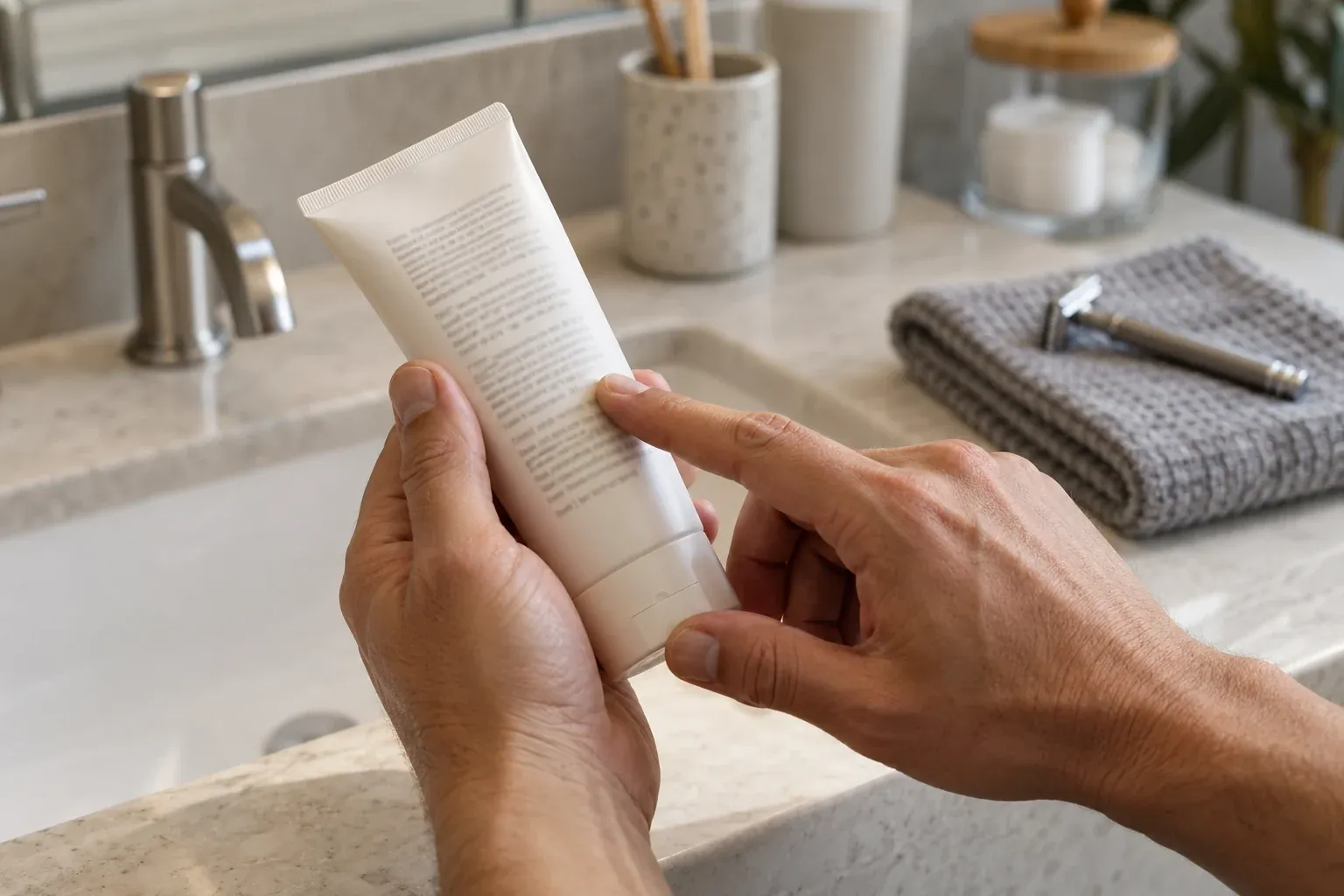
Two similarly named products might use different formulas, or might be similar apart from scent and packaging. You cannot establish which is true from the front label alone.
Compare the intended use, directions, ingredient list and package size. Check sunscreen claims separately: a moisturizer without an SPF claim does not become sunscreen because its daytime branding looks protective.
For sensitive skin, fragrance-free is a useful preference. "Unscented" can include ingredients that mask odor; the AAD's dry-skin guidance also recommends richer creams or ointments when lighter lotions are insufficient.
No front-label promise guarantees an allergy-free experience. The FDA's cosmetic-allergen guidance explains the limits of terms such as hypoallergenic and the importance of checking ingredients against known allergies.
You also do not need an expensive complete set to begin. The AAD's budget skincare advice supports simple basics; price alone is not evidence that a formula suits you.
One optional everyday moisturizer
A fragrance-free lotion is one option for the basic moisture step. Keep your existing moisturizer if it already meets that need.
Vanicream Daily Facial Moisturizer, 3 fl oz

Why it fits: The manufacturer lists glycerin, squalane, hyaluronic acid and five ceramides, with directions to apply as needed day or night.
Buy it if: You want an optional fragrance-free facial lotion and its ingredients suit you.
Skip it if: Your current moisturizer works, you need sunscreen in the same step, you have a known ingredient allergy, or you prefer a richer cream.
Important limit: This Daily Facial Moisturizer is not the separate SPF 30 product and does not replace sunscreen.
See the current formula and directions and check the package before use. We have not tested its performance or your individual tolerance.
As an Amazon Associate, we earn from qualifying purchases.
View 3 fl oz moisturizer on AmazonIf you want other textures, our men's moisturizer selection guide provides more options. Compare their actual features rather than treating the category name as a requirement.
Before using a new product widely, follow the AAD's small-area testing guidance. Home testing can help flag a reaction; it is not a guarantee of tolerance or a substitute for medical allergy testing.
When to seek professional advice
Skin needs can change over time. Review recent changes in your routine, environment or treatment before replacing products.
If a skin change starts with a medicine, discuss it with the prescribing clinician. Do not change a prescribed medicine to match a skincare routine.
- Persistent irritation: Stop the suspected product and seek advice if burning, itching or rash continues.
- Painful or scarring breakouts: Arrange assessment instead of repeatedly escalating scrubs or treatment strength.
- A known skin condition: Follow your treatment plan; a general comparison cannot diagnose or manage it.
Keep a list of the products you use and when symptoms began. That gives a clinician more useful information than whether the bottles were marketed to men or women.
How we chose the questions: We reviewed community discussions about men's skincare marketing, routine differences and shaving concerns, and skin biology versus gendered labels. These older threads helped identify questions; medical guidance and studies support the answers.
Frequently asked questions about men's vs women's skincare
Do men and women need separate skincare products?
Usually, a gender label is not the deciding factor. Choose cleanser, moisturizer and sunscreen by your skin's needs, the complete formula and the directions; individual conditions or prescribed treatments may need a more specific plan.
Can men use women's skincare?
Many everyday products marketed to women can fit a man's routine when their purpose, ingredients and directions suit him. Our guide to using skincare across gendered labels covers that shopping question in more detail.
Do men need stronger active ingredients?
A skin-thickness average does not establish a safe or effective treatment strength. Choose an active for a specific concern, follow its label and seek professional advice when needed; do not increase strength simply because a product is marketed to men.
Does a gender label prove the formula is different?
No. Compare the actual ingredient lists, purpose and directions of the two products; neither a matching name nor different packaging proves that the formulas are identical or meaningfully different.
Are razor bumps only a men's problem?
No. They can affect anyone who removes hair and can occur beyond the beard area; hair shape and removal technique matter.
Persistent, painful, pus-filled or scarring bumps need assessment rather than an automatic switch to stronger exfoliation.
Your Clear Skin Checklist
- Choose one current concern: dryness, shine, sensitivity or shaving discomfort.
- Keep comfortable basics and compare formulas before replacing them.
- Follow product directions; do not select treatment strength by gender.
- Use sun protection and seek advice for persistent or painful problems.
Start with one current concern and keep the basics that already suit you. A suitable formula and clear directions give you a practical basis for choosing the next product.
This article is for informational purposes only and does not replace professional dermatological advice.