Daily Skincare Routine for Combination Skin: Balance Every Zone
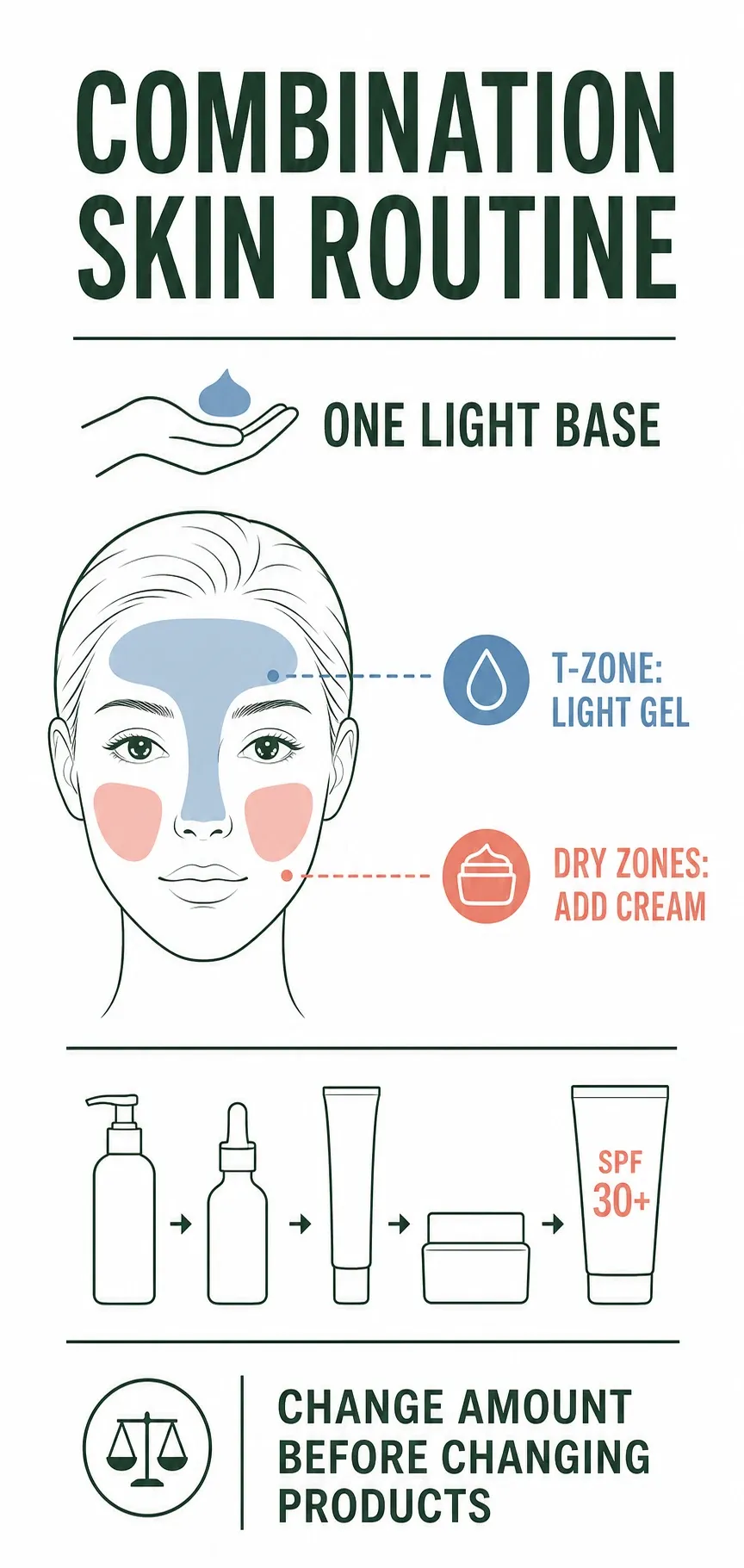
Use one light base routine, then adjust product amount and placement across the oily T-zone and dry areas of combination skin.

In this guide

Combination skin does not need two completely different routines. Start with one gentle cleanser, one light moisturizer and broad-spectrum SPF 30+, then change the amount by zone: use less through the oily T-zone and add a second thin layer of cream only to dry cheeks or flaky areas. Add one targeted active only where the concern exists.
Quick Summary
- Build one light base routine before buying separate products for every facial zone.
- Use a gel or lotion through the T-zone and add cream only to dry areas when needed.
- Apply pore-focused actives to congested zones instead of exfoliating the entire face automatically.
- Change amount, frequency and placement before replacing several products at once.
Map the Zones Before You Change Products
Observe bare skin about 30 to 60 minutes after gentle cleansing. The goal is not a perfect home diagnosis; it is a practical map of where shine, tightness, congestion and irritation actually occur.
| Signal | Likely pattern | Best first adjustment |
|---|---|---|
| Forehead and nose shine; cheeks comfortable | Classic combination pattern | Use less moisturizer through the T-zone |
| T-zone shines but whole face feels tight | Possible dehydration | Reduce cleansing and active frequency |
| Cheeks flake while nose has blackheads | Mixed barrier and congestion needs | Cream on cheeks; pore active only on nose |
| Red, itchy or burning patches | Irritation or dermatitis possible | Pause actives and seek advice if persistent |
Morning Routine
The morning routine should balance comfort with a stable sunscreen finish. Apply the base in thin layers, then increase product only where the skin asks for it.
Cleanse gently or rinse
Use a mild gel cleanser when the T-zone is oily on waking. If cheeks feel dry and the face is otherwise clean, rinse with lukewarm water or cleanse only the oilier zones instead of repeatedly washing the entire face.
Use one optional serum
A simple niacinamide or hydrating serum can fit combination skin, but it is not mandatory. Apply a smaller amount to the T-zone and more to tight areas, and avoid layering several serums just because different zones exist.
Moisturize by zone
Spread a light lotion or gel-cream over the face, using the thinnest layer across the forehead and nose. Press a second layer of cream onto dry cheeks only when they remain tight; placement is often more useful than owning two full routines.
Apply SPF 30+ evenly
Sunscreen is not a product to zone-dose below the labeled amount. Choose a finish the T-zone tolerates and apply evenly across the whole face, ears and exposed neck. Let moisturizer settle first if the layers tend to pill.
Evening Routine
At night, remove makeup and sunscreen, then give the oily and dry zones different treatment intensity without turning the routine into a complicated sequence.
Remove makeup and resistant SPF
Use micellar water, balm or cleansing oil only when the day's layers need it. Work gently around dry cheeks and rinse thoroughly so residue does not become another variable when evaluating congestion.
Cleanse without stripping
Use the same mild cleanser as in the morning. If cheeks feel tight after double cleansing, shorten the first step or use one cleanse on light-sunscreen days. A squeaky T-zone is not a useful target.
Treat the concern, not the label
Apply salicylic acid to recurring blackheads or clogged T-zone areas while keeping it away from flaky cheeks at first. Use retinoids or acne treatment according to directions, but begin one active at a time so each zone's response remains readable.
Finish with zone-based moisture
Use a light moisturizer everywhere and add cream to dry areas. When an active dries the T-zone, increase moisturizer or reduce treatment frequency before assuming combination skin has permanently changed type.
Match the Active to the Zone and Concern
Combination skin is easy to over-treat because visible oil and visible flakes invite opposite products. Use placement and frequency to keep one concern from creating another.
| Concern or product | Best use | Starting rhythm | Watch-out |
|---|---|---|---|
| Blackheads on nose or forehead | Salicylic acid | T-zone only, two nights weekly | Cheeks become tight or nose stings |
| Inflamed pimples | Benzoyl peroxide | Targeted use or wash as directed | Cracking, swelling or painful dryness |
| Uneven texture | Retinoid | One night weekly to start | Raw peeling or persistent burning |
| Dry cheek patches | No exfoliant | Add cream and simplify | Patch remains itchy or inflamed |
Adjust Combination Skin Without Starting Over
Hot or humid weather
Reduce moisturizer through the T-zone and choose a lighter sunscreen finish. Keep enough moisture on the cheeks rather than switching the whole face to oil-control products.
Cold weather and heating
Add a cream to the cheeks, corners of the nose or jaw while keeping the usual light base elsewhere. If the T-zone also feels tight, reduce cleansing or active use before adding more oil-control steps.
Hormonal or stress-related shifts
Track whether the change lasts several weeks before rebuilding the shelf. Short-term breakouts can be treated locally while the stable base routine stays the same.
One Shelf, Two Zones: A Practical Dosing Method
Start with a pea-sized amount of light moisturizer for the whole face, then divide it mentally: the T-zone receives the thinnest pass, while each cheek receives another small press if it still feels tight. This creates different coverage with the same product and makes it easier to understand whether texture or quantity is the problem.
Use the same logic for cleanser. Massage the oilier forehead, nose and chin first, then make a quick pass over the cheeks before rinsing. This is gentler than buying an aggressive “oil control” cleanser for the entire face and trying to repair the dry zones afterward.
Active placement should be even more precise. A salicylic acid leave-on can be limited to the nose and center forehead, while moisturizer protects the cheeks. If acne is distributed across the face, choose a treatment plan for acne rather than assuming every breakout comes from combination skin.
A 14-Day Combination-Skin Mapping Plan
Keep cleanser, moisturizer and sunscreen fixed for two weeks. The purpose is to learn where the routine fails before adding another category. Record the T-zone and cheeks separately because one overall “good” or “bad” score hides the information that combination skin provides.
| Days | Test | T-zone check | Cheek check |
|---|---|---|---|
| 1 to 3 | One light base routine | Shine after two and six hours | Tightness after cleansing |
| 4 to 7 | Reduce moisturizer amount only on T-zone | Residue and pilling | Comfort remains stable |
| 8 to 10 | Add a second cream layer only to cheeks | No new change | Flakes and makeup texture |
| 11 to 14 | Use one active on one congested zone | Blackheads and irritation | Keep active away initially |
Take photos in the same lighting and avoid blotting immediately before the check. Midday shine is not automatically failure; the useful question is whether reducing moisturizer improved wear without creating tightness or increasing treatment irritation.
Makeup and Sunscreen on Combination Skin
Pilling often begins when too many layers are spread repeatedly across the T-zone. Use one light moisturizer, allow it to settle, then apply sunscreen in two thin passes without mixing it into foundation. The guide to stopping skincare pilling gives a step-by-step troubleshooting sequence.
On dry cheeks, press rather than rub foundation over sunscreen. On the forehead and nose, reduce the skincare layer underneath before reaching for a more mattifying primer. A blotting sheet used with a brief press is less disruptive than washing the face again at midday.
If sunscreen repeatedly stings dry zones, simplify the products underneath and test a different sunscreen formula. Do not apply less than the labeled protective amount to the cheeks. Combination skin changes moisturizer placement, but UV protection still needs even coverage.
Handle Breakouts Without Drying the Cheeks
Blackheads and whiteheads in the T-zone respond to a different strategy than red, painful pimples across the jaw. A salicylic acid cleanser or leave-on may suit congestion, while benzoyl peroxide or a retinoid may fit inflammatory acne. The acne-prone cleanser guide separates these active roles and their watch-outs.
Apply treatment to the affected area and keep a simple moisturizer in the routine. If cheeks become flaky, reduce the active's spread or frequency rather than adding another exfoliant. A barrier problem can make the face look simultaneously oilier, redder and more textured.
Persistent jawline acne, deep cysts or scarring should not be managed only by rotating cleansers. A dermatologist can build a treatment plan while the zone-based cosmetic routine continues to support comfort and sunscreen use.
Combination-Skin Myths
- “Every zone needs a separate full routine.” Amount and placement usually solve more than owning duplicate cleansers, serums and sunscreens.
- “The T-zone should be completely matte.” Normal sebum returns during the day. Comfort and stable wear matter more than zero shine.
- “Dry cheeks need daily scrubs.” Repeated friction can increase flakes and sensitivity rather than improve hydration.
- “Combination skin never changes.” Climate, hormones, treatment and age can shift the zone map, so reassess before repurchasing automatically.
- “Non-comedogenic guarantees no breakout.” The label is a useful filter, not a promise for every person and every formula.
Shop the Routine by Step
Choose one buying guide based on the step that is currently failing. The comparison pages separate texture, concern and routine fit so a dry cheek does not automatically lead to an unnecessarily heavy full-face routine.
Choose a combination-skin moisturizer
Compare gels, lotions and creams that can be dosed by zone.
Compare optionsChoose a gentle cleanser
Compare cleansers for an oilier T-zone without treating cheeks harshly.
Compare optionsChoose an everyday sunscreen
Compare SPF textures that layer well over a mixed-zone routine.
Compare optionsCommon Mistakes That Make the Routine Harder
- Using a harsh foaming cleanser over the whole face because only the nose is oily.
- Applying a rich cream equally everywhere when only the cheeks feel dry.
- Exfoliating dry and congested zones at the same frequency without observing their response.
- Changing cleanser, toner, serum and moisturizer in the same week.
- Skipping moisturizer through the T-zone and then increasing acne treatment when it becomes irritated.
- Treating every midday shine as proof that sunscreen or moisturizer is comedogenic.
When a routine becomes confusing, return to cleanser, moisturizer and morning sunscreen for several days. Then reintroduce one optional step at a time. The slow skincare method gives a longer reset framework, while the skin-barrier guide explains signs that irritation has overtaken the original concern.
When to Ask a Dermatologist
Seek qualified advice when combination skin includes painful cystic acne, scarring, recurrent inflamed patches or persistent burning. Sudden widespread oiliness or dryness, especially with medication or hormonal changes, also deserves context beyond a cosmetic routine. A dermatologist can distinguish acne, rosacea, eczema and contact dermatitis when the zone map no longer explains the symptoms.
How to Judge Whether the Routine Is Working
Define success before introducing another product. Comfort can change within days, while clogged pores, discoloration and fine lines usually need a longer observation window. Photograph the same areas in similar light and record burning, tightness, flakes, breakouts and product wear as separate signals instead of relying on a general impression.
Keep cleanser, moisturizer and sunscreen stable while testing one optional step. Note the date, amount, placement and frequency of the change. When several products change together, an improvement cannot be attributed confidently and an irritation trigger becomes much harder to identify.
Evaluate tolerability every morning after an active night. Mild temporary dryness may be manageable by lowering frequency, but persistent burning, swelling, painful cracking or a spreading rash is a stop signal. Do not increase strength merely because the first application did not produce a visible sensation.
At four to six weeks, compare the specific concern that motivated the change. A successful routine should be repeatable, comfortable and affordable enough to maintain; a product that creates a short cosmetic effect while repeatedly destabilizing the rest of the routine has not earned its place.
Also check whether the routine fits real mornings and evenings. A theoretically perfect sequence that is skipped when work runs late is less useful than a shorter version used consistently. Keep the essential steps visible, store optional treatments separately and write their weekly rhythm on the package or calendar to prevent accidental overlap.
The Bottom Line
The most reliable combination-skin routine is one light base with controlled variation. Cleanse gently, moisturize according to zone, protect the entire face with sunscreen and apply treatments only where their target concern appears. Adjust amount and placement first; replace products only when that simpler test fails.
Frequently Asked Questions
Should combination skin use two moisturizers?
Not necessarily. Start with one light lotion or gel-cream over the whole face, then add a richer cream only to dry zones. Two separate moisturizers are useful only when one product cannot create comfort without making the T-zone feel heavy.
How often should combination skin exfoliate?
Start once or twice weekly and focus on congested areas rather than automatically covering the whole face. Reduce frequency when dry zones sting, peel or become shiny-raw.
Is combination skin dehydrated skin?
They can overlap, but they are not identical. Combination skin describes different oil patterns by zone; dehydration is a temporary lack of water that can make even oily areas feel tight.
Can combination skin use facial oil?
Yes, but use it for a clear dry-zone need. A drop pressed over cheek moisturizer may be enough; applying oil over a congested T-zone is optional and should be judged by comfort and breakouts.
Why does my combination skin change with the seasons?
Humidity, temperature, heating, sweat and product layers change water loss and surface oil. Keep the base routine stable and adjust moisturizer amount or active frequency before replacing every product.
For the cleansing step, use our combination-skin cleanser guide to choose by oily T-zone, dry cheeks, sensitivity, and sunscreen-removal needs.