Best Moisturizers for Skin Barrier Repair in 2026: 6 Picks
Six verified barrier moisturizers, a texture-first comparison and a practical reset routine for dry, stinging or over-treated skin.

In this guide
Which moisturizer is best for skin barrier repair?
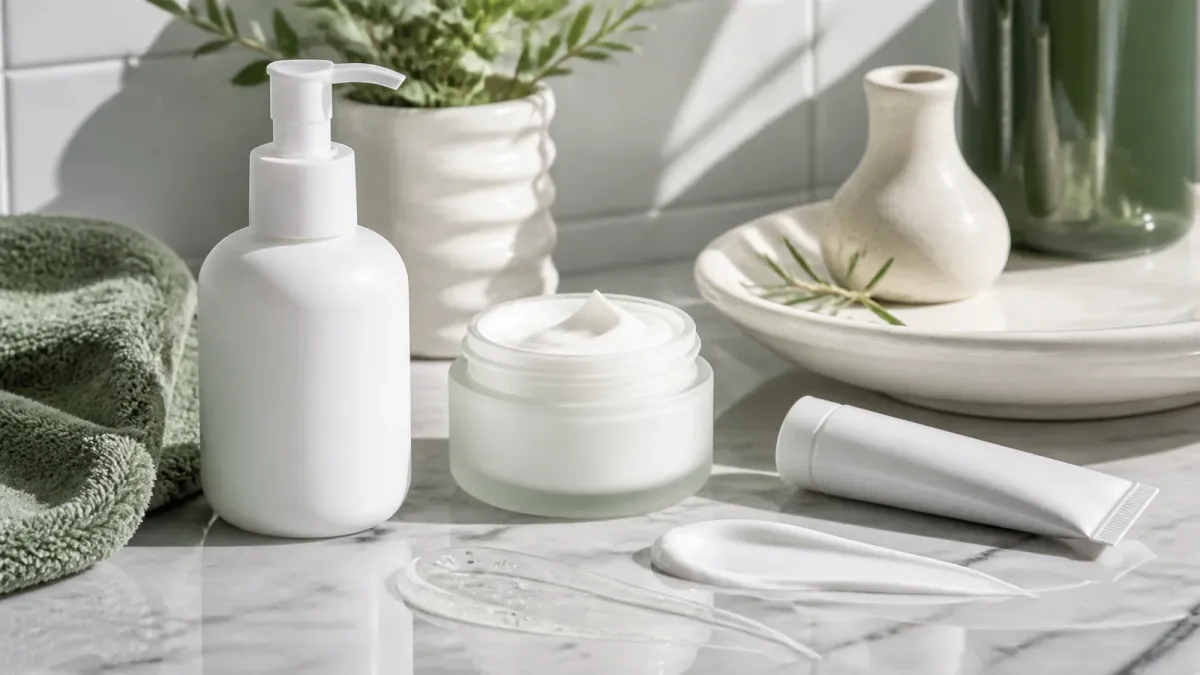
CeraVe Moisturizing Cream is the best broad-use pick for dry, flaky face or body skin because it combines ceramides, humectants and a substantial fragrance-free cream base. Choose Vanicream Daily Facial Moisturizer when an oily or acne-prone face needs a lighter lotion, Cicaplast Balm B5 for localized rough patches, and Eucerin Advanced Repair for rough body skin. A moisturizer can reduce water loss and improve comfort, but persistent burning, swelling, oozing or cracking needs medical assessment.
Build the repair routine around tolerance
- Start with texture: lotion for mild facial tightness, cream for broad dryness, balm for targeted patches.
- Look beyond one hero ingredient: humectants add water while emollients and occlusives help keep it there.
- Choose fragrance-free: “unscented” can still contain masking fragrance.
- Apply after cleansing: moisturizer works best when spread over slightly damp skin.
- Pause the overload: raw or stinging skin rarely benefits from more acids, scrubs or retinoid frequency.
- Know the limit: moisturizer supports the barrier but does not diagnose or cure eczema, infection or allergy.
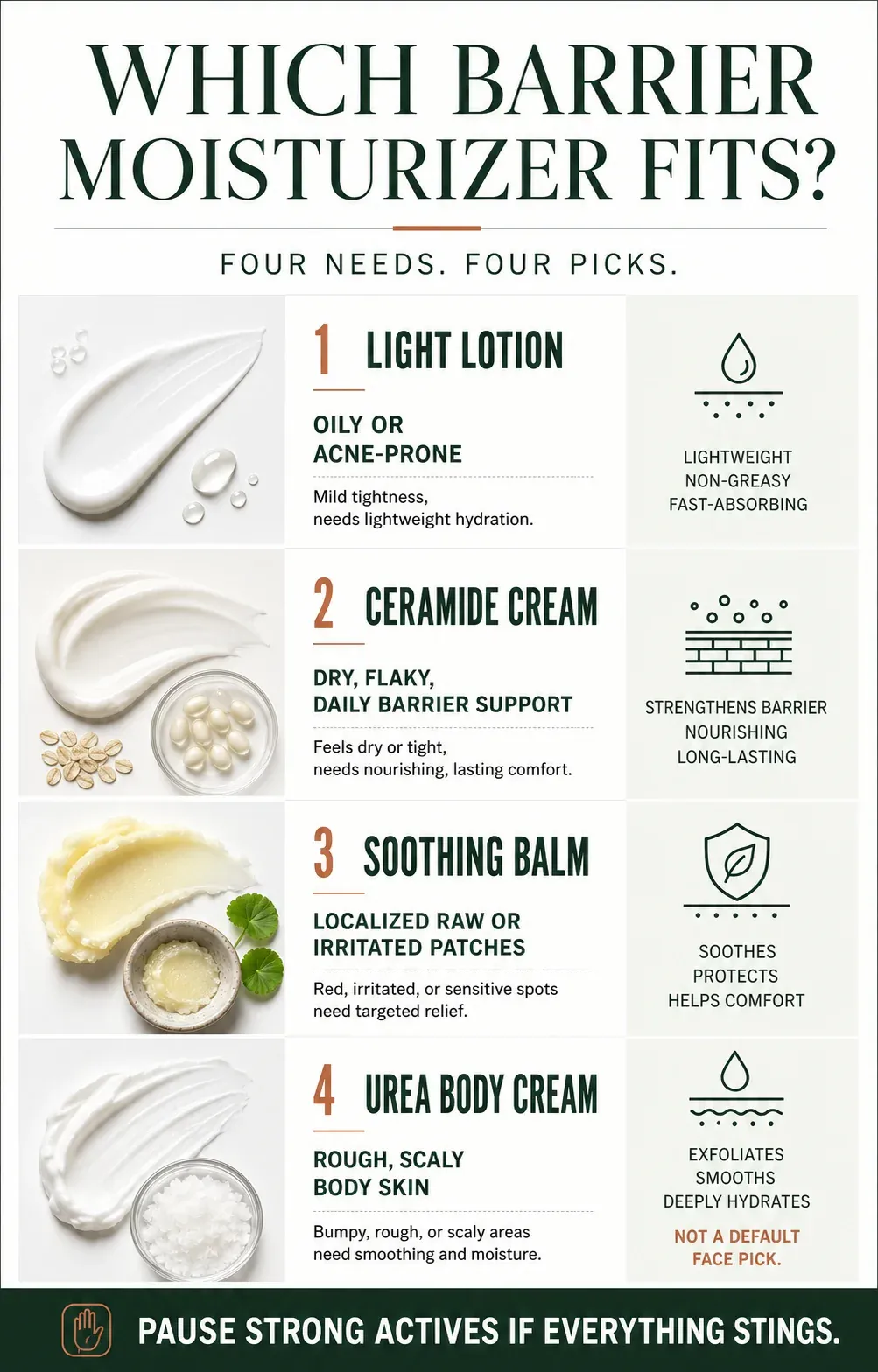
“Skin barrier repair” has become a catch-all phrase for dryness, breakouts, redness and almost every uncomfortable reaction. That is too broad. The barrier is the outer system that limits water loss and helps shield living tissue from irritants, but the same symptoms can also come from dermatitis, allergy, infection, rosacea or an acne treatment that is being used too aggressively.
A moisturizer is therefore a support tool, not a diagnosis. Its practical job is to increase water in the outer skin, smooth gaps between cells and reduce evaporation. The best formula is the one that performs those jobs without making the user avoid it because the texture feels greasy, sticky or painful.
What a Damaged Skin Barrier Actually Feels Like
Common clues include tightness after cleansing, increased stinging from familiar products, rough flakes, shiny-raw patches and sudden sensitivity to actives. Acne routines can trigger this pattern when benzoyl peroxide, retinoids, exfoliating acids and harsh cleansers overlap.
If a prescription retinoid is the reason you are changing creams, compare our moisturizers for tretinoin by daytime texture, evening comfort and the limits of cosmetic support.
These signs are not specific. Our guide to the signs of a damaged skin barrier helps separate common overuse clues from reasons to seek help. Itch, well-defined rashes, swelling, blisters, oozing, crusting, pain or cracks that bleed deserve professional evaluation.
Dry skin, dehydration and inflammation are not identical
Dry skin generally describes a tendency to produce less oil and feel rough or flaky. Dehydration refers to reduced water content and can occur even when the T-zone becomes oily. Inflammation can create burning and redness that a moisturizer may calm but cannot explain.
This distinction changes the product choice. A light humectant gel may feel excellent on oily dehydrated skin but insufficient on very dry skin. A thick balm may protect a raw patch but feel occlusive across an acne-prone face.
For a more specific ingredient-led comparison, see our urea face-cream shortlist, including strength and fragrance checks and why irritated skin may need a simpler option.
How Moisturizers Support Barrier Function
Humectants such as glycerin and hyaluronic acid bind water in the outer skin. Emollients such as squalane, fatty alcohols and skin lipids smooth the spaces between cells. Occlusives such as petrolatum, dimethicone and richer oils slow evaporation.
Many effective moisturizers combine all three functions. The ingredient list does not need to contain every fashionable lipid, but the overall formula must provide enough water and enough seal for the degree of dryness.
What the evidence says about ceramides
Ceramides are natural components of the stratum corneum lipid matrix. A small split-site randomized trial in people with mild to moderate xerosis found that a ceramide-containing cream improved hydration and measures of barrier function over 28 days compared with a hydrophilic cream.
That supports ceramides as a useful feature, not a guarantee that every ceramide product will beat every non-ceramide product. A separate randomized observer-blind study comparing several common moisturizers in people with atopic dermatitis found improved capacitance on treated skin, while several barrier measurements did not change significantly; the authors also noted that the study was underpowered.
Fragrance-free is different from unscented
The American Academy of Dermatology recommends fragrance-free products for dry, sensitive skin and explains that “unscented” products may still use chemicals to mask odor. This is a high-value label distinction when familiar products already sting.
For readers who specifically avoid niacinamide, our current-label moisturizer comparison separates that ingredient check from fragrance, texture and other tolerability needs.
Fragrance-free is not the same as hypoallergenic or reaction-proof. Botanical extracts, preservatives, adhesives and even familiar emollients can still be problematic for an individual. Patch testing a moisturizer on a small area is sensible when reactivity is high.
Choose the Right Texture Before the Brand
| Texture | Best fit | Strength | Main tradeoff |
|---|---|---|---|
| Gel | Oily or combination skin with dehydration | Light and easy under sunscreen | Often too light for severe flakes |
| Lotion | Mild dryness or acne-treatment sensitivity | Balances hydration and wearability | May need a second layer on dry zones |
| Cream | Dry, flaky face or broad body areas | More emollient and occlusive support | Can feel rich on oily zones |
| Balm or ointment | Localized rough, cracked-looking or high-friction areas | Strongest evaporation control | Heavy and not ideal over every pore |
| Urea body cream | Rough, scaly arms, legs, hands or feet | Hydrates and smooths rough texture | Can sting raw skin; not a default face pick |
The AAD's moisturizer-selection guidance likewise distinguishes gel, lotion, cream and ointment by skin type and dryness severity. This texture-first framework is more useful than assuming the most expensive cream is always the most reparative.
Best Moisturizers for Skin Barrier Repair at a Glance
| Product | Best for | Texture role | Main limitation |
|---|---|---|---|
| CeraVe Moisturizing Cream | dry or flaky face and body skin that tolerates a rich cream | overall rich ceramide cream | The tub is large and the finish is richer than many facial lotions. Acne-prone users may prefer it on dry zones or the body before applying it across an oily T-zone. |
| La Roche-Posay Cicaplast Balm B5 | localized dry, rough or irritated-looking patches that need a balm layer | targeted soothing balm | A soothing balm is not a diagnosis or treatment for eczema, infection or an allergic reaction. The heavier finish may be uncomfortable on oily or congestion-prone areas. |
| Neutrogena Hydro Boost Gel-Cream | dehydrated or combination skin that dislikes heavy creams under sunscreen | lightweight hydration step | A humectant-led gel is not the strongest stand-alone option for severely flaky skin. Confirm the current formula and pack size because Hydro Boost names and packaging vary. |
| First Aid Beauty Ultra Repair Cream | very dry face or body skin that prefers a rich fragrance-free oatmeal cream | colloidal-oatmeal cream | Oatmeal and a fragrance-free label do not make a formula reaction-proof. Patch test when skin is highly reactive and verify the current seller and size. |
| Vanicream Daily Facial Moisturizer | sensitive, combination or acne-prone skin that wants a lighter daily face lotion | light facial ceramide lotion | The finish is not matte on everyone, and simple formulas can still sting a severely compromised barrier. Introduce it without adding another new active at the same time. |
| Eucerin Advanced Repair Body Cream | rough, flaky arms, legs, hands or feet that need a richer body moisturizer | for rough, scaly body skin | This is a body cream, not our default facial recommendation. Urea can sting cracked or freshly irritated skin, so pause and seek advice if application burns persistently. |
The 6 Best Barrier Moisturizers in 2026
Each pick has a different texture and job. The links below go to verified direct Amazon product pages with SkinOptimizer affiliate tracking. Confirm the current seller, size, formula and directions before ordering.
1. CeraVe Moisturizing Cream
Why it fits: The current 19-ounce listing combines three ceramides with glycerin and hyaluronic acid in a fragrance-free face-and-body cream. It is the most practical starting point when one substantial formula needs to cover broad dry areas.
Watch-out: The tub is large and the finish is richer than many facial lotions. Acne-prone users may prefer it on dry zones or the body before applying it across an oily T-zone.
- Best for: dry or flaky face and body skin that tolerates a rich cream.
- Use: Apply to slightly damp skin after gentle cleansing, unless the current label says otherwise.
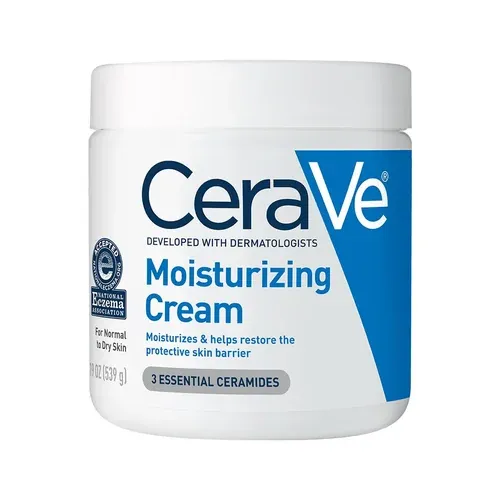
CeraVe Moisturizing Cream
Best for: dry or flaky face and body skin that tolerates a rich cream.
Before you buy: The tub is large and the finish is richer than many facial lotions. Acne-prone users may prefer it on dry zones or the body before applying it across an oily T-zone.
View CeraVe Cream on AmazonAs an Amazon Associate, SkinOptimizer may earn from qualifying purchases.
2. La Roche-Posay Cicaplast Balm B5
Why it fits: The verified listing positions this fragrance-free multi-purpose balm around panthenol, shea butter and centella asiatica. Its dense texture makes more sense as a targeted comfort layer than as the automatic all-over choice for every skin type.
Watch-out: A soothing balm is not a diagnosis or treatment for eczema, infection or an allergic reaction. The heavier finish may be uncomfortable on oily or congestion-prone areas.
- Best for: localized dry, rough or irritated-looking patches that need a balm layer.
- Use: Apply to slightly damp skin after gentle cleansing, unless the current label says otherwise.
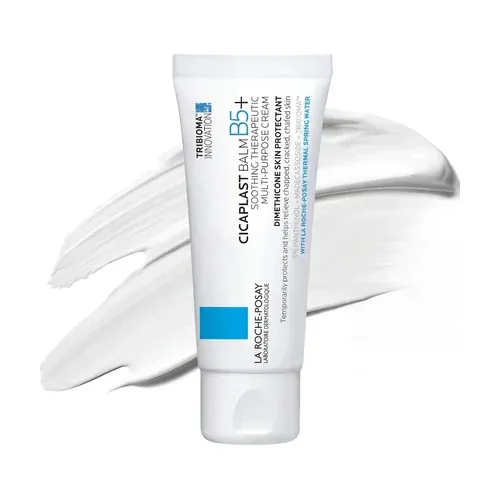
La Roche-Posay Cicaplast Balm B5
Best for: localized dry, rough or irritated-looking patches that need a balm layer.
Before you buy: A soothing balm is not a diagnosis or treatment for eczema, infection or an allergic reaction. The heavier finish may be uncomfortable on oily or congestion-prone areas.
View Cicaplast Balm B5 on AmazonAs an Amazon Associate, SkinOptimizer may earn from qualifying purchases.
3. Neutrogena Hydro Boost Gel-Cream
Why it fits: The current direct listing is a two-pack of the Extra-Dry Skin gel-cream and emphasizes hyaluronic-acid hydration. Its light texture fills a useful role when comfort and adherence matter more than choosing the richest lipid blend.
Watch-out: A humectant-led gel is not the strongest stand-alone option for severely flaky skin. Confirm the current formula and pack size because Hydro Boost names and packaging vary.
- Best for: dehydrated or combination skin that dislikes heavy creams under sunscreen.
- Use: Apply to slightly damp skin after gentle cleansing, unless the current label says otherwise.
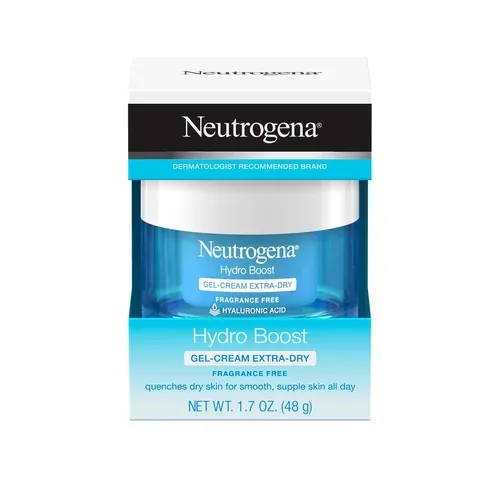
Neutrogena Hydro Boost Gel-Cream
Best for: dehydrated or combination skin that dislikes heavy creams under sunscreen.
Before you buy: A humectant-led gel is not the strongest stand-alone option for severely flaky skin. Confirm the current formula and pack size because Hydro Boost names and packaging vary.
View Hydro Boost Gel-Cream on AmazonAs an Amazon Associate, SkinOptimizer may earn from qualifying purchases.
4. First Aid Beauty Ultra Repair Cream
Why it fits: The verified seven-ounce listing uses colloidal oatmeal and positions the fragrance-free cream for intense face-and-body hydration. It gives shoppers a different soothing route from a ceramide-first formula.
Watch-out: Oatmeal and a fragrance-free label do not make a formula reaction-proof. Patch test when skin is highly reactive and verify the current seller and size.
- Best for: very dry face or body skin that prefers a rich fragrance-free oatmeal cream.
- Use: Apply to slightly damp skin after gentle cleansing, unless the current label says otherwise.
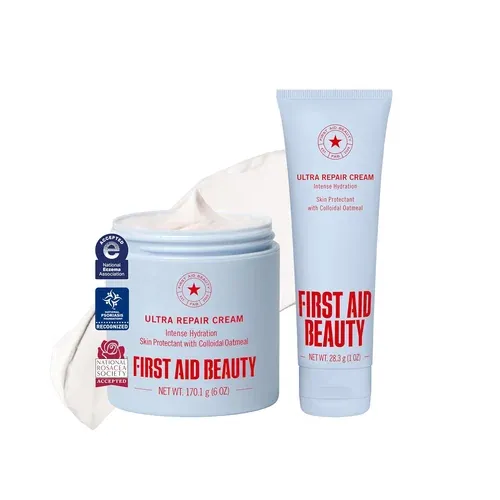
First Aid Beauty Ultra Repair Cream
Best for: very dry face or body skin that prefers a rich fragrance-free oatmeal cream.
Before you buy: Oatmeal and a fragrance-free label do not make a formula reaction-proof. Patch test when skin is highly reactive and verify the current seller and size.
View Ultra Repair Cream on AmazonAs an Amazon Associate, SkinOptimizer may earn from qualifying purchases.
5. Vanicream Daily Facial Moisturizer
Why it fits: The current three-ounce listing highlights five ceramides and hyaluronic acid in a lightweight formula made without several common irritants. It is a stronger face-specific choice when a large tub cream feels excessive.
Watch-out: The finish is not matte on everyone, and simple formulas can still sting a severely compromised barrier. Introduce it without adding another new active at the same time.
- Best for: sensitive, combination or acne-prone skin that wants a lighter daily face lotion.
- Use: Apply to slightly damp skin after gentle cleansing, unless the current label says otherwise.
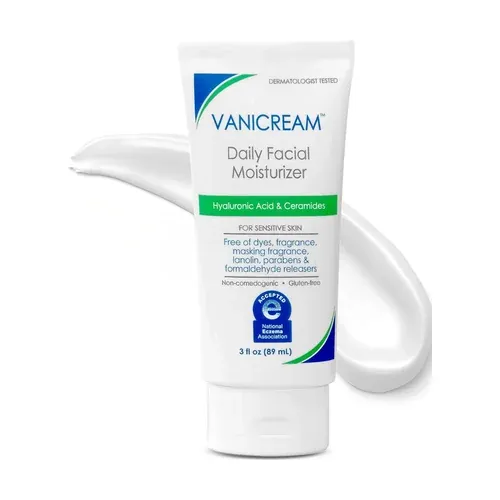
Vanicream Daily Facial Moisturizer
Best for: sensitive, combination or acne-prone skin that wants a lighter daily face lotion.
Before you buy: The finish is not matte on everyone, and simple formulas can still sting a severely compromised barrier. Introduce it without adding another new active at the same time.
View Vanicream Daily on AmazonAs an Amazon Associate, SkinOptimizer may earn from qualifying purchases.
6. Eucerin Advanced Repair Body Cream
Why it fits: The current 16-ounce listing is a fragrance-free body cream with urea and a triple moisturizing complex. It fills the rough-body-skin role that a light facial lotion cannot cover well.
Watch-out: This is a body cream, not our default facial recommendation. Urea can sting cracked or freshly irritated skin, so pause and seek advice if application burns persistently.
- Best for: rough, flaky arms, legs, hands or feet that need a richer body moisturizer.
- Use: Apply to slightly damp skin after gentle cleansing, unless the current label says otherwise.
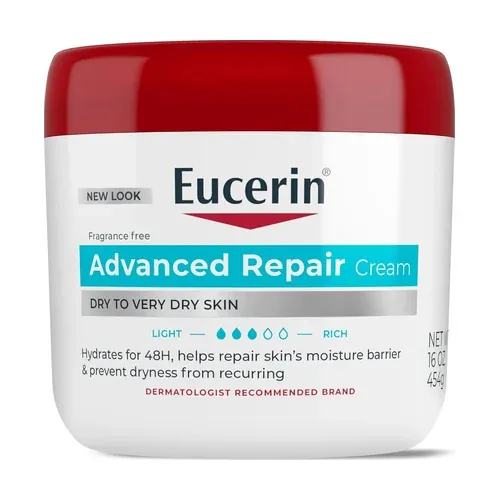
Eucerin Advanced Repair Body Cream
Best for: rough, flaky arms, legs, hands or feet that need a richer body moisturizer.
Before you buy: This is a body cream, not our default facial recommendation. Urea can sting cracked or freshly irritated skin, so pause and seek advice if application burns persistently.
View Eucerin Advanced Repair on AmazonAs an Amazon Associate, SkinOptimizer may earn from qualifying purchases.
A Simple Seven-Day Barrier Reset
Morning
- Rinse or cleanse gently. Use lukewarm water and avoid a long, foamy wash when the face is not oily.
- Apply moisturizer to slightly damp skin. Use a lotion or cream matched to the zones that feel dry.
- Finish with broad-spectrum SPF 30 or higher. Choose a sunscreen the irritated skin can tolerate.
Evening
- Remove sunscreen without scrubbing. Use a gentle cleanser and fingertips rather than a brush or gritty cloth.
- Pause non-essential irritating actives. Hold exfoliating acids, scrubs and optional retinoids while basic products sting.
- Moisturize promptly. Apply cream to dry zones and a thin balm only to localized rough areas when needed.
This is not a promise that every barrier problem resolves in seven days. The point is to remove variables and see whether comfort improves. Our guide to avoiding barrier damage explains how cleansing, water temperature and active overlap can keep the cycle going.
How to reintroduce actives
When cleanser, moisturizer and sunscreen no longer sting, add one active back at a lower frequency. Wait long enough to observe the response before adding another. A retinoid may restart one or two nights per week, while an exfoliating acid should not automatically return on the same nights.
Use our slow skincare routine guide for a structured reintroduction schedule. If a prescription treatment caused the irritation, ask the prescribing clinician before changing it.
Common Barrier-Repair Mistakes
Exfoliating flakes away
Visible flakes tempt people to add an acid or scrub. That can remove more of the outer layer and increase stinging. Moisturize first and let loose skin shed without mechanical force.
Buying a new cleanser, serum and cream together
Multiple changes make reactions difficult to trace. Stabilize the routine with one familiar gentle cleanser, one moisturizer and one sunscreen. Add only one new product at a time.
Applying a rich balm across acne-prone areas
More occlusion is not automatically better for every zone. A balm can be excellent around the mouth or on a friction patch while feeling excessive on the forehead. Match the finish to the location.
Treating every sting as “purging”
Moisturizer should not need a painful adjustment period. Persistent burning, swelling or rash is a reason to stop and reassess. Purging is not a useful explanation for a basic cream that repeatedly irritates the skin.
Barrier Moisturizers for Acne-Prone and Sensitive Skin
Acne treatment and barrier support are not opposites. A tolerable moisturizer can make it easier to use adapalene or benzoyl peroxide consistently. The mistake is assuming acne-prone skin needs no moisturizer or that a very rich balm is the only repair option.
Start with Vanicream Daily or another simple light lotion, then add cream only where peeling occurs. Our acne-prone barrier repair guide connects this approach to common acne actives, while the acne cleanser comparison helps reduce stripping at the first step.
Highly reactive skin benefits from fewer variables. Compare options in our sensitive-skin moisturizer guide, and avoid assuming a long botanical ingredient list is gentler than a short conventional formula.
When Moisturizer Is Not Enough
Seek dermatology care for severe itch, spreading rash, crusting, blisters, swelling, pain, bleeding cracks or symptoms that do not improve with a simple routine. These can reflect eczema, contact dermatitis, psoriasis, infection or another condition that needs diagnosis.
Also get help when acne treatment cannot be continued without repeated rawness. A clinician may adjust the frequency, vehicle or combination rather than asking you to tolerate ongoing damage.
Before buying a barrier moisturizer
- Decide whether the product is for face, body or a localized patch.
- Choose gel, lotion, cream or balm by severity and comfort.
- Prefer fragrance-free over merely unscented.
- Check the current seller, size, formula and directions.
- Apply to slightly damp skin after gentle cleansing.
- Introduce one new product at a time.
- Stop and seek care for persistent burning, swelling, oozing or pain.
The Bottom Line
CeraVe Moisturizing Cream is the best all-around barrier-support moisturizer in this comparison, but it is not the best texture for every face. Vanicream Daily is lighter, Cicaplast is more targeted, Hydro Boost prioritizes lightweight hydration, First Aid Beauty uses colloidal oatmeal, and Eucerin handles rough body skin.
Choose by body zone, dryness level and tolerance. Then simplify the routine long enough to learn whether the moisturizer is helping. Barrier support should make skincare easier and more comfortable, not become another source of active ingredients and irritation.
Frequently Asked Questions About Barrier Moisturizers
What is the best moisturizer for a damaged skin barrier?
The best starting point is usually a fragrance-free cream that combines water-binding ingredients with emollients and occlusives. CeraVe Moisturizing Cream is the strongest broad-use pick in this guide, while Vanicream Daily Facial Moisturizer is lighter for combination or acne-prone faces. The right texture depends on where the dryness is and how reactive the skin feels.
How long does skin barrier repair take?
Comfort can improve within days when irritants are removed and moisturizer is used consistently, but there is no universal countdown. Mild over-exfoliation may settle sooner than eczema, contact dermatitis or persistent inflammation. Seek professional care when cracking, swelling, oozing, severe itch or pain continues.
Should I stop retinol and exfoliating acids while my skin barrier recovers?
If routine products suddenly sting, skin is raw or peeling is increasing, pause non-essential retinoids, exfoliating acids, scrubs and other irritating actives. Use a gentle cleanser, moisturizer and sunscreen, then reintroduce one active slowly after the skin feels stable. Prescription treatments should be discussed with the clinician who prescribed them.
Are ceramides necessary in a barrier moisturizer?
Ceramides are useful skin-identical lipids and clinical studies support ceramide-containing moisturizers, but they are not the only route to better hydration. Glycerin, petrolatum, dimethicone, fatty alcohols, squalane and other emollient or occlusive ingredients can also reduce dryness. Texture, tolerance and consistent use matter more than a single marketing ingredient.
Can oily or acne-prone skin use a barrier repair moisturizer?
Yes. Oily skin can still become dehydrated or irritated by acne treatments. Start with a light fragrance-free lotion such as Vanicream Daily, apply it to dry or treatment-sensitive zones, and avoid assuming that a heavy balm belongs across the entire face. Choose non-comedogenic products when possible, but remember that individual breakouts can still occur.