Cetaphil Gentle Skin Cleanser: Ingredients, Use and Who It Suits
An evidence-led look at Cetaphil Gentle Skin Cleanser ingredients, use, skin-type fit and limitations.

In this guide
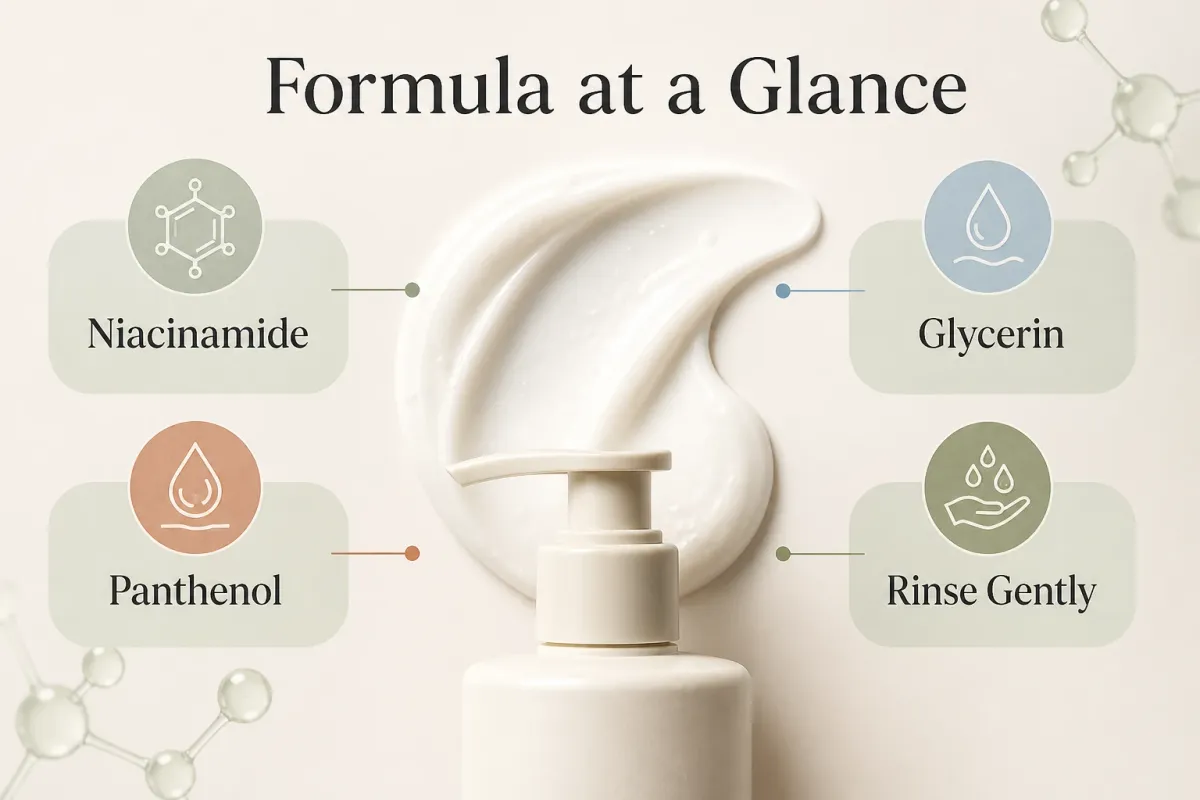
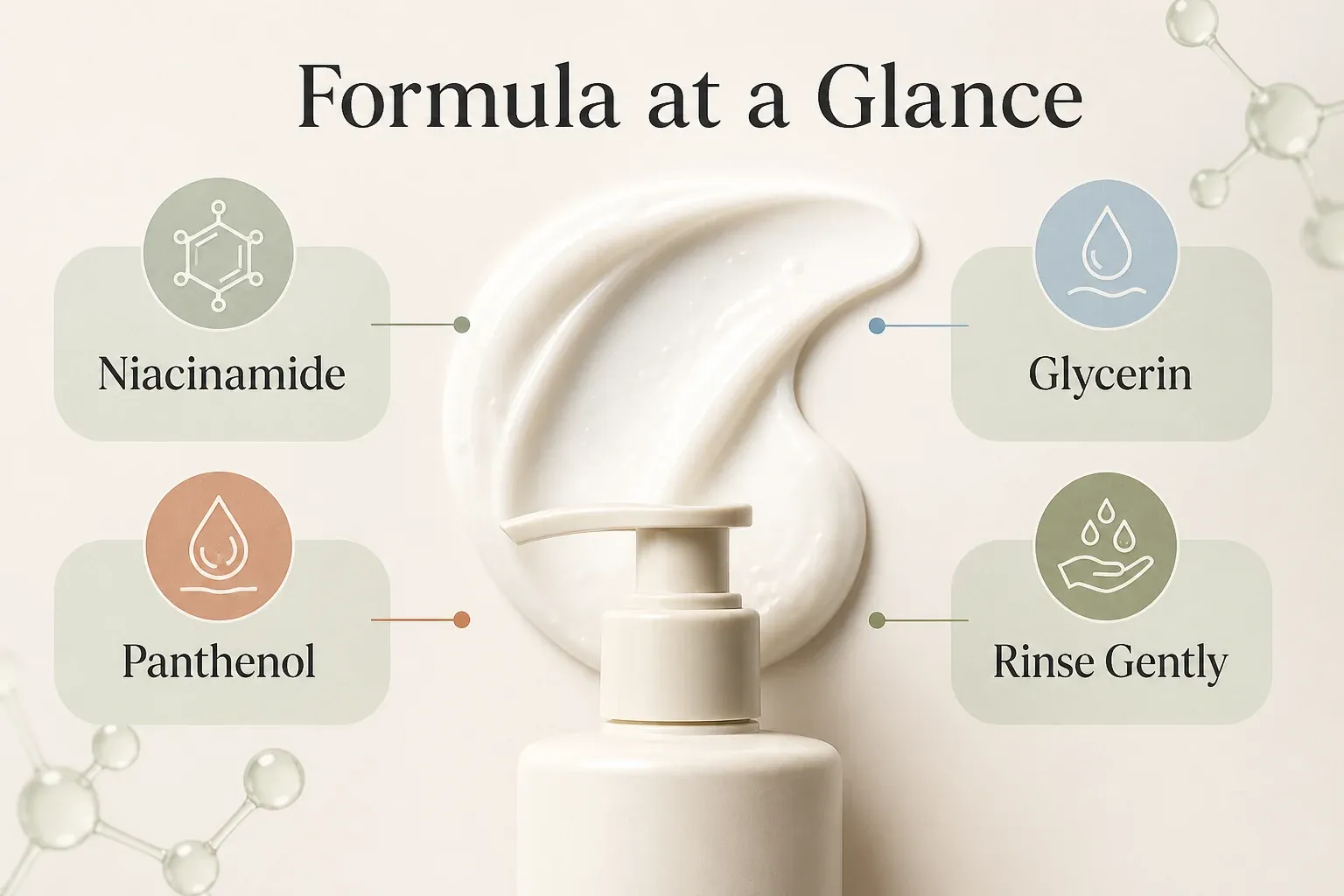
Quick Answer: Cetaphil Gentle Skin Cleanser is a creamy, low-lather cleanser positioned by the U.S. manufacturer for normal-to-dry sensitive skin. The current ingredient list is short and includes glycerin, cetearyl alcohol, panthenol, niacinamide, and sodium cocoyl isethionate. It can be rinsed with water or removed according to the brand's wipe-off directions. Its strength is simple, comfortable cleansing; its limitation is removal power. It is not an acne treatment, it may feel too conditioned for some oily users, and “gentle” does not guarantee that every sensitive person will tolerate it.Quick Summary
- Best fit: normal-to-dry skin that likes a creamy, low-foam cleanser and does not need heavy makeup removal.
- Current U.S. formula: ten listed ingredients, including glycerin, panthenol, niacinamide, and a mild cleansing surfactant.
- Main tradeoff: the soft conditioned finish can feel insufficient or filmy to some oily-skin users.
- Acne boundary: the formula can serve as a gentle base cleanser, but it does not contain an acne-treatment active.
Go straight to your question
Check the current formula, application options, skin-type fit, or the purchase decision.
See Ingredients How to Use It Check Skin Fit Should You Buy It?Open the Full-Size Formula GuideEditorial Note: SkinOptimizer has not personally tested Cetaphil Gentle Skin Cleanser. This guide separates current U.S. manufacturer information from editorial interpretation, ingredient-function context, and routine-fit advice. Formula, packaging, directions, and availability can change, so compare this guide with the label in your hand.
Cetaphil Gentle Skin Cleanser has a simple promise: remove everyday dirt and impurities without the strong-foam experience many dry or sensitive users dislike. That makes it easy to recommend too broadly. A better assessment asks four questions. What is in the current formula? What can a rinse-off product realistically do? Which daily layers can it remove? And which skin situations may need a different cleanser?
The answer is nuanced. The cleanser is a reasonable low-lather option for people who value comfort over a crisp, squeaky rinse. Its ten-ingredient U.S. list is easier to audit than a botanical-heavy formula. Yet a short ingredient list is not an allergy guarantee, and a creamy texture is not automatically adequate for water-resistant sunscreen, long-wear makeup, or very oily skin.
What Is Cetaphil Gentle Skin Cleanser?
The current Cetaphil U.S. product page describes a creamy, non-foaming cleanser for normal-to-dry skin. The brand lists it as fragrance-free, oil-free, and non-comedogenic and provides directions for use with or without water. Those are manufacturer statements, not a promise that every reader will have the same experience.
In practical terms, the product sits between a traditional foaming face wash and a richer cleansing cream. It uses a water-based cream structure, a surfactant to help lift oily debris, humectant and conditioning ingredients, thickeners, a preservative, and a pH-adjusting ingredient. It does not contain salicylic acid or benzoyl peroxide, so it should not be framed as an acne-treatment cleanser.
The Skin Insider
“Gentle” is a positioning word, not an individual tolerance test. The more defensible conclusion is narrower: the formula avoids fragrance, has low lather, and is designed for normal-to-dry sensitive skin. Patch history and your own post-rinse response still matter.
Cetaphil Gentle Skin Cleanser Ingredients Explained
As checked on August 16, 2026, the U.S. manufacturer lists: Water, Glycerin, Cetearyl Alcohol, Panthenol, Niacinamide, Pantolactone, Xanthan Gum, Sodium Cocoyl Isethionate, Sodium Benzoate, and Citric Acid. Regional versions can differ. Always verify the package sold in your market.
| Ingredient | Typical formula role | What not to assume |
|---|---|---|
| Water | Solvent and main formula base | Water content alone does not make a cleanser hydrating |
| Glycerin | Humectant that supports a less stripped feel | A rinse-off cleanser does not replace leave-on moisturizer |
| Cetearyl alcohol | Fatty alcohol used for texture, stability, and conditioning | It is not the same as drying ethanol or denatured alcohol |
| Panthenol | Humectant and conditioning ingredient | Brief contact limits what can be claimed from a cleanser |
| Niacinamide | Skin-conditioning vitamin B3 derivative | Do not expect the same effect as a leave-on niacinamide serum |
| Pantolactone | Conditioning and humectant-support role | Its presence does not guarantee universal sensitivity tolerance |
| Xanthan gum | Thickener and texture stabilizer | Texture does not determine removal power by itself |
| Sodium cocoyl isethionate | Surfactant that helps lift oil and debris | “Mild surfactant” still depends on concentration and total formula |
| Sodium benzoate | Preservative | Preservative-free is not automatically safer |
| Citric acid | Usually used to adjust pH | Its presence does not make this an exfoliating acid cleanser |
A review of cleansing formulations and barrier integrity explains why the complete surfactant system influences how a cleanser interacts with the outer skin layer. Another overview of mild and moisturizing cleanser technology describes advances in surfactants, pH, and barrier-aware formulation. Neither paper proves this specific commercial product is ideal for every user. They provide the formula context needed to interpret a low-lather cleanser responsibly.
Glycerin: useful, but still rinse-off
Glycerin is the second listed ingredient and is commonly used to attract water and improve skin feel. In a cleanser, its practical value is helping the wash feel less stripping. It does not turn the product into a moisturizer. If your skin is dry, follow cleansing with a leave-on product as outlined in our daily routine for dry skin.
Niacinamide and panthenol: supporting roles
Both ingredients are better known from leave-on skincare, where contact time is much longer. In this cleanser they contribute to formula positioning and post-rinse comfort, but it would be misleading to promise serum-like brightening, pore changes, or barrier repair from a brief wash. If niacinamide itself has caused flushing or stinging for you, the rinse-off format may still be tolerated differently, but caution is reasonable.
Sodium cocoyl isethionate: the cleansing engine
This surfactant helps water remove oily debris. It is often used in formulas positioned as mild, yet ingredient reputation cannot replace the real-world comfort test. Concentration, other formula components, water temperature, massage time, and washing frequency all influence the result.
The Optimizer's Edge
Evaluate rinse-off ingredients by their job. Glycerin and panthenol can support comfort; sodium cocoyl isethionate does the cleansing; xanthan gum creates texture. Do not turn the presence of niacinamide into a treatment promise the format cannot support.
How to Use Cetaphil Gentle Skin Cleanser
The manufacturer provides two methods. With water, apply the cleanser, massage gently, and rinse. Without water, apply a liberal amount and remove the excess with a soft cloth, leaving a thin film. The brand currently notes that water use is the preferred everyday method for more thorough cleansing. The better option for you depends on removal needs, sensory preference, and tolerance to cloth friction.
| Method | Best use | Watch-out |
|---|---|---|
| Rinse with water | Normal daily face cleansing | Use lukewarm water and rinse around hairline and nose |
| Wipe off without water | Travel, limited water, or a preferred conditioned finish | Cloth friction and residual film may bother very reactive or oily skin |
| After oil or balm | Second step when a first cleanser leaves residue | Skip the second cleanse if skin is already clean and comfortable |
- Start once nightly. Use morning cleansing only if oil, sweat, or overnight products create a need.
- Use lukewarm water. Hot water can make dry or reactive skin feel worse.
- Massage with fingertips. Twenty to thirty seconds is enough for routine use; do not scrub.
- Rinse and pat dry. Follow with moisturizer while skin is slightly damp if that suits your routine.
- Check after ten minutes. Notice tightness, stinging, residue, and whether your sunscreen or makeup was removed.
The American Academy of Dermatology's face-washing guidance similarly recommends lukewarm water, fingertips, a gentle non-abrasive cleanser, and no scrubbing. Our cleanser versus face wash guide explains why technique and formula matter more than the name on the bottle.
Who Is Cetaphil Gentle Skin Cleanser Best For?
| Skin situation | Likely fit | Reason to choose differently |
|---|---|---|
| Normal-to-dry skin | Strongest fit | May need an oil or balm first for resistant sunscreen |
| Sensitive or retinoid-dry skin | Reasonable simple base | Any ingredient can still trigger an individual reaction |
| Oily skin | Possible if easily stripped | Low-lather conditioned finish may feel insufficient |
| Acne-prone skin | Useful non-active cleanser | Does not treat clogged pores or inflamed acne by itself |
| Heavy makeup wearer | Possible second cleanse | May not remove long-wear layers efficiently alone |
Dry and sensitive skin
This is the clearest match. The creamy, fragrance-free, low-lather formula aligns with readers who dislike a squeaky-clean finish. Compare it with other textures in our guide to the best cleansers for dry and sensitive skin. If sensitivity includes persistent rash, swelling, or burning, a cosmetic cleanser guide cannot identify the cause.
Oily skin
Oily skin can still be sensitive or over-cleansed, so Cetaphil Gentle Skin Cleanser is not automatically wrong. The question is whether it removes enough oil, sweat, and sunscreen while leaving a finish you accept. Readers wanting more foam can compare the best face cleansers for oily skin. Avoid assuming the strongest wash will reduce oil production.
Acne-prone skin
The current formula does not contain salicylic acid or benzoyl peroxide. That makes it a gentle base, not an acne treatment. It may be useful when prescription or leave-on acne products are already doing the active work and the routine needs a less aggressive wash. For ingredient-specific choices, use the acne-prone cleanser decision guide.
Teenage skin
Teen routines often become irritated because several acne steps are added at once. A simple cleanser can reduce that complexity. Our teenage cleanser guide compares Cetaphil with foaming and active alternatives. A teen with painful, scarring, or persistent acne needs professional care rather than increasingly harsh cleansing.
Can It Remove Makeup and Sunscreen?
The manufacturer says the cleanser removes dirt, makeup, and impurities, but removal demands vary. Light, non-water-resistant layers may come off adequately. Waterproof mascara, long-wear foundation, mineral sunscreen, and water-resistant outdoor SPF can require an oil or balm first. The most honest test is visual and tactile: if pigment remains on a white towel or the skin still feels coated, the routine needs a different removal step.
Do not compensate by scrubbing longer. Use a targeted first cleanse from the cleansing balm guide or cleansing oil guide, then use Cetaphil only if residue remains. Double cleansing every night is unnecessary when one step already works.
Cetaphil is most likely to make sense when:
- You want a low-lather everyday cleanser rather than an active acne wash.
- Your skin feels tight after stronger foaming products.
- You wear light daily layers or are willing to use a separate first cleanse.
- You prefer a creamy, conditioned finish over a crisp rinse.
Should You Buy Cetaphil Gentle Skin Cleanser?
Buy it when you want a widely available, fragrance-free, low-lather cleanser for normal-to-dry or easily stripped skin and you understand that it is a basic cleansing step. Skip it when you want strong foam, an acne-active formula, one-step removal of resistant makeup, or a completely residue-free sensation.
Cetaphil Gentle Skin Cleanser
Who it fits: normal-to-dry or sensitive skin wanting a simple creamy cleanser.
Why it fits: The current U.S. formula is fragrance-free, low-lather, and built around glycerin, panthenol, niacinamide, and a cleansing surfactant.
Watch-out: It is not an acne treatment and may not remove resistant makeup or sunscreen alone.
Check current Amazon optionsAs an Amazon Associate, we earn from qualifying purchases. Product availability, formulas, packaging, and prices can change.
If you are deciding between whole brand routines rather than one bottle, use our CeraVe versus Cetaphil comparison. It separates cleanser, moisturizer, and skin-type decisions so a single brand reputation does not determine every step.
Potential Downsides and Reaction Signs
Conditioned finish
Some users interpret the low-lather cream residue as softness; others experience it as film.Limited heavy removal
Long-wear makeup and resistant sunscreen can require a separate first cleanse.No acne active
It can support a routine but does not substitute for evidence-based acne treatment.Individual reaction
Fragrance-free and hypoallergenic claims do not make allergic or irritant responses impossible.Stop using it and seek appropriate help if:
- You develop persistent burning, swelling, hives, or a spreading rash.
- The eye area becomes swollen or breathing symptoms occur.
- Dryness and redness continue despite simplifying the rest of the routine.
- You suspect eczema, rosacea, allergy, or a medication-related reaction.
A mild cleanser cannot diagnose a chronic skin problem. If your barrier feels recently overworked, the skin-barrier damage guide helps identify products to pause. The nighttime routine guide shows how to keep cleansing, treatment, and moisturizer from competing.
Your Clear Skin Checklist
- Verify the current regional ingredient list before purchase.
- Choose it for low-lather comfort, not for acne treatment or strong makeup removal.
- Start once nightly with lukewarm water and fingertips.
- Use a first cleanse only when resistant layers remain.
- Stop for persistent irritation and seek care for severe or allergic-type symptoms.
Final Takeaway
Cetaphil Gentle Skin Cleanser is a sensible basic cleanser for the right routine. Its current U.S. formula is short, fragrance-free, low-lather, and built for normal-to-dry sensitive skin. The editorial case for it is comfort and simplicity, not dramatic treatment results. Choose it if you like a creamy conditioned finish and wear removable daily layers. Choose a different format if you need stronger oil control, acne actives, or one-step removal of long-wear makeup. Above all, let the current label and your skin's response outrank the product's reputation.
Frequently Asked Questions About Cetaphil Gentle Skin Cleanser
How do you use Cetaphil Gentle Skin Cleanser with water?
Apply it to damp skin, massage gently with fingertips, rinse with lukewarm water, and pat dry. Start once nightly and add morning use only when your routine needs it.
Can Cetaphil Gentle Skin Cleanser be used without water?
The current manufacturer directions allow a wipe-off method: apply the cleanser and remove excess with a soft cloth, leaving a thin film. Avoid harsh rubbing, and rinse instead if residue or cloth friction bothers your skin.
Is Cetaphil Gentle Skin Cleanser good for acne?
It can be a gentle non-active base cleanser, especially when acne treatments are drying. It does not contain salicylic acid or benzoyl peroxide and should not be presented as an acne treatment.
Is Cetaphil Gentle Skin Cleanser good for oily skin?
It may suit oily skin that is easily stripped or irritated, but the low-lather conditioned finish may feel insufficient to some users. A mild foaming cleanser can be a better match when oil and sweat are the main removal job.
Can Cetaphil Gentle Skin Cleanser be used as a moisturizer?
No. Although glycerin and other conditioning ingredients can support a comfortable rinse, the product is designed to cleanse and is removed from the skin. Use a suitable leave-on moisturizer when dryness requires it.
This article is for informational purposes only and does not replace professional dermatological advice.