Does Drinking Water Clear Skin? Evidence and Safe Intake
Adequate hydration supports health, but extra water is not an acne treatment. See what skin hydration studies show and how to drink safely.

In this guide
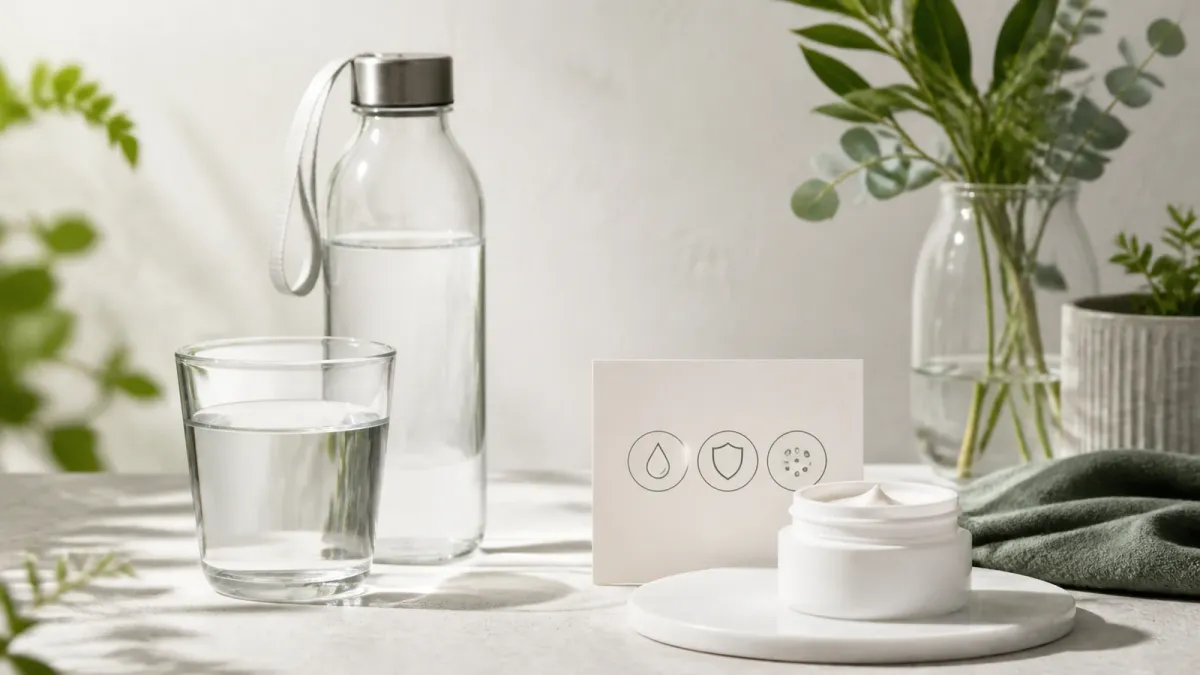
Drinking enough water supports normal health and can correct dehydration. Limited studies suggest that people with low baseline intake may gain a small improvement in outer-skin hydration after drinking more, but evidence is weak and does not show that extra water clears acne, fades spots or reverses wrinkles. Fluid needs vary, and forcing very large amounts can dangerously lower blood sodium.
Quick Summary
- Adequate hydration and clear skin are different outcomes.
- Small studies show possible modest skin-hydration gains mainly in low-intake people.
- Water does not unclog pores or replace moisturizer and acne treatment.
- Use thirst, meals, activity, climate and medical needs instead of a beauty quota.
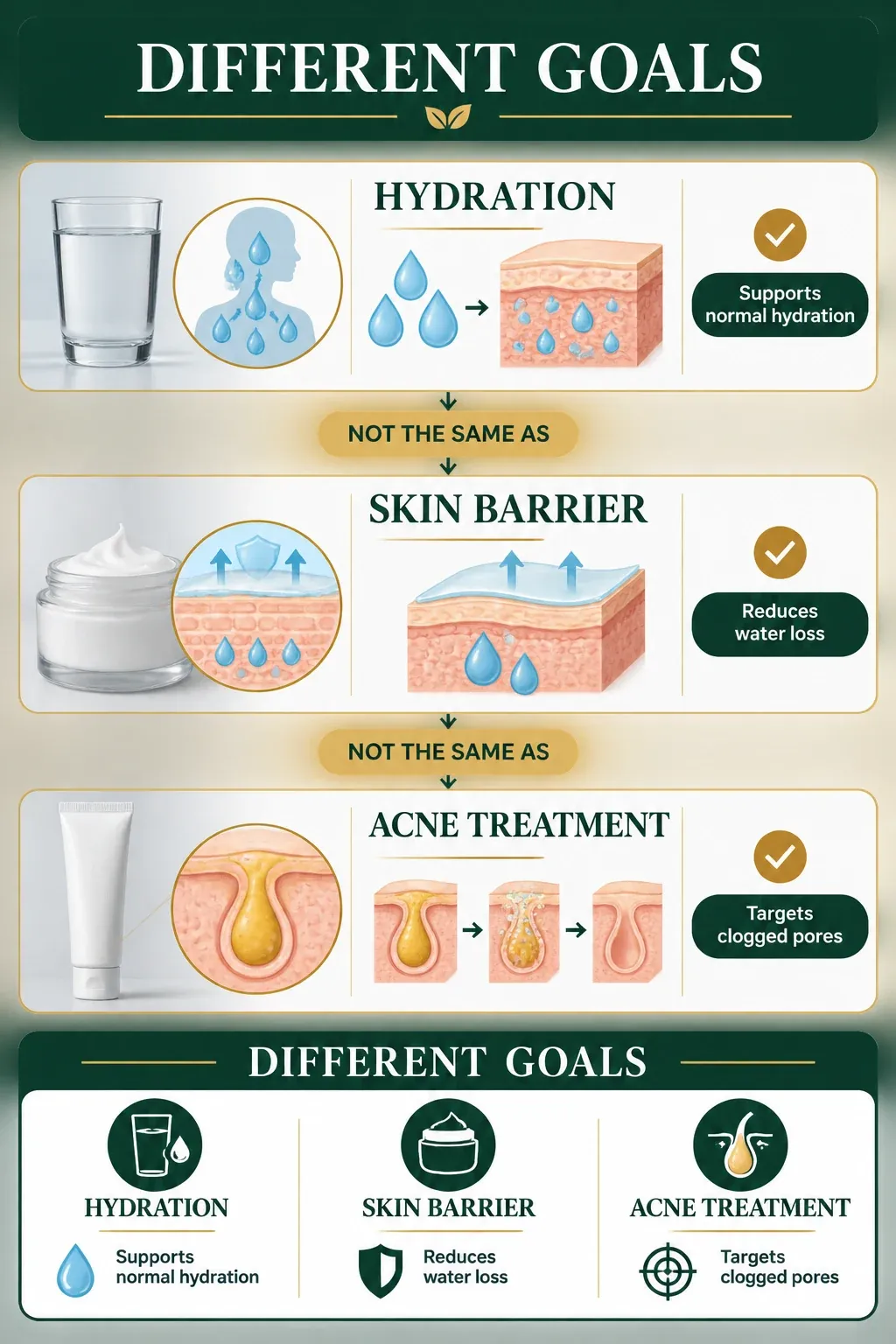
The advice to drink more water sounds harmless, inexpensive and universal, which is why it appears in almost every clear-skin list. The evidence is narrower: a small hydration benefit may occur when intake was low, but acne and barrier dryness involve mechanisms that a bottle cannot fix. This guide distinguishes dehydration from dry skin, explains variable fluid needs and sets safety limits around aggressive water challenges.
Will Drinking More Water Clear Your Skin?
Drinking enough fluid supports normal health and prevents dehydration, but extra water is not a proven acne treatment. It does not wash sebum out of pores, remove comedones or replace a moisturizer, retinoid, benzoyl peroxide or sunscreen.
People who start with low fluid intake may see a small improvement in skin hydration or roughness after drinking more. That outcome is different from fewer pimples, lighter dark spots or reduced wrinkles. Clear skin and hydrated skin are not interchangeable endpoints.
The useful goal is adequate hydration, not forcing a beauty quota. Needs vary with food, climate, activity, body size, pregnancy, illness and medication. More is not automatically better.
| Claim | Evidence-based answer | Better action |
|---|---|---|
| Water clears acne | Not established | Use evidence-based acne treatment |
| Water hydrates dry skin | May help slightly when intake was low | Add a barrier-supporting moisturizer |
| Water flushes skin toxins | No meaningful dermatology mechanism | Identify the actual skin condition |
| Eight glasses fit everyone | Needs vary widely | Use thirst, meals, environment and medical advice |
| More water removes wrinkles | No convincing evidence | Use sunscreen and proven topical care |
| Clear urine is always ideal | Can reflect excessive intake | Aim for normal hydration, not overhydration |
What the Hydration Studies Show
A systematic review of dietary water and skin hydration found only six eligible studies. The evidence was weak in quantity and quality, with slight hydration improvements mainly among people who had lower water intake before the intervention.
Effects on transepidermal water loss, sebum and skin surface pH were unclear. The review did not establish that extra water treats acne, eczema or visible aging. It also could not define a universal dose for better skin.
A small study adding about two liters daily for one month reported higher superficial and deeper hydration, especially in lower-intake participants. The study involved 34 healthy young women and did not show a significant change in transepidermal water loss.
Why two-liter challenges do not become universal advice
Small uncontrolled or non-blinded studies are vulnerable to behavior changes and measurement variation. Participants who intentionally drink more may also change food, caffeine, sleep or skincare. Results in healthy young women may not apply to older adults or people with medical conditions.
Adding two liters on top of an already adequate intake can be unnecessary and, in extreme cases, unsafe. The study intervention was designed to test physiology, not to create a daily prescription for every reader.
The National Academies water guidance emphasizes wide variation in needs and notes that thirst plus beverages at meals usually maintains hydration in healthy people under ordinary conditions. Food contributes water too.
Why Water Does Not Unclog Acne
Acne begins in the pilosebaceous unit, where keratin, sebum and inflammation create comedones and lesions. Drinking water travels through the digestive system and circulation; it does not rinse a clogged pore from the inside. Kidneys regulate fluid and waste, while skin is not a detox filter that needs flushing.
The 2024 AAD acne guideline recommends treatments with demonstrated effects on acne mechanisms, including benzoyl peroxide and topical retinoids. Water is not listed as a therapeutic intervention.
Build an acne routine with the acne cleanser guide and breakout prevention guide. Adequate hydration can support general wellbeing, but it should remain background care.
| Skin concern | What adequate hydration may do | What usually matters more |
|---|---|---|
| Dehydration | Correct systemic fluid deficit | Replacing fluid and electrolytes appropriately |
| Dry, rough surface | Offer a small benefit if intake was low | Gentle cleanser, humectants, emollients and occlusives |
| Oily skin | No reliable sebum reduction | Avoid stripping and choose suitable actives |
| Acne | No proven lesion-clearing effect | Retinoids, benzoyl peroxide, salicylic or azelaic acid |
| Dark spots | No direct pigment-fading effect | Inflammation control and photoprotection |
| Fine lines | May reduce dehydration-related crepiness | Daily sunscreen and evidence-based treatment |
Water Intake Versus a Dry Skin Barrier
Dry skin commonly reflects a barrier that loses water too easily, not simply a body that needs another bottle. Harsh cleansers, low humidity, hot showers, retinoids, eczema and age can reduce lipids or increase transepidermal water loss. Drinking more cannot replace those missing surface lipids.
A moisturizer combines humectants that attract water, emollients that smooth gaps and occlusives that reduce evaporation. Read the day versus night moisturizer guide and the facial oil guide to match texture to the barrier problem.
If every product suddenly stings, reduce actives and follow the skin-barrier reset. Persistent cracking, rash or widespread itch may require evaluation for eczema, contact dermatitis or another condition.
How Much Water Do You Actually Need?
There is no single number that suits every person. Total water includes plain water, other beverages and water in food. Requirements rise with heat, sustained exercise, fever, vomiting, diarrhea, pregnancy or breastfeeding, and they can change with kidney, heart or endocrine conditions.
Healthy adults can usually use thirst and regular meals as practical guides. Pale yellow urine can be one general sign, but supplements, medicines and foods change color. Constantly colorless urine is not a beauty achievement.
Athletes or people working in heat may need electrolytes as well as water. Replacing only water after prolonged heavy sweating can dilute sodium. Follow sport, occupational or medical guidance for unusual exposure.
Can You Drink Too Much Water?
Yes. Very large amounts consumed quickly can overwhelm the kidneys' ability to excrete water and lower blood sodium. Symptoms may include nausea, headache, confusion, weakness, seizures or loss of consciousness and require urgent medical care.
People with kidney, heart or liver disease may have individualized fluid limits. Some medicines also change sodium or fluid balance. Do not adopt an aggressive water challenge for skin without discussing these factors with a clinician.
Spreading intake across the day and responding to thirst is safer than catching up with liters at night. Stop treating discomfort, bloating or repeated nighttime urination as proof that a routine is working.
Water, Caffeine and Sugary Drinks
Coffee and tea contribute fluid, although caffeine can have a mild diuretic effect in people who are not accustomed to it. Moderate intake generally does not cancel all hydration. Alcohol can increase fluid loss and disturb sleep, which may affect how skin looks the next day.
Replacing frequent sugary drinks with water may improve the overall dietary pattern and reduce glycemic load. That is different from water directly treating acne. The benefit comes partly from what the water replaces.
For diet context, use the diet and acne evidence guide. Track dietary patterns over weeks rather than labeling one beverage as a detox or toxin.
A Practical Hydration Routine
- Start with thirst: drink regularly with meals and when thirsty.
- Adjust for conditions: increase thoughtfully for heat, activity or illness.
- Include food: fruit, vegetables, soups and other foods contribute water.
- Spread intake: avoid forcing a large volume at once.
- Watch symptoms: dizziness, confusion or persistent excessive thirst need assessment.
- Keep skincare separate: moisturize and treat acne based on skin mechanisms.
If plain water is difficult, flavor it with a small amount of fruit or choose unsweetened tea, provided this fits medical and dental needs. A reusable bottle can improve convenience, but it does not need motivational deadlines.
How to Separate Dehydrated-Looking Skin From Dry Skin
Dehydration is a whole-body fluid deficit and may come with thirst, darker urine, dizziness or low urine output. Dry skin is a surface condition characterized by roughness, scaling, tightness or cracking. A person can have oily acne-prone skin and still have a dehydrated or irritated outer layer.
Temporary fine lines after cleansing often reflect surface water loss and can improve with moisturizer. Persistent wrinkles are shaped by age, ultraviolet exposure, movement and structure. Drinking extra water cannot rebuild collagen that has been damaged over years.
Use the daily dry-skin routine to address cleanser temperature, moisturizer timing and barrier-supporting ingredients. If signs improve rapidly after topical care, the main problem was likely at the surface rather than a need to force more fluid.
A simple two-week observation
For two weeks, drink normally according to thirst and daily conditions while keeping a rough record of beverages, exercise, heat and symptoms. At the same time, use a gentle cleanser and the same moisturizer twice daily. Avoid starting acids or retinoids during the observation.
Rate tightness, flaking and stinging rather than an undefined glow. If dryness improves with consistent topical care while fluid intake remains normal, keep the effective barrier steps. If systemic thirst or dizziness persists, address that medically rather than adding skincare.
Hydration Claims in Beauty Marketing
Terms such as cellular hydration, alkaline water, structured water and detox water often lack a validated skin endpoint. Bottled water can be convenient, but pH or added trace ingredients do not automatically deliver better skin than safe ordinary drinking water.
Collagen drinks, electrolyte powders and vitamin waters are separate products with separate evidence and risks. Sugar, sodium, stimulants or high vitamin doses can be hidden behind hydration branding. Read the nutrition label and decide whether the product solves a real need.
The most defensible beauty benefit of replacing a sugary drink with water may be the reduced sugar exposure and simpler habit, not a special property of the water. State the mechanism honestly so the routine remains affordable and repeatable.
Be skeptical of before-and-after images taken immediately after a person increases water intake. Lighting, facial expression, moisturizer and sleep can change perceived radiance. Useful evidence measures hydration with instruments and follows participants long enough to separate normal variation from a true effect.
Even then, an instrument change must be interpreted clinically. A small increase in stratum-corneum water does not guarantee that another person will see or feel a meaningful difference.
Visible benefit, comfort and safety still decide whether the habit is useful.
When Thirst or Dryness Needs Medical Attention
Persistent extreme thirst and frequent urination can signal diabetes, medication effects or another medical issue. Dry mouth, dizziness, very dark urine, low urine output or inability to keep fluids down can indicate dehydration. Seek timely medical advice rather than treating these as cosmetic concerns.
Skin that remains scaly, cracked, inflamed or intensely itchy despite gentle care may be eczema, psoriasis, contact dermatitis or infection. A dermatologist can distinguish these conditions from simple dryness. Drinking more water should not delay diagnosis.
Common Water and Skin Mistakes
- Equating hydration with clear skin: moisture and acne lesion counts are different outcomes.
- Forcing a fixed gallon: fluid needs vary and excess can be dangerous.
- Ignoring food and climate: total intake and losses change daily.
- Replacing moisturizer with water: barrier lipids still need topical support.
- Calling urination detox: kidneys already regulate fluid and waste.
- Delaying acne care: water does not prevent scars from inflammatory lesions.
The Bottom Line
Adequate water intake is important, and people who previously drank little may notice a small improvement in outer-skin hydration. Evidence is weak and does not show that extra water clears acne, fades spots or reverses wrinkles.
Drink according to thirst, meals, environment and medical needs. Use topical barrier care for dryness, evidence-based treatment for acne and professional evaluation for persistent symptoms.
Frequently Asked Questions About Does Drinking Water Clear Skin? Evidence and Safe Intake
How much water should I drink for clear skin?
There is no proven clear-skin dose. Total needs vary with food, body size, activity, climate, pregnancy, illness and medication; healthy adults can often use thirst and meals as practical guides.
Can drinking water clear acne?
No clinical evidence shows that extra water reliably reduces acne lesions. Acne treatment targets clogged follicles, inflammation and microbes with proven topical or systemic therapies.
Can more water fix dry skin?
It may slightly improve outer-skin hydration when prior intake was low, but dry skin often needs gentle cleansing and a moisturizer that reduces water loss and restores surface lipids.
Does water flush toxins through the skin?
No. Kidneys and the liver manage fluid and waste; skin is not cleansed of acne or toxins by forcing extra water. Increased urination is not evidence of a skin detox.
Can drinking too much water be dangerous?
Yes. Very large amounts consumed quickly can dilute blood sodium and cause nausea, headache, confusion, seizures or worse. Medical conditions and medicines can also change safe fluid intake.
This article is for informational purposes only and does not replace professional dermatological advice.