How Diet Affects Teenage Skin: Acne Evidence Without Food Fear
Diet can modify acne for some teens but is not the sole cause. Understand glycemic load, dairy and whey evidence without universal bans or food shame.
In this guide
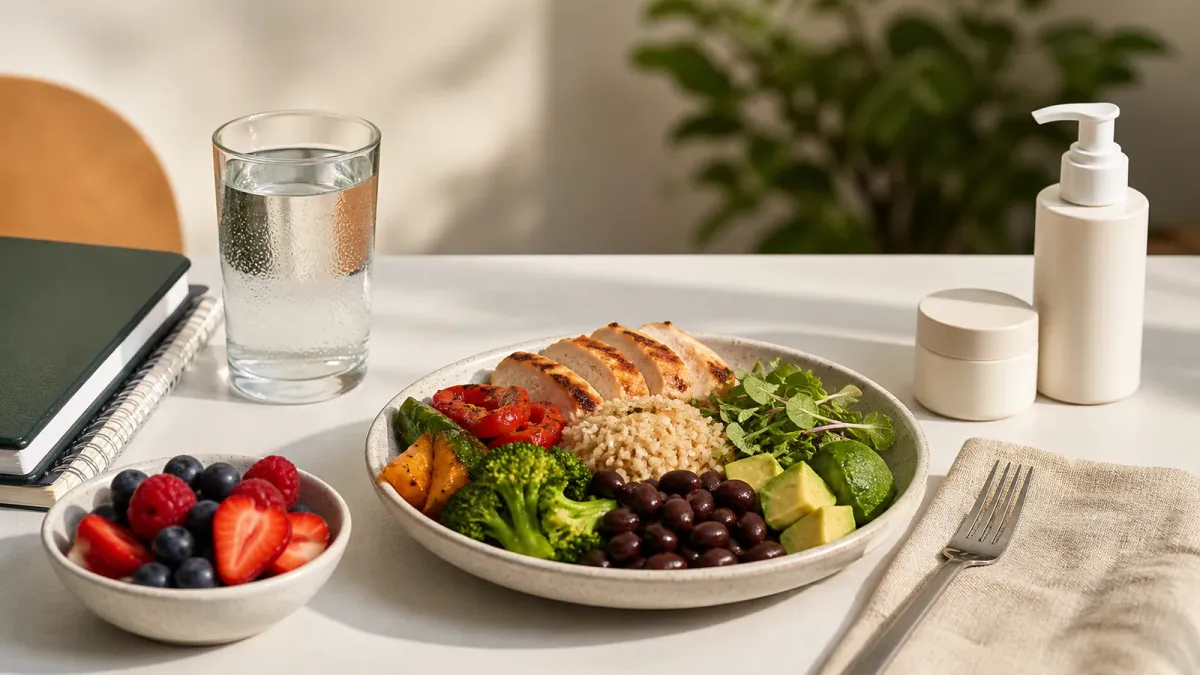
Diet may modify teenage acne, but it is not the only cause and should not replace treatment. Evidence is most consistent for a modest link with high glycemic load, while dairy findings are mixed and mostly observational. Keep skincare stable, change one eating pattern for six to eight weeks, record supplements and symptoms, and avoid major elimination diets without a clinician or dietitian.
Quick Summary
- High glycemic load has a more consistent acne signal than single-food myths.
- Dairy associations are mixed and do not justify a universal ban.
- Record whey supplements, menstrual timing, stress and treatment with food.
- Protect growth, energy and mental health during any diet experiment.
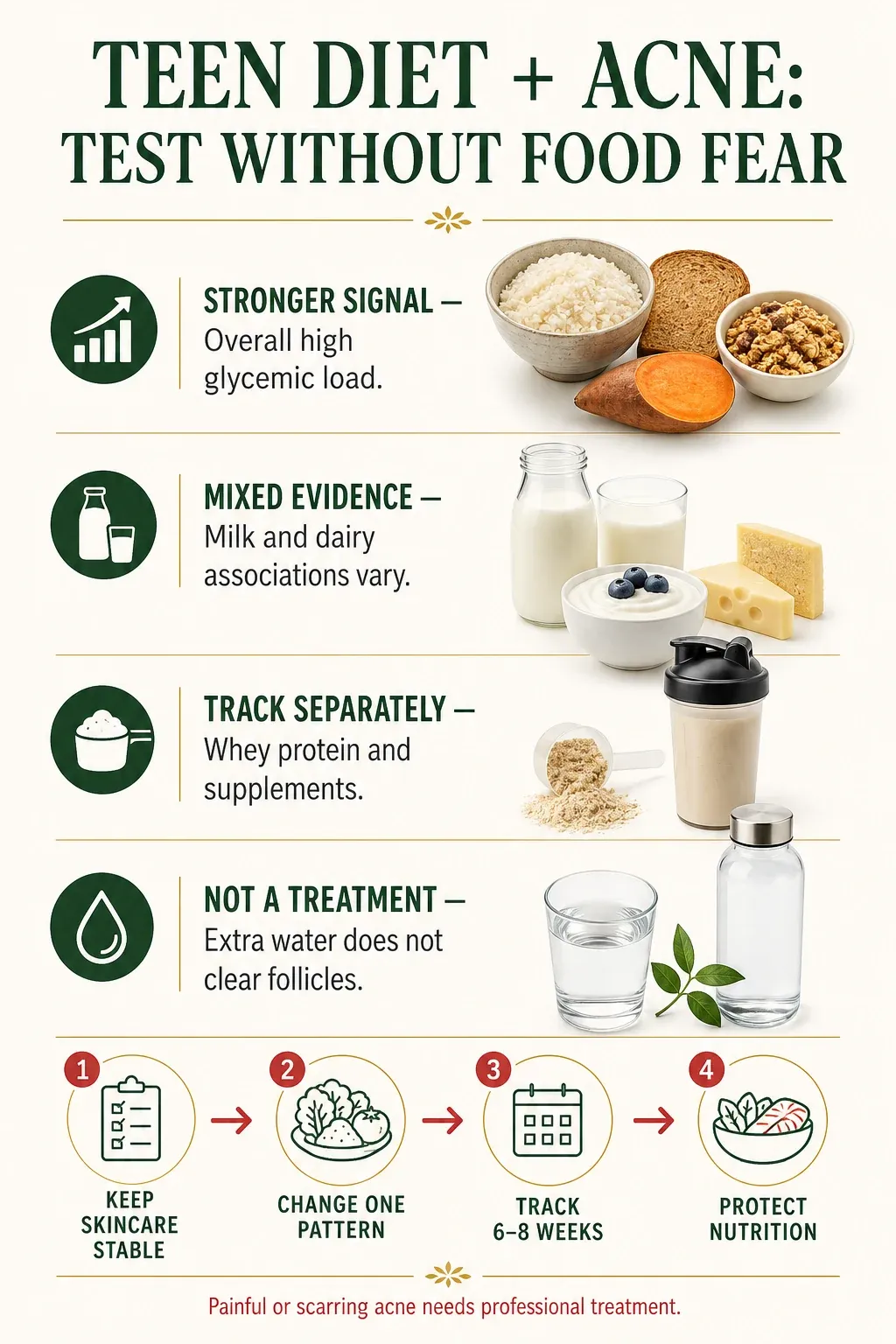
Teen acne makes food an easy target, and online advice often turns uncertain associations into rigid bans. This guide separates stronger evidence from weak claims, explains glycemic load and dairy without moral language and provides a six-week personal test that protects nutrition, treatment and mental health.
What Research Says About Diet and Teen Acne
Diet can influence acne for some teenagers, but it is not the only cause and does not replace treatment. Evidence is strongest for a modest association between high glycemic load and acne. Dairy findings are mixed, mostly observational and affected by population, product and eating pattern.
A 2022 systematic review of diet and acne found that high glycemic index and load had a modest pro-acne association supported by randomized trials. Dairy associations varied, and the review found no dairy intervention trials.
A separate dairy meta-analysis involving young people reported associations but warned about heterogeneity and bias. Association does not prove that milk causes acne in every teen.
| Diet topic | Evidence signal | Responsible takeaway |
|---|---|---|
| High glycemic load | Most consistent diet signal | Test overall meal pattern, not one candy |
| Milk and dairy | Mixed observational association | Do not impose a universal dairy ban |
| Chocolate | Depends on product and study | Separate cocoa from sugar and total pattern |
| Whey protein | Case reports and emerging concern | Track supplements if acne changed |
| Water | Important for health | Extra water is not an acne treatment |
Understand Glycemic Load Without Fear of Carbohydrates
Glycemic index describes how quickly a carbohydrate food raises blood glucose under test conditions. Glycemic load also considers the amount eaten. Mixed meals, fiber, protein and fat change the real response.
A lower-glycemic pattern emphasizes minimally processed grains, beans, vegetables, fruit and balanced meals. It does not require eliminating all bread, rice, potatoes or dessert. A teen still needs adequate energy for growth, learning and sport.
Focus on repeated patterns such as sugary drinks, refined snacks and meals with little fiber or protein. The sugar and skin guide gives context without claiming that one sweet creates one pimple.
Milk, Dairy and Whey Protein
Some observational studies associate milk, especially low-fat or skim milk, with acne. Results are inconsistent across countries and study designs, and confounding is difficult to remove. Cheese and yogurt do not show one uniform pattern.
Do not remove all dairy automatically. Dairy can provide protein, calcium, iodine and vitamin D depending on the product and country. A major elimination needs nutritionally equivalent replacements and may deserve dietitian input.
Whey protein supplements deserve separate attention because they can deliver a concentrated milk-derived protein exposure. If acne changed after starting a supplement, pause the supplement with professional guidance and track the skin. Do not stop medically indicated nutrition without advice.
How to Run a Safe Personal Food Trial
First stabilize skincare for two weeks. Keep cleanser, moisturizer, sunscreen and acne treatment unchanged. Record a weekly photo and the number of new inflamed lesions.
Choose one reasonable change, such as replacing sugary drinks with water at meals or swapping some refined snacks for balanced options. Continue for six to eight weeks, because acne lesions develop over time. Do not change dairy, gluten, sugar and supplements simultaneously.
Review energy, concentration, sport performance and mood as well as skin. Stop a self-directed elimination if it creates anxiety, bingeing, fatigue or weight loss. Teens with diabetes, eating-disorder history, chronic illness or pregnancy need clinician guidance.
A Six-Week Diet-and-Skin Log
| Week | Food focus | Skin and health check |
|---|---|---|
| 1 | Record usual pattern | Baseline lesions, treatment and menstrual timing |
| 2 | Choose one substitution | Energy, hunger and feasibility |
| 3 | Repeat without new restrictions | New inflamed lesions and irritation |
| 4 | Review supplements and drinks | Hidden variables and adherence |
| 5 | Maintain balanced meals | Trend, not daily fluctuation |
| 6 | Compare with baseline | Keep, reverse or discuss professionally |
Chocolate, Fast Food and the Problem With Single-Food Claims
Chocolate studies use products with different cocoa, sugar and milk content. A chocolate bar is not the same exposure as cocoa powder. The chocolate and acne evidence guide separates these variables.
Fast food often travels with sugary drinks, refined carbohydrates, sleep changes and stress. Observational studies cannot always identify which factor matters. Replacing the overall pattern is more defensible than calling one meal toxic.
Food language should stay neutral. Acne is not a moral consequence of eating the wrong thing. Shame can make both skin care and nutrition less sustainable.
Hydration and Skin
Water supports normal body function, but drinking beyond thirst does not wash acne toxins out of pores. Skin hydration depends on the barrier, environment and topical care as well as overall health. Use the water and clear skin guide for the evidence.
Choose water as a regular drink, especially during sport and heat, without forcing excessive volumes. Urine that is completely clear all day is not a skin goal. Medical conditions can change fluid needs.
Dryness from benzoyl peroxide or a retinoid needs moisturizer and schedule adjustment. More drinking water does not neutralize an irritating topical routine.
Protein, Fats and Micronutrients
Teens need adequate protein for growth and recovery. Food-first sources can include beans, lentils, eggs, fish, poultry, tofu, yogurt or other culturally appropriate options. A supplement is not automatically healthier than a meal.
Omega-3 fats are being studied for inflammatory pathways, but they are not a stand-alone acne cure. Include fish, walnuts, flax or other appropriate sources as part of a balanced pattern. Supplements can interact with medication and vary in quality.
Do not megadose vitamin A, zinc, biotin or vitamin B products for acne. Excess vitamin A can be toxic, and some supplements may worsen breakouts or interfere with tests. Ask a clinician about a suspected deficiency.
Diet Does Not Replace Acne Treatment
The AAD acne guideline strongly recommends treatments such as benzoyl peroxide and topical retinoids. Dietary evidence is not strong enough to replace these therapies for moderate, severe or scarring acne.
Use gentle skin care and one matched active while testing a food pattern. The acne prevention guide explains how to keep treatment variables stable.
Deep painful lesions, scars or persistent pigment change need professional care. A dermatologist and registered dietitian can coordinate treatment when food restrictions, supplements or medical conditions complicate the plan.
How Parents Can Help Without Policing Food
Offer balanced choices and let the teen participate in planning. Avoid inspecting every meal for acne triggers or commenting on weight and skin at the table. Support works better than surveillance.
Pay attention to skipped meals, rigid rules, fear foods, bingeing, rapid weight change or excessive exercise. These are more urgent than a possible small acne benefit. Seek qualified help early.
Fund the basics before supplements: normal meals, prescribed treatment, cleanser, moisturizer and sunscreen. The complete teen skincare guide keeps the routine age-appropriate.
Common Diet-and-Acne Mistakes
- Removing several food groups at once: cause and nutrition become impossible to judge.
- Using detox tea: laxative or stimulant effects do not clear follicles.
- Blaming one weekend meal: acne lesions develop over time.
- Replacing treatment with food rules: scarring acne needs medical control.
- Ignoring whey and supplements: powders are part of the diet record.
- Turning skin into a morality score: acne is a medical condition.
Build a Lower-Glycemic Pattern With Addition First
Add fiber, protein and minimally processed foods before creating a forbidden list. Pair cereal with yogurt, milk or an appropriate alternative and fruit; add beans or protein to rice; choose whole-grain bread when acceptable. Mixed meals are more realistic than isolated glycemic-index charts.
Replace some sugary drinks with water or unsweetened options while preserving adequate energy. Keep dessert in context rather than turning it into a test of discipline. A sustainable pattern can include celebration foods.
The aim is not weight loss unless medically indicated and professionally managed. Teens are still growing, and athletes may have high energy requirements. Inadequate intake can harm concentration, bone health, hormones and recovery.
How to Replace Dairy Nutritionally If a Trial Is Chosen
Map what the removed food contributes. Milk may provide protein, calcium, iodine, riboflavin and vitamin D depending on fortification. Plant drinks differ widely, and some contain little protein.
Choose a fortified replacement and shake it before use because minerals can settle. Include other calcium and protein sources. A registered dietitian can tailor options for allergy, vegan eating, sport and cultural preferences.
Do not treat yogurt, cheese, milk and whey as one identical exposure. Fermentation, protein concentration and meal context differ. Test one clearly defined category rather than declaring all dairy inflammatory.
Supplements That Can Confuse the Picture
Whey protein, high-dose vitamin B12, iodine-containing products and some muscle-building blends have been reported in relation to acne, but evidence and individual response vary. Record brand, dose and start date. Multi-ingredient powders make cause harder to identify.
Biotin can interfere with laboratory tests, and high-dose zinc can cause nausea or copper deficiency. Vitamin A supplements can be toxic and are especially dangerous in pregnancy. “Skin” branding is not a safety evaluation.
Review supplements with a pharmacist, doctor or dietitian. Bring the actual container or a photo of the Supplement Facts panel. Do not rely on a front-label claim such as detox, hormone balance or clean protein.
School, Budget and Household Reality
A useful plan must work with cafeteria options, packed lunches, family meals and food access. Choose one repeatable substitution rather than requiring a separate expensive menu. Frozen and canned foods can be nutritious and practical.
Parents should avoid making one child eat visibly different “acne food” at every meal. Household-wide additions such as vegetables, beans and balanced snacks reduce stigma. Let the teen identify which change feels possible.
Budget first for adequate food and prescribed care, not powders or specialty snacks. The food-first skin guide helps build variety without miracle claims.
Food Allergy, Intolerance and Acne Are Not the Same
Hives, lip swelling, breathing difficulty, vomiting and rapid reactions suggest allergy and can require urgent care. Acne develops through follicles over a different time course. Do not use an acne trial to test a suspected serious allergy.
Lactose intolerance causes digestive symptoms because lactose is not fully digested; it does not prove a milk-protein allergy. Choose replacements based on the actual condition. A clinician can distinguish allergy, intolerance and preference.
Gluten-free eating is medically necessary for celiac disease and selected conditions, not a universal acne treatment. Unsupervised removal can reduce fiber and micronutrient intake. Test only with a defensible reason.
When the Diet Experiment Should Stop
Stop when there is dizziness, fatigue, weight loss, missed periods, declining sport performance or persistent hunger. Rigid food rules, fear of eating socially, bingeing, purging or compulsive exercise require prompt support. Skin goals never justify an eating disorder.
Stop when the change is nutritionally incomplete or impossible to sustain. A no-change result after a fair trial is useful information. Reintroduce foods thoughtfully rather than extending restrictions indefinitely.
A formal NICE evidence review on dietary interventions for acne found limited treatment evidence. That uncertainty is a reason for measured trials, not escalating restriction.
Connect Diet to a Complete Teen Plan
Use the teen acne treatment options guide to match lesions with topical or professional care. Diet cannot substitute for scar prevention when acne is deep or painful.
The clear-skin food myths guide provides a broader evidence filter for elimination claims. Keep any diet experiment secondary to adequate nutrition.
Review progress with the same photos, lighting and treatment schedule. If both diet and medication change together, record that limitation. Honest uncertainty is more useful than assigning credit to the preferred explanation.
The Bottom Line
Diet may modify teen acne, especially through overall glycemic load, but the effect is usually modest and individual. Dairy evidence is mixed and does not justify a universal ban. Safe experimentation changes one pattern while preserving nutrition.
Keep acne treatment, moisturizer and sunscreen in place. Food should support health, not become a punishment for having breakouts.
Frequently Asked Questions About How Diet Affects Teenage Skin
Can diet cause teenage acne?
Diet may modify acne in some teens, but hormones, genetics, follicular plugging and inflammation also matter. Food is not the sole cause.
Does sugar cause acne in teenagers?
High glycemic load has a modest association with acne, but one sugary food does not map directly to one pimple. Evaluate the repeated eating pattern.
Should a teenager stop dairy for acne?
Not automatically. Dairy evidence is mixed and mostly observational. Test only with nutritionally equivalent replacements and professional guidance for major elimination.
Can whey protein cause acne?
Whey has been linked to acne in case reports and deserves tracking when breakouts begin after a supplement. Pause or replace it with professional guidance and keep other variables stable.
How long should a diet change be tested for acne?
Use one balanced change for six to eight weeks while keeping skincare stable. Stop if the plan harms energy, growth, mood or eating behavior.
This article is for informational purposes only and does not replace professional dermatological advice.