DIY Face Masks for Glowing Skin: A Dermatologist-Safe Guide
A DIY mask can add temporary hydration, but it cannot cure acne or erase dark spots. Learn which ingredients to skip and how to test a simple mask safely.
In this guide
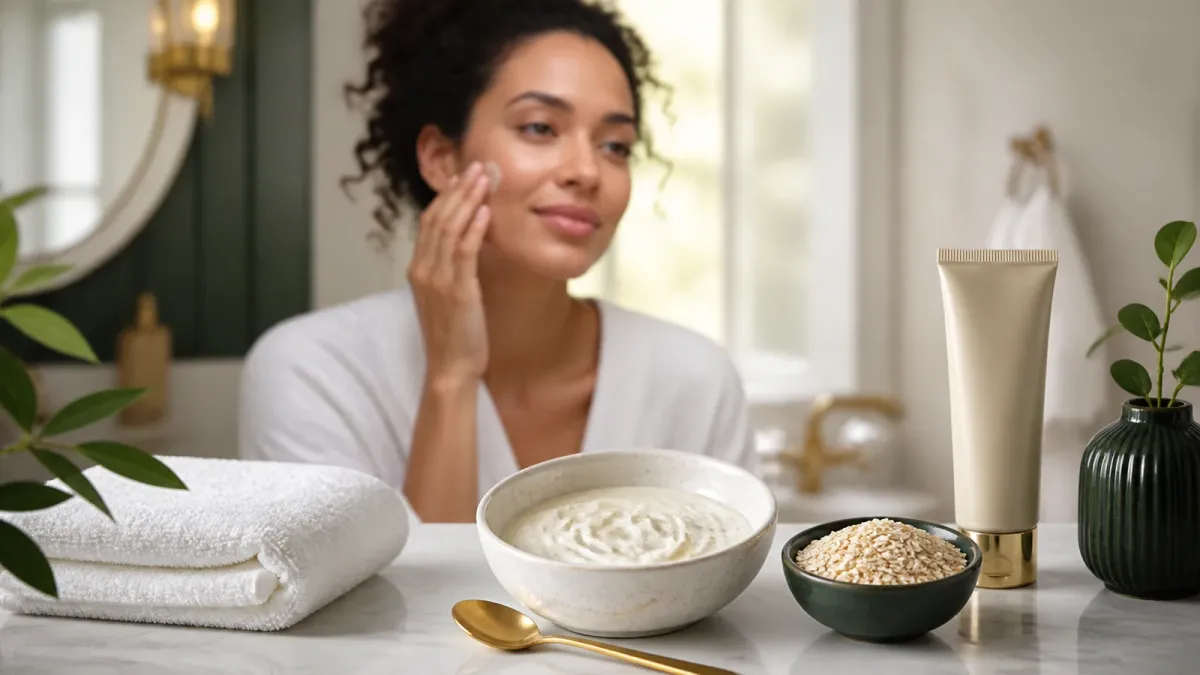
A DIY face mask can temporarily soften or hydrate comfortable skin, but it cannot cure acne, erase dark spots or permanently shrink pores.
Keep any home mixture simple and fresh, avoid lemon, baking soda, cinnamon, essential oils and rough scrubs, and test it on a small area for seven to ten days.
Skip DIY masks on broken, infected, sunburned or actively inflamed skin.
Content substantially revised: . Originally published October 19, 2024 (UTC). This date reflects the documented content revision, not a new article.
Quick Summary
- Treat a mask as optional comfort, not acne or pigment treatment.
- Use one or two bland ingredients and discard every wet mixture after one use.
- Avoid citrus, spices, essential oils, baking soda and coarse facial scrubs.
- Patch test and stop for persistent burning, itch, swelling or delayed rash.
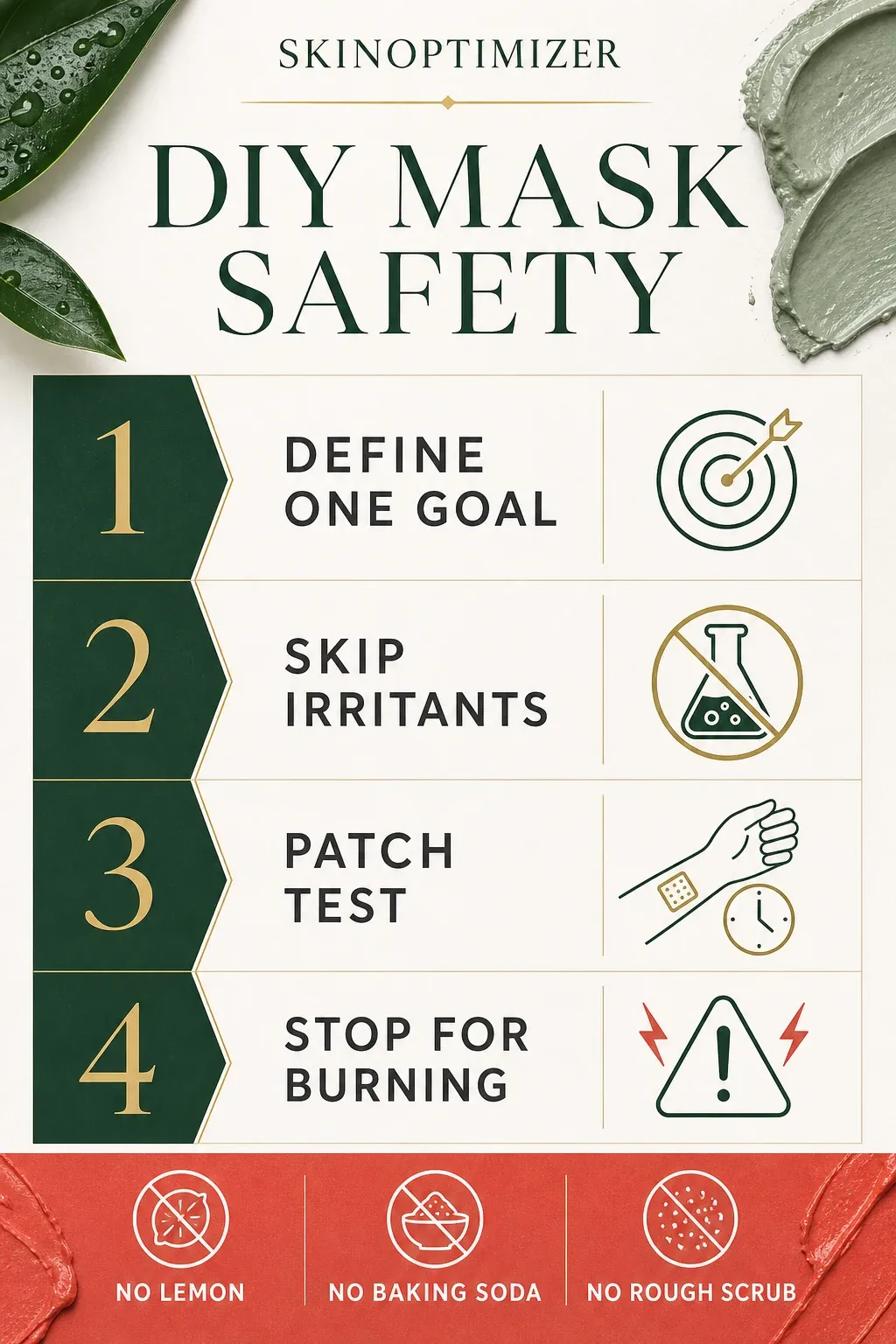
DIY masks are often presented as harmless because the ingredients come from a kitchen. Skin does not classify exposure that way.
This guide replaces viral recipes with a concern-first decision process, explains contamination and contact-allergy risk, and shows when a familiar moisturizer is the more effective option.
What a DIY Face Mask Can Realistically Do
A face mask can temporarily reduce tightness, add surface hydration or make a routine feel more comfortable. It cannot cure acne, erase dark spots, close pores or rebuild collagen in one application.
The useful question is whether the mask adds one controlled benefit without duplicating irritation.
The American Academy of Dermatology facial-mask guidance recommends choosing ingredients for a specific concern and avoiding ingredients that overlap with the rest of the routine. A mask is an optional step, not a replacement for cleanser, moisturizer, sunscreen or prescribed treatment.
"Glow" usually describes smoother light reflection, temporary plumping and more even surface hydration. It is not a medical endpoint. Photographs taken immediately after rinsing cannot establish long-term pigment, acne or anti-aging results.
| Skin situation | Reasonable mask goal | Better tool when needed |
|---|---|---|
| Comfortable but mildly dry | Short-term hydration | Daily fragrance-free moisturizer |
| Oily with clogged pores | No extra oil stripping | Salicylic acid or acne plan |
| Red inflamed acne | Avoid friction and food mixtures | Evidence-based acne treatment |
| Dark marks | Prevent new irritation | Sunscreen and targeted pigment care |
| Eczema flare or broken skin | Skip DIY masks | Clinician-directed barrier treatment |
The Lowest-Risk Ingredient Strategy
The safest home approach is often not a recipe at all. Use a fragrance-free rinse-off mask from a reputable manufacturer or apply a familiar bland moisturizer as a short comfort layer. Formulated products include preservation, pH control and directions that kitchen mixtures usually lack.
If you still choose a simple DIY mask, use one or two non-irritating ingredients and make a fresh single-use amount. Plain finely milled colloidal oatmeal prepared with clean water has a clearer barrier-support rationale than acidic fruit, spices or essential oils.
Do not confuse breakfast oats with standardized colloidal oatmeal used in skin products.
Keep the mixture away from eyes, lips, nostrils and broken skin. Use clean hands and a clean bowl, then discard leftovers. Refrigeration does not turn an unpreserved mixture into a stable cosmetic.
Ingredients to Leave Out
Do not apply lemon or lime juice to the face. Citrus can irritate, and some plant compounds can contribute to phototoxic reactions when combined with ultraviolet exposure. An acidic sting is not proof that pigment or pores are improving.
Baking soda is highly alkaline relative to healthy facial skin and can disrupt comfort. Cinnamon, undiluted vinegar, toothpaste and essential oils can also cause irritant or allergic reactions. The natural-skincare myth guide explains why edible or plant-derived does not automatically mean skin-safe.
Avoid sugar, salt, coffee grounds, walnut shells and coarse grains as facial scrubs. Their friction is difficult to dose and can worsen inflamed acne. Use the AHA and BHA guide when controlled exfoliation is the actual goal.
Patch Test Before Full-Face Use
The AAD home testing method recommends applying a product to a small area twice daily for seven to ten days. A rinse-off product should remain for only the labeled or intended contact time. This is more informative than a ten-minute test immediately before full-face use.
Home testing reduces avoidable surprises but cannot guarantee that a reaction will never occur. Allergy can develop after repeated exposure, and facial skin may be more reactive than the inner arm. Stop for redness, itch, swelling, hives or persistent burning.
Wash off a reacting product gently and do not neutralize it with another DIY ingredient. A cool compress or familiar bland petrolatum may help mild irritation. Severe swelling, breathing difficulty, blistering or eye involvement requires urgent medical care.
A Simple Hydration Mask Option
Start with clean, comfortable skin. Apply a thin layer of a familiar fragrance-free cream or a properly formulated hydrating mask, avoiding the eye and lip margins. Leave it on only as directed, then rinse if required and finish with your normal moisturizer.
Humectants such as glycerin or hyaluronic acid attract water, while emollients smooth the surface and occlusives reduce water loss. A useful formula balances these roles. The hydration versus moisturization guide explains why adding water without sealing it can still leave skin tight.
Apply no more than once or twice weekly at first. If the same comfort is achieved by daily moisturizer, the mask is redundant. Skincare should earn its place by a repeatable benefit, not by looking elaborate.
Oatmeal Masks for Itchy or Sensitive Skin
Colloidal oatmeal is used in formulated products for soothing and barrier support. It differs from rough oat flakes because particle size and processing affect how it disperses. A commercial fragrance-free colloidal oatmeal product is more predictable than grinding food oats at home.
Oat allergy is possible, and cross-contact may matter for some people. Patch test and avoid using a new oatmeal mask during an active eczema flare without professional guidance. A mask should not delay treatment for oozing, crusting or widespread itch.
Use lukewarm rather than hot water and avoid rubbing during removal. Pat dry and moisturize promptly. The sensitive-skin routine guide offers a better daily foundation than repeated rescue masks.
Clay Masks and Oily Skin
Clay can absorb surface oil and create a temporary matte feel. It does not permanently reduce sebaceous gland activity or pull deep acne out of pores. Leaving clay on until it cracks can increase tightness without improving acne treatment.
Use a thin layer for the instructed time and rinse before the skin feels painfully tight. Keep it off dry cheek areas if only the T-zone is oily. Follow with a light non-comedogenic moisturizer.
If blackheads or whiteheads are the concern, salicylic acid or a retinoid has a clearer mechanism. The acne-prevention guide shows how to choose one active rather than rotating masks.
Honey, Yogurt and Avocado Masks
Food ingredients are popular because they feel familiar, not because household use has established facial outcomes. Kitchen honey is not sterile medical-grade honey, yogurt varies in acidity and additives, and avocado is an unpreserved fat-rich food. None is required for healthy skin.
People with food allergy should avoid skin exposure to the relevant ingredient. Sticky mixtures can also encourage rubbing during removal. The dedicated honey skincare guide separates wound-care evidence from DIY mask claims.
A formulated mask can still contain botanical allergens or fragrance. Read the entire ingredient list rather than assuming packaged products are universally gentle. "Natural" and "dermatologist tested" do not replace personal tolerance.
How Masks Fit With Retinoids and Acids
Do not combine a new mask containing acids, enzymes or exfoliating particles with a retinoid night. The skin receives the total routine, not separate marketing categories. Duplicate exfoliation can turn a comfort ritual into barrier damage.
After waxing, shaving, picking, sunburn or a professional peel, wait until skin is calm and follow aftercare instructions. Avoid occluding prescription medication under a mask unless the prescriber specifically directs it. Occlusion can change penetration and irritation.
The slow skincare method is useful here: introduce one product, hold everything else stable and observe for at least several uses. Do not test a mask, toner and serum on the same evening.
A Seven-Day Mask Safety Plan
| Day | Action | Decision signal |
|---|---|---|
| 1 | Review ingredients and routine overlap | No citrus, spices, harsh scrub or duplicate acid |
| 1 to 7 | Test a small area | No persistent redness, itch or swelling |
| 8 | Use once for the intended contact time | Comfort during and after removal |
| 9 to 14 | Return to the stable routine | No delayed rash or rising sensitivity |
| After two uses | Decide whether it adds value | A clear benefit without irritation |
Common DIY Mask Mistakes
- Copying a viral recipe: popularity does not establish pH, preservation or allergy safety.
- Chasing tingling: sensation is not a measure of efficacy.
- Using leftovers: unpreserved wet mixtures should not become bathroom products.
- Scrubbing during removal: friction can undo any comfort benefit.
- Masking active disease: eczema, painful acne and infection need appropriate care.
- Changing several variables: a reaction becomes impossible to trace.
When to Skip a Mask Entirely
Skip DIY masks on broken, blistered, infected-looking or severely inflamed skin. Avoid them during an unexplained facial rash or when even water and bland moisturizer sting. Treating the cause is more important than adding ingredients.
Persistent acne, scarring, sharply defined pigment change or recurrent eczema needs diagnosis and a stable plan. A mask cannot substitute for prescription treatment. The barrier recovery guide can help identify when simplification is the safer next step.
Seek urgent care for trouble breathing, facial or throat swelling, faintness or a rapidly spreading reaction. Stop using the suspected mixture and keep its ingredient list or recipe for the clinician.
Mask Advice by Skin Condition
Normal or mildly dry skin can test a simple hydrating mask when the daily routine is already comfortable. Oily skin should avoid interpreting degreasing as treatment. Combination skin can use different products on different zones instead of applying one drying clay formula everywhere.
Acne-prone skin benefits more from a stable active than from rotating recipes. Inflamed lesions should not be scrubbed, squeezed or covered with spicy ingredients. The acne cleanser guide helps build the gentler base that masks cannot replace.
Eczema, rosacea and perioral dermatitis can flare with fragrance, botanical extracts and excessive occlusion. Use condition-specific advice and clinician care instead of treating redness as a generic glow problem. A soothing claim on social media is not a diagnosis.
Colloidal Oatmeal Versus Ground Food Oats
Colloidal oatmeal has recognized skin-protectant use and is milled to disperse into a controlled formulation. A study of colloidal oatmeal extracts and a formulated lotion describes barrier, moisturizing and soothing properties. This evidence concerns prepared colloidal material and formulated use.
Home-ground oats have variable particle size and can feel abrasive. They may also contain flavor, sugar or cross-contact from the kitchen. If oatmeal is the desired ingredient, a fragrance-free commercial colloidal oatmeal product offers clearer composition and instructions.
Stop if itching increases or hives appear. People with oat allergy should avoid the ingredient, and people with active widespread dermatitis should ask a clinician before testing. A mask is not a substitute for prescribed eczema treatment.
Hygiene, Water and Container Decisions
Wash hands, use clean utensils and make only enough for one application. Tap water is suitable for normal washing but does not sterilize a mixture. Once water and food are combined, microbes can grow even when the product smells normal.
Do not dip back into a shared ingredient jar after touching the face. Keep unpreserved mixtures out of pump bottles, mist bottles and reusable cosmetic pots. These containers create repeated contact and false confidence in shelf life.
The AAD notes that personal-care ingredients can cause irritant or allergic contact dermatitis. Record every ingredient, including fragrance or additives in packaged food. The recipe name alone is not enough for troubleshooting.
How to Judge Results Without Being Misled
Take a baseline photo in the same light before the first full-face use. Rate comfort, tightness and visible flaking the next morning, not only immediate shine. Surface wetness and lighting can make almost any mask look successful for an hour.
After two tolerated uses, ask whether the benefit lasts beyond the application day and whether the same result comes from moisturizer. Stop if the skin needs more recovery products afterward. Complexity is a cost even when the ingredients are inexpensive.
Do not use a short mask trial to judge acne, melasma or wrinkles. Those outcomes require weeks to months and appropriate treatment. A temporary soft feel can be worthwhile, but it should be described accurately.
The Bottom Line
A DIY face mask can offer temporary hydration or a calming ritual, but it is not a shortcut to poreless, acne-free or pigment-free skin. The safest option is simple, freshly prepared, non-abrasive and free from ingredients that duplicate the rest of the routine.
Choose evidence-based daily care first. Patch test, limit contact time and judge a mask by comfort over several uses rather than immediate shine. When skin is inflamed, broken or persistently symptomatic, skip the recipe and treat the condition.
Frequently Asked Questions About DIY Face Masks for Glowing Skin
What is the safest DIY face mask for glowing skin?
The lowest-risk option is a familiar fragrance-free moisturizer used as a short comfort layer or a properly formulated hydrating mask. If using a home mixture, keep it simple, fresh and non-abrasive.
Can I put lemon juice in a face mask?
No. Citrus juice can irritate and may contribute to phototoxic reactions with ultraviolet exposure. It is not a controlled or proven treatment for dark spots.
How long should a DIY face mask stay on?
Use the shortest appropriate contact time, usually five to ten minutes for a simple rinse-off experiment. Remove it immediately for burning, itch or swelling.
Can a DIY mask treat acne?
No kitchen mask is a first-line acne treatment. Salicylic acid, benzoyl peroxide, retinoids and clinician-directed options have clearer evidence depending on lesion type.
How often can I use a homemade face mask?
Start no more than once weekly after a seven-to-ten-day small-area test. Continue only when it adds a clear benefit without dryness or delayed rash.
This article is for informational purposes only and does not replace professional dermatological advice.