Best Sunscreens for Kids: 3 Practical Picks and a Simple Plan
Compare three kids sunscreen picks by pack and format. Learn age limits, sensitive-skin checks and when to reapply after swimming, sweating or towel drying.
In this guide
Quick Answer
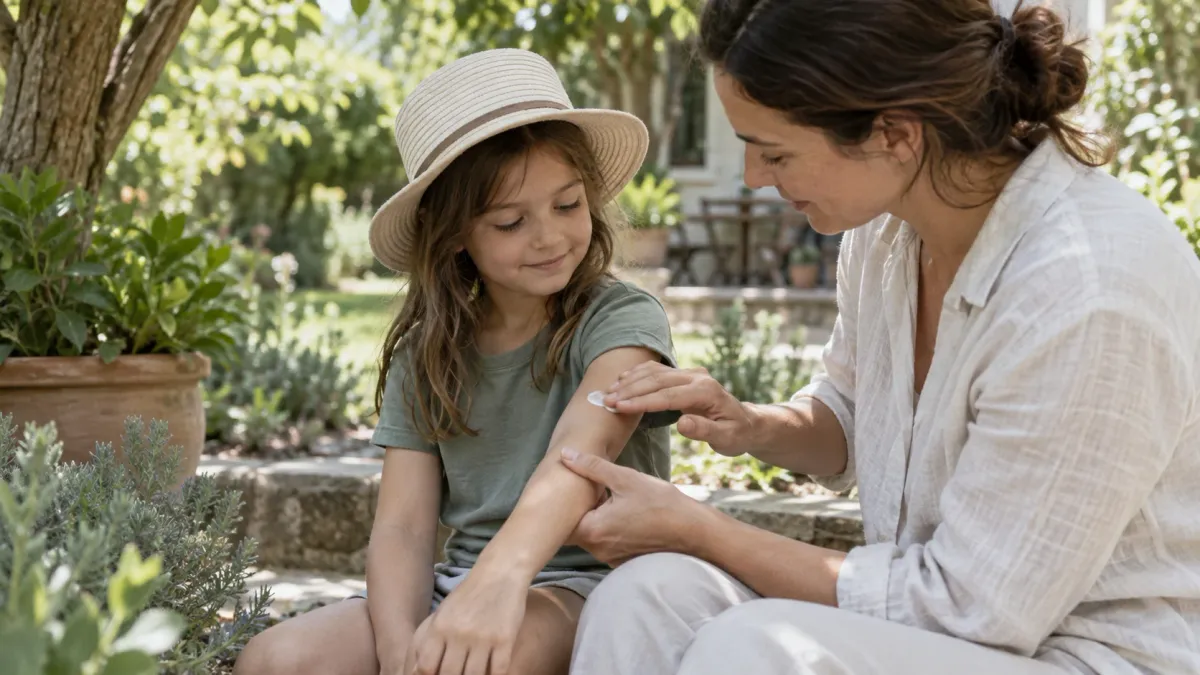
The best sunscreens for kids are broad-spectrum SPF 30 or higher, suit the child's skin, and are easy for an adult to apply generously. Choose water resistance for swimming or sweaty play, and use sunscreen alongside shade, clothing and a hat.
Our practical picks are Blue Lizard Kids Mineral SPF 50 lotion for a larger home supply, Baby Bum Mineral SPF 50 lotion for a small day bag, and Neutrogena Sheer Zinc Kids SPF 50+ stick for targeted coverage.
For babies under six months, prioritize shade and covering clothing and ask a pediatrician about sunscreen. For older children, reapply at least every two hours outdoors, immediately after towel drying, and after the label's swimming or sweating interval.
Quick Summary
- Read three things: broad spectrum, SPF 30+, and water resistance when needed.
- Start with a lotion: use a stick for small areas; a powder brush is a poor default for full-body coverage.
- Check tolerance: fragrance-free mineral formulas can be a useful starting point for sensitive skin, without guaranteeing comfort.
- Plan the second application: pack enough sunscreen, a towel and a reminder, rather than relying on a higher SPF number.
A simple sun plan in 12 seconds
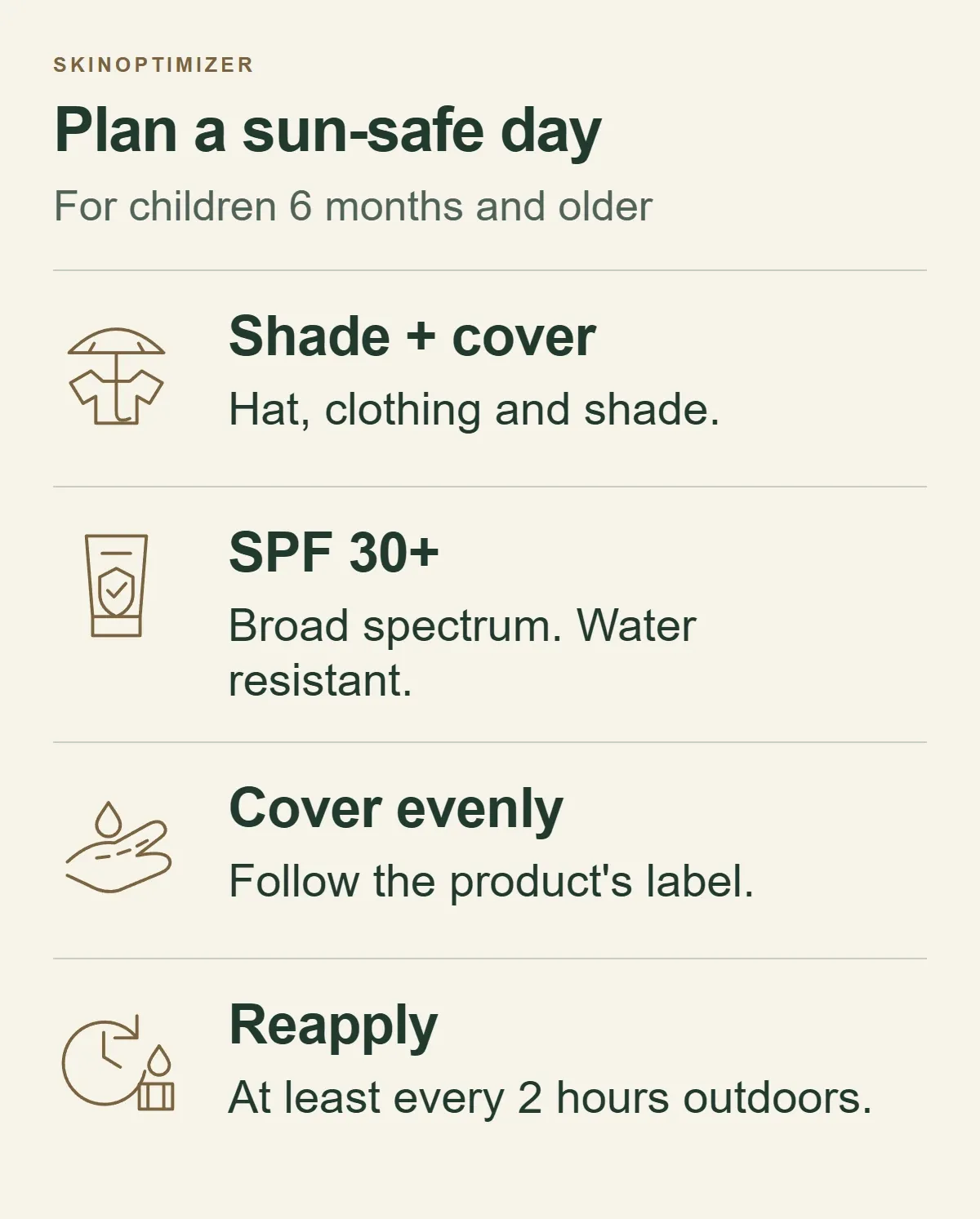
Editorial note: SkinOptimizer is an editorial skincare resource, not a medical practice. These are label-based recommendations, not products we have wear-tested on children; no product can guarantee that an individual child will avoid irritation or sunburn.
Updated: . Originally published October 19, 2024. Product variants, pediatric guidance and application advice reviewed.
Choosing the best sunscreen for children often comes down to an ordinary morning problem: getting enough of it onto a moving child before leaving home. A formula that stays in the bag because nobody will use it cannot do its job.
We would start with one tolerated body lotion, then add a stick only if it makes small areas easier to cover. There is no need to buy three products for the same outing.
Compare pack size and application method against your child's needs. A preschool bag needs a portable tube; a family pool day needs enough lotion for repeated applications, while recurring eczema calls for a clinician's advice.
The Skin Insider
SPF 50 does not mean 50 minutes of protection. It is a tested measure of protection against sunburn-causing UVB; the broad-spectrum label also matters for UVA coverage.
A high number cannot compensate for missed ears, a thin application or a towel that removes the sunscreen film. Make the application and reapplication plan before comparing extra marketing claims.
Choose children's sunscreen by age and skin needs
The American Academy of Dermatology's sunscreen guidance recommends broad-spectrum SPF 30 or higher. For children six months and older, choose a suitable children's sunscreen and follow its directions.
| Child's age | Start here | Adult's job |
|---|---|---|
| Under 6 months | Shade and lightweight covering clothing; keep babies out of direct sun. | Ask a pediatrician about sunscreen and avoid overheating. |
| 6 months and older | Broad-spectrum SPF 30+ on uncovered skin, plus clothing and shade. | Apply generously, check missed areas, and follow reapplication directions. |
| School-age children | The same protection standard, with a school or camp plan. | Teach application, check coverage, and arrange adult help when needed. |
The American Academy of Pediatrics allows a small amount on limited exposed areas when adequate shade and clothing are unavailable; ask your pediatrician rather than planning routine full-body sunscreen for a young baby.
A product called “baby” sunscreen does not remove this age boundary. Keep a stroller's airflow and the baby's temperature in mind when arranging shade, and move indoors if the baby is getting too hot.
For eczema-prone or easily irritated skin
A fragrance-free formula with zinc oxide or titanium dioxide is a reasonable starting point for a child whose skin reacts easily. “Unscented” does not necessarily mean fragrance-free, and a sensitive-skin label cannot guarantee tolerance.
The AAD's guidance on eczema-friendly products supports fragrance-free choices and mineral sunscreen filters. Check the complete ingredient list and involve the child's clinician when reactions are frequent or eczema is active.
- Before a long outing: try the product on a small area of intact skin as directed; a home check cannot rule out a later reaction.
- During a flare: use shade and clothing, and ask for advice about protecting sore or broken areas.
- After a reaction: stop the product and retain its name and ingredient list for the clinician.
Mineral sunscreen is an option, not a requirement for every child. Our mineral versus chemical sunscreen guide explains the filter categories without treating all non-mineral formulas as unsafe.
Best sunscreens for kids: three practical picks
These three mineral options serve different packing and application needs. We checked current U.S. product information and the matching Amazon variants; we have not compared their protection in a clinical trial.
All three carry broad-spectrum SPF 50 or 50+ and 80-minute water-resistance labeling. That shared label does not establish equal texture, personal tolerance or protection after a rushed application.
| Pick | Practical fit | Main trade-off |
|---|---|---|
| Blue Lizard Kids Mineral SPF 50 lotion | Two 5 fl oz tubes for a larger supply. | Check that the listing and delivered label are the new mineral-only formula. |
| Baby Bum Mineral SPF 50 lotion | A compact 3 fl oz tube for a day bag. | Small pack; check the full formula if your child has ingredient triggers. |
| Neutrogena Sheer Zinc Kids SPF 50+ stick | Targeted face and ear coverage with adult help. | Needs repeated passes and rubbing in; slow as the only full-body format. |
As an Amazon Associate, we earn from qualifying purchases. Pack sizes and formulas can change; confirm the selected variant and its Drug Facts before buying.
1. Blue Lizard Kids Mineral SPF 50 lotion: a larger home supply

A larger supply is useful when several children need generous applications before and during an outing. This two-pack also allows a separate tube for a caregiver, provided both are stored correctly and kept within their expiry dates.
The current Kids Mineral lotion uses titanium dioxide 8% and zinc oxide 10%, with broad-spectrum SPF 50 and 80-minute water resistance. The matched new-formula listing identifies it as fragrance-free.
Older Blue Lizard Kids formulas also exist, including a hybrid formula. Check the delivered tube's active ingredients rather than assuming every similarly named listing contains the same sunscreen.
Buy it if: you want two larger lotion tubes and your child tolerates this formula.
Skip it if: you need only a small bag tube, or the formula's feel or residue makes complete application difficult.
Check the two-tube Blue Lizard variant on AmazonAs an Amazon Associate, we earn from qualifying purchases.
2. Baby Bum Mineral SPF 50 lotion: a compact day-bag tube

A smaller tube can fit a caregiver's bag or a labeled school sunscreen pouch. Keep a larger supply available when the outing requires repeated full-body applications; portability does not make a small tube sufficient for the whole family.
The manufacturer's lotion label specifies zinc oxide 20%, broad-spectrum SPF 50, fragrance-free formulation and 80-minute water resistance. It also contains coconut oil, shea butter and cocoa butter.
Check those and the other ingredients against your child's known triggers. The baby branding does not change the advice to ask a doctor before sunscreen use under six months.
Buy it if: you need a compact mineral lotion and can pack enough for the planned applications.
Skip it if: an ingredient is a known trigger, or this tube would leave you rationing sunscreen during a long day.
Check the 3 fl oz Baby Bum lotion on AmazonAs an Amazon Associate, we earn from qualifying purchases.
3. Neutrogena Sheer Zinc Kids SPF 50+ stick: targeted coverage

A stick can help with small areas such as the ears and face when a child dislikes lotion running from an adult's fingers. Keep it away from the eyes and use enough passes to cover the area properly.
The Sheer Zinc Kids stick is labeled broad-spectrum SPF 50+ and water-resistant for 80 minutes. Its mineral active is zinc oxide; a “sheer” name does not promise an invisible finish on every skin tone.
Use a lotion for broad body areas when that makes generous coverage easier. A quick swipe across each cheek is not a complete face application.
Buy it if: an adult-supervised stick makes small areas easier to cover alongside your body sunscreen.
Skip it if: you want one fast full-body format or your child will only accept a single light pass.
Check the 1.5 oz Neutrogena kids stick on AmazonAs an Amazon Associate, we earn from qualifying purchases.
How to read a kids sunscreen label
Broad spectrum covers UVA as well as UVB. SPF describes tested UVB protection; neither label tells you how carefully the sunscreen will be applied during a busy morning.
Water resistance is tested for either 40 or 80 minutes of swimming or sweating. “Waterproof” and “all-day protection” are poor reasons to ignore the reapplication directions.
- Age and warnings: check the directions, including advice for babies and damaged skin.
- Full formula: read inactive ingredients as well as the sunscreen filters.
- Pack size: buy enough for repeated use rather than stretching a small amount.
- Expiry and storage: follow the date and keep the product out of excessive heat.
If there is no expiry date, FDA guidance says to consider sunscreen expired three years after purchase. That is not three years after opening; replace a bottle of unknown age rather than guessing.
A previous good experience is useful, but recheck a replacement bottle when packaging or ingredients change. Keep a photo of the label if you need to compare it with the next purchase.
The Optimizer's Edge
Choose the application format your child can tolerate, then plan adult help around it. For a child who resists face lotion, a carefully applied stick plus a familiar body lotion may be easier than buying several new bottles.
Practice indoors before a swim day. Give the child a small role, such as holding the hat or choosing which arm goes first, while the adult remains responsible for coverage.
How to apply sunscreen to kids without missing areas
Apply generously before heading outside, following the product's timing; the three selected labels specify 15 minutes before sun exposure. Choose a calm place with good light so an adult can see the areas being covered.
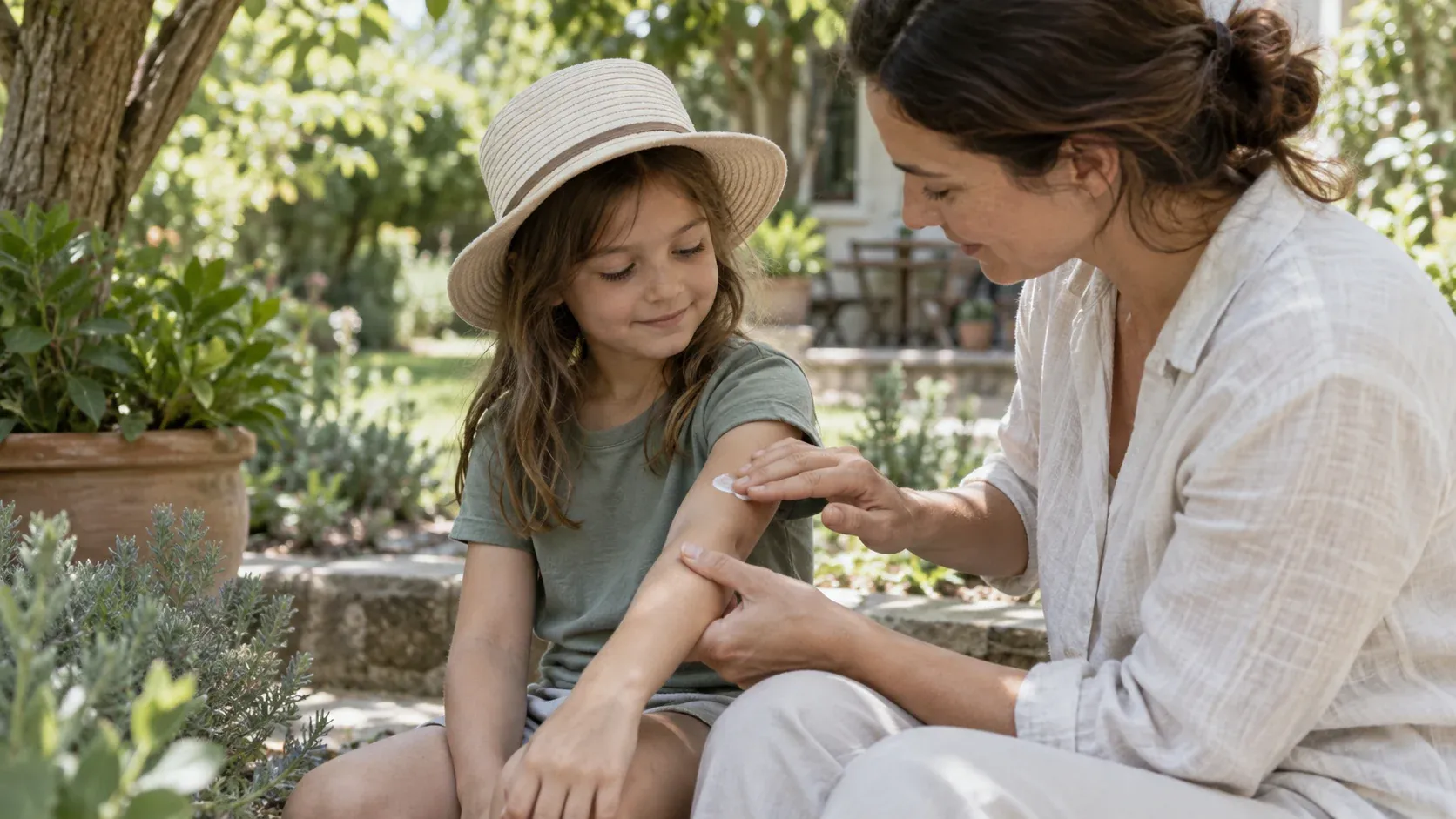
- Cover with clothing first: a hat and suitable covering clothes reduce the amount of skin that needs sunscreen.
- Work by body area: cover each exposed arm, leg and other uncovered area evenly, following the label.
- Check the edges: ears, neck, tops of feet and skin beside swimsuit or shirt edges are easy to miss.
- Let it settle before activity: follow the pre-exposure directions rather than applying as the child jumps into the water.
Children vary too much in size for an adult shot-glass amount to serve as a universal child dose. Use the label's generous-application instructions across all uncovered skin and keep enough product for the next round.
A white cast can help reveal where a mineral lotion was spread, but appearance cannot confirm the tested dose or prove complete protection. Check the whole application instead of chasing a perfectly invisible finish.
Sticks, sprays and powder sunscreen for kids
For sticks, the AAD advises four back-and-forth passes over each area, followed by rubbing in. Follow the specific product's directions as well, with adult help for missed spots.
If you use a spray, avoid inhalation and do not spray directly onto the face. Apply to adult hands first for the face, rub it in, avoid wind and flames, and check that the skin is fully covered.
We prefer lotion as the main body format because an adult can spread it deliberately. Powder sunscreen is better treated as a supplement because getting a generous, even application can be difficult.
A tool may make application more acceptable, but it does not supply SPF on its own. For more format-specific help, see our sunscreen stick guide and watch for the common application mistakes that leave gaps.
Watch a brand's sunscreen demonstration
This BabyChakra video is a manufacturer demonstration of a different product, not an independent comparison of our picks. Use the current label of the product you actually buy rather than transferring claims from a demonstration.
Reapplication at the pool, beach and playground
The next application is often harder than the first: the child is wet, sandy or busy playing. Plan a shade break and keep the sunscreen where the supervising adult can reach it.
Reapply at least every two hours outdoors. Swimming, sweating and towel drying can require an earlier application; a phone's two-hour alarm is only one reminder, not permission to ignore those triggers.
| What happened? | What to do | Common mistake |
|---|---|---|
| Two hours outdoors | Reapply at least this often, following the label. | Assuming SPF 50 lasts longer than SPF 30. |
| Swimming or sweating | Follow the product's 40- or 80-minute interval. | Treating water resistance as protection for the whole afternoon. |
| Towel drying | Reapply immediately, following the label's application directions. | Waiting for the remaining water-resistance minutes. |
After a towel dry, the earlier water-resistance countdown does not preserve the sunscreen film. Take the break needed to apply again, and follow the product's directions for skin condition and time before returning to the water.
For example, a child who swims for 20 minutes and towels off needs reapplication after toweling, even with an 80-minute product.
Our sunscreen reapplication guide covers the practical steps. The water-resistant sunscreen guide explains what the 40- and 80-minute labels can and cannot tell you.
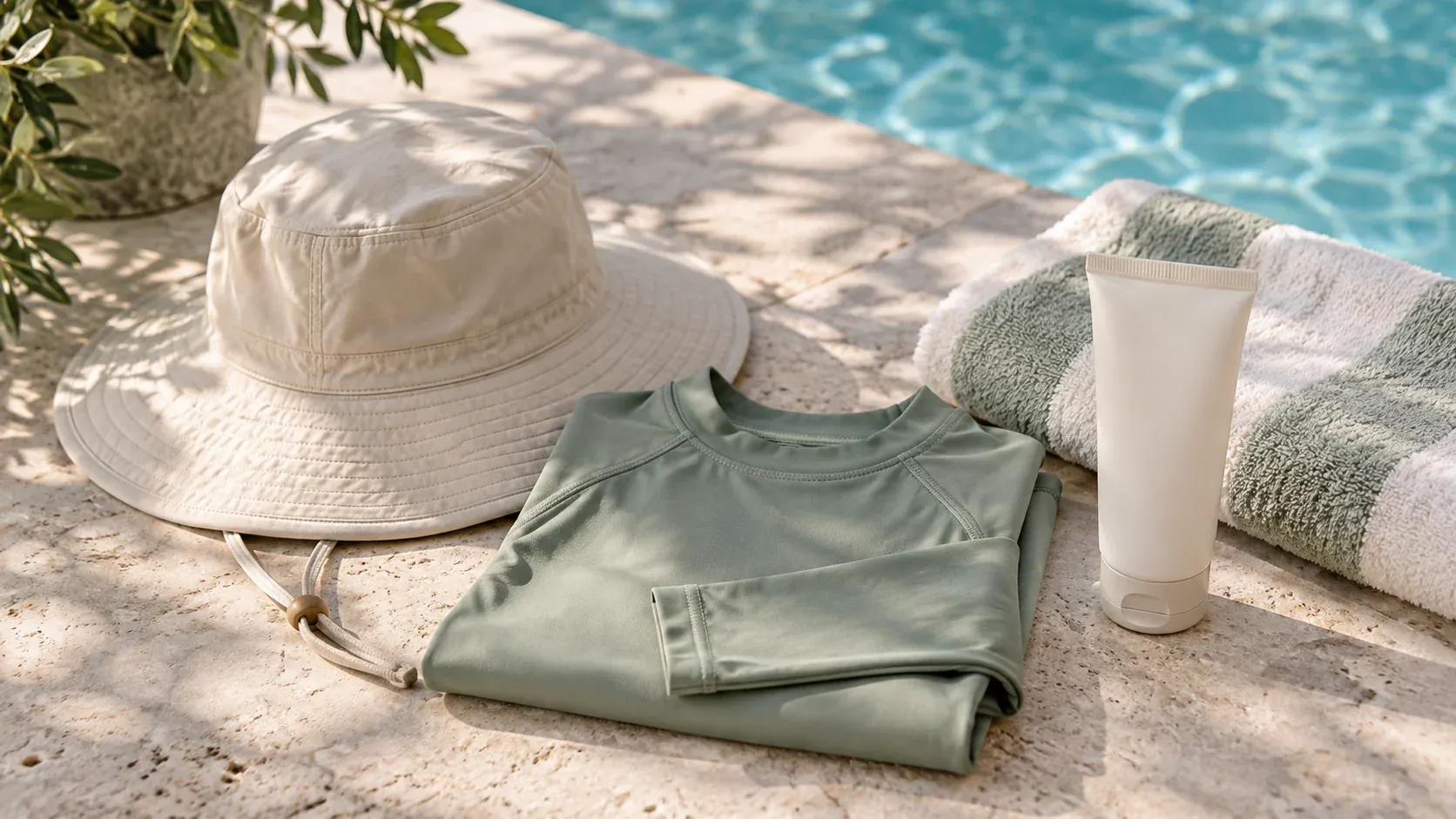
School, camp and sports: arrange the help before drop-off
Ask the school or camp about its actual sunscreen policy, including who may apply it and where it is stored. Permission forms and staff responsibilities vary, so do not assume a bottle in the backpack will be used.
Label the product with the child's name and share any relevant allergy information. Agree on a practical reapplication time before outdoor activities and identify the adult who can help.
- At home: apply before leaving when that suits the schedule and label.
- During the day: arrange sunscreen access, shade breaks and a coverage check.
- At pickup: check how much sunscreen remains and replace the tube before it runs out.
A capable child can practice spreading sunscreen, but there is no universal birthday at which complete application becomes reliable. An adult should check coverage and provide help based on the child and the activity.
When sunscreen stings or your child gets sunburned
If sunscreen gets into the eyes, rinse with water and follow its warning label. Stop a product that causes a rash or persistent irritation and seek medical advice rather than repeatedly trying it on sore skin.
For recurring reactions, take the product label and a description of what happened to a pediatrician or dermatologist. Fragrance-free, mineral and “hypoallergenic” claims do not identify every child's trigger.
The AAP advises calling a doctor right away for sunburn in a baby under one year, or in an older child with blistering, pain or fever. A child who seems seriously unwell needs prompt medical assessment.
Move out of the sun and follow the clinician's care advice. Do not cover an active burn with more experimental products or treat a previous burn as evidence that another sunscreen brand will guarantee protection.
Prevention also includes everyday exposure outside summer holidays. Our guides to preventing sun damage and sun protection beyond summer explain how clothing, shade and sunscreen work together.
Frequently Asked Questions About Best Sunscreens for Kids
Questions about school-age application, dryness and tolerance, and children resisting sunscreen helped identify parent concerns. These community discussions are question sources; the answers follow pediatric and dermatology guidance, not anecdotes.
Does every child need mineral sunscreen?
No. A tolerated broad-spectrum SPF 30+ sunscreen, applied correctly, is the starting point; fragrance-free zinc oxide or titanium dioxide formulas are reasonable options for sensitive or eczema-prone skin.
Our three picks are mineral products chosen for their different formats and pack sizes. They do not establish that all non-mineral sunscreen is unsafe for children.
What should I do if sunscreen stings or causes a rash?
Rinse the eyes with water if sunscreen gets into them, and stop a product that causes a rash or persistent irritation. Ask a clinician about recurring reactions and bring the ingredient list.
Do not keep testing new products on broken or inflamed skin. Use shade and covering clothing while you get advice on a suitable option.
Can a seven-year-old apply sunscreen without help?
Some children can help with application, but age alone does not show that they can cover every exposed area generously. Have an adult check missed spots and arrange school or camp help according to the child's needs.
Practice with the same product at home. A stick still needs repeated passes and rubbing in; a quick self-applied swipe is not enough.
Does an 80-minute sunscreen last through a whole swimming session?
It is labeled for 80 minutes of swimming or sweating before reapplication, but towel drying means reapplying immediately. Reapply at least every two hours outdoors as well, and follow the exact product directions.
For example, toweling off after 20 minutes in the pool triggers reapplication then. Do not wait another hour because the bottle says 80 minutes.
Can babies under six months use these sunscreens?
Prioritize shade and covering clothing and ask a pediatrician about sunscreen for a baby under six months. The products' baby or kids branding does not make routine full-body use the default at that age.
AAP guidance allows a small amount on limited exposed areas when adequate clothing and shade are unavailable. Keep babies out of direct sun and watch for overheating.
Your Clear Skin Checklist
- Before buying: confirm broad spectrum, SPF 30+, water resistance when needed, and the exact formula.
- Before leaving: apply generously as directed and pack enough for repeat applications.
- During play: use shade and clothing, check missed areas, and follow towel, water and time cues.
- With other caregivers: name the product, share relevant skin concerns and agree who will help.
Choose one workable sunscreen plan
Start with a body lotion your child tolerates and enough of it for the day. A larger Blue Lizard pack, a compact Baby Bum tube or a Neutrogena stick can fit different needs, but buying all three is unnecessary.
Keep an adult responsible for coverage and reapplication, even as the child learns to help. Keep sunscreen accessible and build shade breaks into the day, with covering clothing and a hat.
This article is for informational purposes only and does not replace professional dermatological advice.