How to Prepare for a Chemical Peel: A Safety-First Guide
A provider-first chemical peel preparation guide covering peel depth, medication and skincare disclosure, pigment risk, aftercare and urgent warning signs.

In this guide

Confirm the exact peel acid, intended depth, provider qualifications, pigment risk, downtime and aftercare before treatment. Give the clinician your complete medication, skincare, cold-sore, procedure and healing history, then pause products only according to their written instructions. Do not use a high-strength home peel; plan recovery and seek prompt care for severe pain, blistering, spreading redness, pus, rapid swelling or eye symptoms.
Quick Summary
- Preparation changes with peel depth, acid, skin history and provider protocol.
- Disclose medicines, topicals, cold sores, pigment reactions and recent skin injury.
- Do not follow a universal retinoid or acid stop schedule from the internet.
- Avoid high-strength home peels and arrange aftercare before the appointment.
Know Which Chemical Peel You Are Preparing For
Preparation depends on peel depth, acid, concentration, treatment area, skin history and the clinician's protocol. A superficial peel with brief flaking is not prepared for like a medium or deep peel with prolonged wound care. Ask for the exact name and depth before following any checklist.
Chemical peels intentionally create controlled injury so damaged outer layers shed and healing responses begin. That mechanism is why stronger is not automatically better. The same treatment that improves a concern can cause burns, infection, scarring or pigment change when the depth, candidate or aftercare is wrong.
| Peel depth | Typical setting | Preparation priority |
|---|---|---|
| Very light or superficial | Dermatology or qualified professional setting | Confirm active-product pauses and short-term sun protection plan |
| Medium | Medical setting with structured follow-up | Plan downtime, wound care, medication review and transport if advised |
| Deep | Physician-led medical procedure | Full medical evaluation, monitoring and detailed recovery support |
| High-strength product sold for home use | Not a safe substitute for professional care | Do not use; FDA warns of serious chemical injury |
The American Academy of Dermatology describes different healing times and care requirements by peel depth. The category matters more than a social-media label such as “glow peel” or “lunchtime peel.” Marketing language does not define how deeply an acid can injure your skin.
If the provider cannot name the acid, concentration, intended depth and expected recovery, pause the booking. A responsible plan should also explain who performs the procedure, what qualifications they have and who handles complications. Do not rely on a consent form handed over only after payment.
Use the Consultation to Screen Risk
The consultation should establish what you want to treat and whether a peel is the right tool. Acne, melasma, post-inflammatory pigment, rough texture and sun damage are not interchangeable. A clinician may recommend a different procedure, a topical plan or no procedure when risk outweighs likely benefit.
The AAD advises asking about the doctor's experience with people who have your skin coloring, expected results, side effects, complications and downtime. Ask to see representative outcomes without assuming another person's result predicts yours.
Bring a complete health and treatment history
List prescription and over-the-counter medicines, supplements, topical treatments and recent procedures. Mention isotretinoin history, retinoids, antibiotics, anticoagulants, photosensitizing medicines and any treatment that affects healing. Do not stop a prescribed medicine without the prescriber's or peel clinician's direction.
Tell the clinician about cold sores or herpes infection, keloid or abnormal scar history, eczema, psoriasis, rosacea, contact allergies and previous pigment changes. Disclose pregnancy, breastfeeding, immune suppression, diabetes or another condition relevant to healing. The clinician decides whether prophylaxis, postponement or a different treatment is appropriate.
Describe every recent source of skin injury
Report waxing, threading, shaving irritation, sunburn, tanning, picking, laser treatment, microneedling, surgery and previous peels. An intact-looking surface can still be sensitized. A provider needs the timing and location to decide whether the skin is ready.
Bring photographs of prior reactions when available. Do not conceal a recent home peel because you fear the appointment will be postponed. Delay is safer than layering controlled injury over uncontrolled injury.
Skin Tone and Pigment Risk Need a Specific Plan
People with darker skin tones can undergo appropriately selected chemical peels, but post-inflammatory hyperpigmentation and hypopigmentation require careful prevention and management. Provider experience, conservative depth and aftercare matter. Skin color alone should not exclude treatment, and it should not be ignored.
A 2021 review of dermatologic procedure complications in skin of color highlights pigment change, keloids and other risks requiring specific precautions. A 2024 systematic review of PIH treatments also found limited robust evidence across many interventions.
Ask how the clinician assesses pigment risk, whether they alter peel choice or concentration, and how they manage a pigment flare. The answer should be more specific than “this peel is safe for everyone.” The dark spots on darker skin guide explains why irritation control is central to pigment care.
Active melasma can be influenced by ultraviolet and visible light exposure. A peel may be only one part of a longer plan involving photoprotection and topical treatment. Treating without maintenance can produce temporary improvement followed by recurrence.
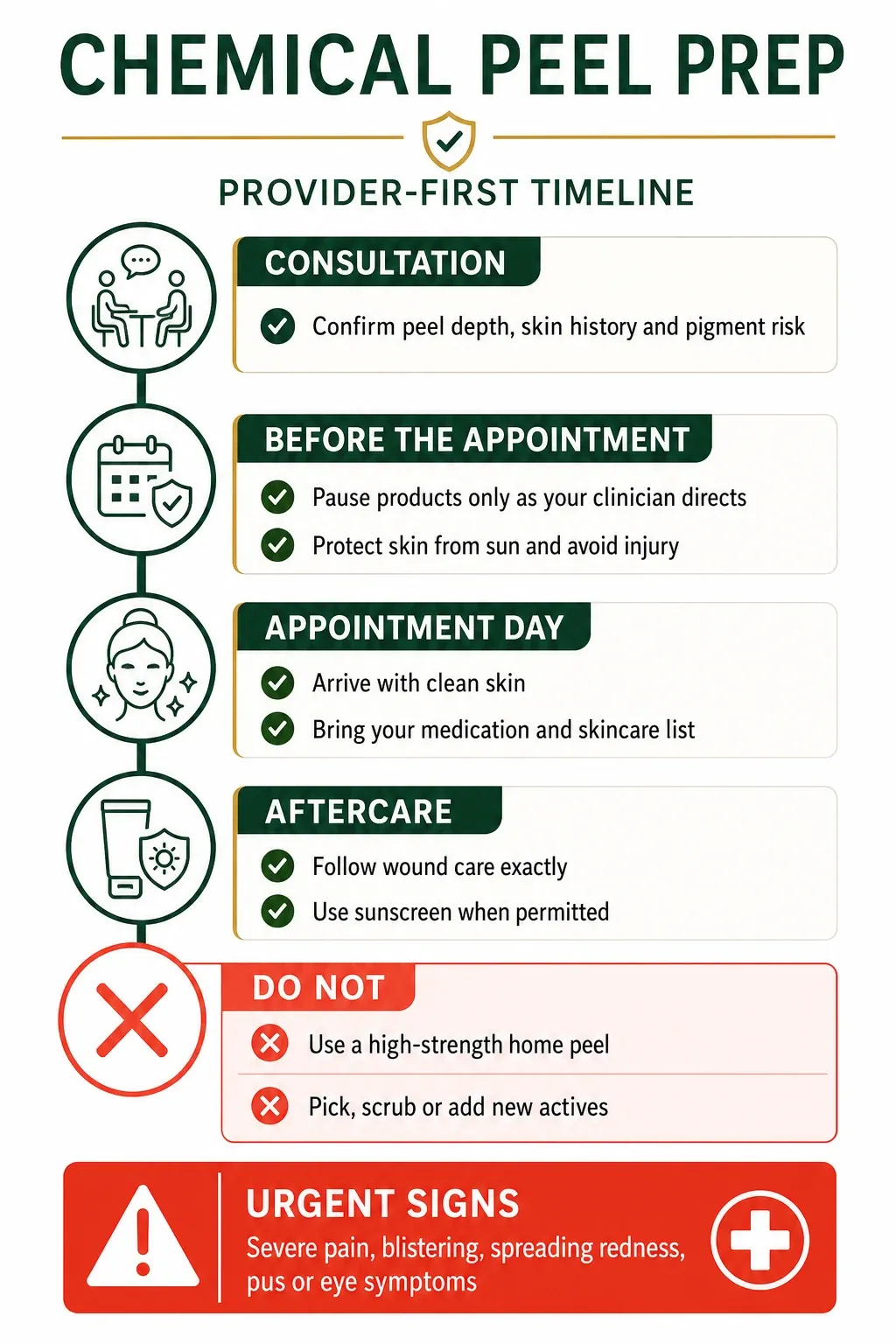
A Provider-First Preparation Timeline
| Stage | Your task | Do not improvise |
|---|---|---|
| Consultation | Confirm diagnosis, peel depth, risks, downtime and contact plan | Do not book from price or acid percentage alone |
| Weeks before | Follow individualized product and medication instructions | Do not use a universal internet stop schedule |
| Days before | Avoid sunburn, picking, waxing and new products | Do not pre-exfoliate to make the peel work harder |
| Appointment day | Arrive as instructed with clean skin and complete lists | Do not conceal irritation or a new health change |
| Recovery | Use only prescribed or approved care | Do not pick, scrub or restart actives early |
Several weeks before
Confirm the appointment, procedure type, expected downtime and who can be contacted after hours. Arrange work, childcare and social commitments around realistic healing rather than the shortest marketing estimate. Medium and deep peels may require substantial recovery and follow-up.
Use daily broad-spectrum sunscreen and avoid tanning. If the clinician prescribes a pigment-preparation or antiviral plan, follow it exactly and ask what to do after a missed dose. Do not borrow another person's prescription or buy a bleaching cream from an unverified seller.
One to two weeks before
Continue only the skincare the clinician has approved. Retinoids, exfoliating acids, benzoyl peroxide, scrubs and depilatory methods may need adjustment, but timing differs. Get the instruction in writing instead of relying on memory.
Avoid introducing a new cleanser, sunscreen, fragrance or facial oil. A reaction near the appointment can be confused with peel sensitivity. The slow skincare guide explains why a stable routine makes reactions easier to trace.
Several days before
Do not wax, pick, scratch, dermaplane or use an at-home exfoliating device unless the clinician explicitly permits it. Protect the treatment area from sun and friction. Contact the office for a new rash, cold sore, wound, infection, sunburn or medication change.
Prepare simple aftercare supplies that the provider has approved. These may include a bland cleanser, specified moisturizer, wound-care product and sunscreen for the stage when sunscreen is permitted. Do not create your own recovery kit from influencer recommendations.
Appointment day
Arrive with clean skin according to instructions, without makeup, fragrance or unapproved leave-on products on the treatment area. Bring your medication and skincare list and confirm transport requirements. Deep or sedated procedures may have fasting and escort rules that must be followed exactly.
Tell the clinician about any change since consultation, even if it seems minor. Ask again what normal discomfort looks like, which symptoms are urgent and how to contact the practice. Do not leave without written aftercare.
Do Not Use High-Strength Home Chemical Peels
In 2024 the FDA warned consumers not to purchase or use certain high-concentration chemical peel products without professional supervision. The agency described risks including serious chemical burns, pain, swelling, infection, pigment change and disfiguring scars. FDA also stated that it has not approved chemical peel products.
Acid percentage alone does not predict depth or safety. pH, vehicle, buffering, contact time, number of layers, skin preparation and anatomy all matter. Neutralizing a burn at home after the skin turns white or painful is not a controlled procedure.
Do not use a high-strength TCA, glycolic, salicylic or lactic peel from an online marketplace because reviews call it professional grade. “Professional” on a label does not place a clinician beside you. A product that can scar the skin should not be tested to save the consultation cost.
If a home product causes severe pain, blistering, marked swelling, eye exposure or rapidly changing color, rinse or act according to emergency guidance and seek urgent medical help. Do not apply another acid, alkali or improvised neutralizer unless a poison specialist or clinician directs it.
What to Stop Before a Peel
The correct answer is the provider's individualized list. Retinoids, exfoliating acids, scrubs, benzoyl peroxide, hair-removal methods and certain topical prescriptions may be paused, but the interval depends on the product and peel. A universal chart can create harm by stopping needed treatment or failing to stop the right exposure.
Do not stop oral medicines, antivirals, antibiotics or anticoagulants on your own. The peel clinician may need to coordinate with the prescriber. Bring the exact names, strengths and schedules rather than saying “an acne pill” or “a blood thinner.”
Also disclose supplements and herbal preparations. Some can affect bleeding, photosensitivity or interactions even when marketed as natural. The provider should decide which information changes the plan.
Prepare the Skin Barrier Without Over-Exfoliating
A calm, intact barrier is a better starting point than skin that has been scrubbed thin. Use a gentle cleanser, familiar moisturizer and sunscreen. If the face stings when water or moisturizer touches it, the peel should be reassessed rather than intensified.
The damaged skin barrier guide lists common warning signs such as persistent burning, raw shine, painful peeling and sudden sensitivity. Do not hide these symptoms under makeup at the appointment. They are relevant safety information.
A pre-peel cream prescribed for pigment or cell turnover is not permission to add a second exfoliant. Use the stated amount and frequency. Contact the office for unexpected burning or dermatitis instead of pushing through.
Plan the Recovery Before the Procedure
Ask what the skin is expected to look and feel like each day, when cleansing begins, what moisturizer or ointment is allowed and when sunscreen can be used. Confirm whether dressings, cool compresses or prescription care are required. Different peel depths have fundamentally different recovery pathways.
Arrange shade, a clean sleeping environment and hands-off time. Keep pets and small children from touching treated skin or wound-care supplies. Change pillowcases as directed and avoid shared towels.
Ask which sunscreen texture the clinician wants you to use once the skin is ready. The acne-prone sunscreen guide can help compare comfortable options, but the treating clinician still decides when sunscreen may restart after the peel.
Do not schedule a peel immediately before a beach trip, outdoor event or important appearance. Healing cannot be rushed with extra product. The sunscreen reapplication guide becomes relevant only when the clinician permits sunscreen on the treated skin.
For medium or deep peels, confirm transport, pain control, follow-up visits and who will stay with you if required. A deep peel is not a spa add-on. It is a medical procedure with systemic and wound-healing considerations.
What Good Aftercare Looks Like
Follow the written plan even when the skin looks better sooner than expected. Use only approved cleanser, moisturizer, ointment and sunscreen at the permitted stages. Restart retinoids, acids and acne treatments only when the clinician says the skin is ready.
Do not pick peeling skin or remove crusts. Picking can deepen injury, introduce infection and create pigment change or scars. Let loose skin detach naturally unless the provider performs care.
Avoid heat, heavy sweating, swimming and friction for the period specified. Do not use saunas, steam rooms or hot yoga as a way to accelerate peeling. Heat and moisture can worsen discomfort and complicate wound care.
Take photographs in consistent light if the clinic requests monitoring. Do not diagnose infection or normal healing from another person's recovery reel. Call the provider when the course differs from the written expectation.
Normal Recovery Versus Warning Signs
| Possible expected effect | Needs a call to the provider | May need urgent care |
|---|---|---|
| Temporary redness, tightness or planned flaking | Symptoms lasting longer or stronger than the written plan | Severe or escalating pain |
| Mild swelling described by the clinician | New asymmetric swelling or worsening redness | Rapid facial, lip or eye swelling |
| Controlled crusting after a deeper peel | Drainage, odor or increasing tenderness | Pus, fever or spreading redness |
| Temporary darkening discussed in advance | Unexpected pigment change | Blistering, black or gray tissue, eye symptoms |
The table cannot replace the clinic's instructions because normal recovery differs by depth. When in doubt, contact the provider early and describe timing, location and progression. Keep the after-hours number available.
Eye exposure, severe pain, extensive blistering, breathing difficulty, confusion or rapid swelling requires urgent assessment. In the United States, Poison Control can provide exposure guidance, while emergency services handle severe symptoms. Use the appropriate local service where you live.
Questions to Ask Before You Consent
- What exact diagnosis and goal are we treating?
- What acid, concentration and intended depth will be used?
- How often have you performed this peel on my skin tone?
- What are the alternatives and why is this option preferred?
- What downtime, pain and pigment change should I expect?
- Which products and medicines should I change, and when?
- Who handles complications after hours?
- When is the follow-up visit?
A qualified clinician should welcome specific questions and acknowledge uncertainty. Guarantees of no risk, no downtime or permanent results are warning signs. So is pressure to buy a package before diagnosis.
Common Chemical Peel Preparation Mistakes
- Following a universal retinoid countdown: exact pauses depend on the treatment and clinician.
- Pre-scrubbing the skin: more injury does not create a better result.
- Hiding cold sores or medication: missing history can change safety decisions.
- Choosing by acid percentage: pH, vehicle, layers and contact time also affect depth.
- Scheduling before sun exposure: recovery and pigment control need planning.
- Buying a high-strength home peel: professional wording does not create professional supervision.
Another mistake is treating the peel as a standalone cure. Acne, melasma and photodamage often need maintenance. The chemical peel expectations guide covers the treatment-day experience, while the acne-scar peel guide explains why scar type changes the likely benefit.
Who May Need to Delay or Choose Another Option?
A current infection, open wound, sunburn, active dermatitis or uncontrolled picking can make postponement sensible. Pregnancy, breastfeeding, immune conditions, healing disorders, medication use or recent procedures can also change candidacy. The provider should evaluate the whole context.
People expecting complete removal of deep scars or permanent melasma clearance may need a different plan or more realistic goal. A peel can improve selected concerns, but it cannot erase every texture or prevent recurrence by itself. The consultation should define a measurable outcome.
When the provider lacks experience with your skin tone or the procedure depth, seek a second opinion. Delaying treatment is not failure. It is an appropriate decision when the preparation or safety plan is incomplete.
The Bottom Line
Prepare for a chemical peel by identifying the exact depth, using a qualified clinician, disclosing your full skin and medical history and following that provider's written protocol. Do not invent product-stop times or use a high-strength home peel. Plan recovery and urgent-contact steps before treatment so safety, pigment control and realistic outcomes guide the procedure.
Frequently Asked Questions
How many days before a chemical peel should I stop retinol?
There is no universal interval. Peel depth, retinoid strength, skin response and treatment goal differ, so follow the written timing from the clinician performing the peel.
Can people with darker skin tones get chemical peels?
Yes, appropriately selected peels can be used, but pigment change requires a conservative plan and a clinician experienced with darker skin tones. Ask how risk will be prevented and managed.
What should I avoid in the days before a chemical peel?
Avoid sunburn, picking, waxing, scrubbing and new products, and follow the provider's individualized instructions for actives and medicines. Report any rash, wound, cold sore or health change.
Are strong chemical peels safe to do at home?
No. The FDA warns that unsupervised high-concentration peel products can cause serious burns, infection, pigment change and scarring. Professional wording on a listing does not create professional supervision.
What symptoms after a chemical peel need urgent care?
Seek prompt help for severe or escalating pain, extensive blistering, spreading redness, pus, fever, black or gray tissue, rapid swelling or eye symptoms. Use the clinic's emergency instructions and appropriate local services.