Retinol for Anti-Aging: Start Slowly and Get Results
A practical, evidence-based retinol plan for fine lines and texture with realistic timelines, product roles and irritation limits.

In this guide
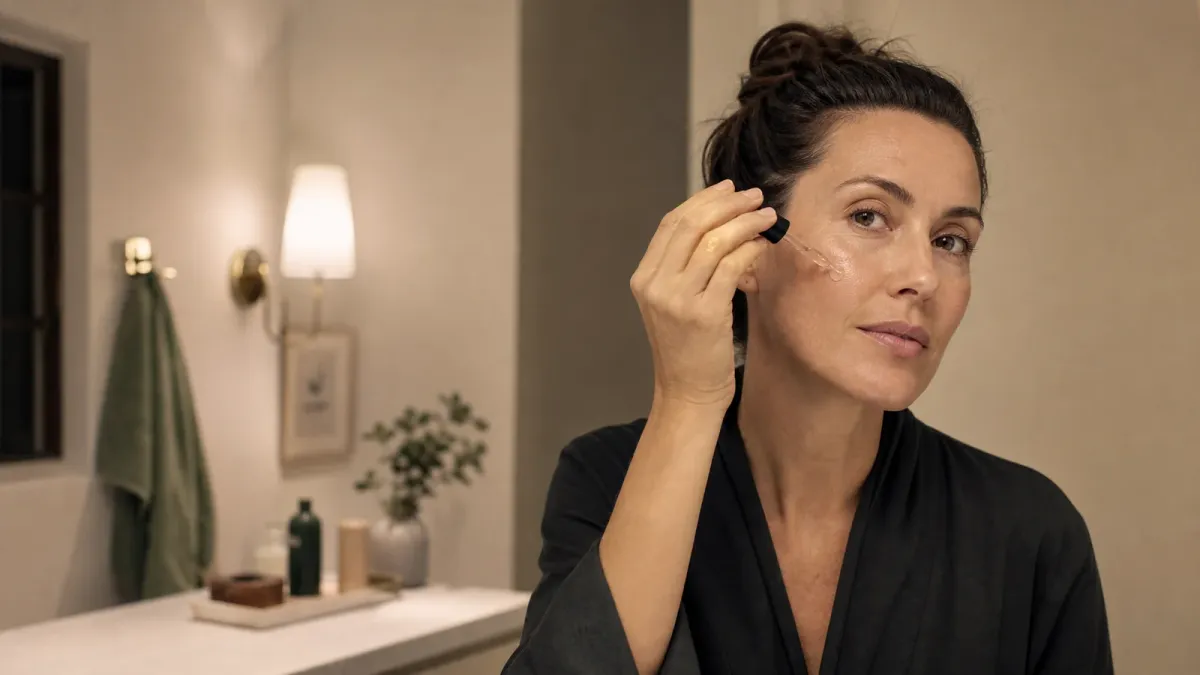
Retinol can improve mild fine lines, uneven tone and rough photoaged texture, but it should be one slow nighttime treatment inside a stable routine. Start one night weekly, increase only after several comfortable weeks, moisturize and use broad-spectrum SPF 30+ every morning. Avoid retinoids during pregnancy and stop for raw burning, swelling or painful peeling.
Quick Summary
- Stabilize cleanser, moisturizer and sunscreen before adding retinol.
- Begin one night weekly; do not chase immediate daily use.
- Retinol, retinal and prescription tretinoin are not interchangeable.
- Judge texture after 8-12 weeks and deeper change over months.
Decide Whether Retinol Fits Your Anti-Aging Goal
Retinol is an over-the-counter retinoid used for mild fine lines, uneven tone and rough photoaged texture. It is useful, but it is not the first purchase for every routine. Daily sunscreen, a comfortable moisturizer and gentle cleansing need to work before a retinol schedule can stay consistent.
The American Academy of Dermatology explains that retinol is a type of retinoid and may suit mild fine lines, pigmentation irregularities and texture. Prescription tretinoin is not the same product at a higher cosmetic percentage. It is already active retinoic acid, has stronger evidence for photoaging and should be used with medical guidance.
| Your main concern | Retinol fit | Better first move |
|---|---|---|
| Mild fine lines or rough texture | Reasonable when the barrier is stable | Start one night weekly |
| Dryness lines that change quickly | May be unnecessary at first | Moisturizer and gentler cleansing |
| Deep folds or volume loss | Cannot replace structural treatment | Set realistic expectations or seek a consultation |
| Raw, burning or peeling skin | Poor fit right now | Pause actives and repair the base routine |
| Pregnant or trying to conceive | Avoid retinoids | Ask a qualified clinician for alternatives |
A randomized study of topical retinol in naturally aged skin found improvement in fine wrinkles after sustained use. A newer network meta-analysis of topical photoaging interventions supports retinoids as relevant options, while also showing that effect and tolerability depend on the specific intervention.
For pigment-prone complexions, follow the melanin-rich anti-aging routine, including a slow retinoid ladder and clear dark-mark stop signs.
The evidence should not be inflated. A review of cosmeceutical retinoids noted that the evidence behind over-the-counter derivatives is less extensive than the evidence for prescription tretinoin. Product stability, packaging, concentration and the complete formula all affect what reaches the skin.
Retinol, Retinal and Prescription Retinoids Are Different
Retinol: the common cosmetic starting route
Retinol must be converted within the skin before it can act through retinoid receptors. That indirect route is one reason it is usually less potent than prescription retinoic acid, though irritation can still occur. Percentages cannot be compared across brands as if the rest of the formula did not matter.
Encapsulation, solvents, antioxidants and packaging can change stability and delivery. An opaque airless pump or tube generally protects light-sensitive ingredients better than an open jar. Do not guess a percentage when a brand does not publish one.
Retinal: one conversion step closer
Retinaldehyde, often shortened to retinal, sits one conversion step closer to retinoic acid than retinol. Some users choose it for a stronger cosmetic route, but a faster conversion does not guarantee better tolerance. Introduce it with the same caution as another retinoid.
For a concrete cosmetic-retinal buying decision, our Medik8 versus Geek & Gorgeous guide compares the two 0.1% products by complete formula, delivered cost and switching considerations.
Do not layer retinal and retinol together. They fill the same treatment slot. If a retinal product irritates, the answer is usually lower frequency or a simpler formula, not a second retinoid underneath it.
Tretinoin and other prescription retinoids
Prescription retinoids have established medical uses and require different risk management. Tretinoin has a substantial evidence base for photoaging, while adapalene is commonly used for acne. A cosmetic retinol guide should not provide a conversion table that pretends these medicines are directly interchangeable.
Use the retinol versus bakuchiol comparison when irritation or pregnancy restrictions make a non-retinoid route more relevant. Bakuchiol has emerging data, but it should not be described as chemically identical to retinol.
How to Start Retinol Without Turning Irritation Into the Routine
| Phase | Frequency | Decision rule |
|---|---|---|
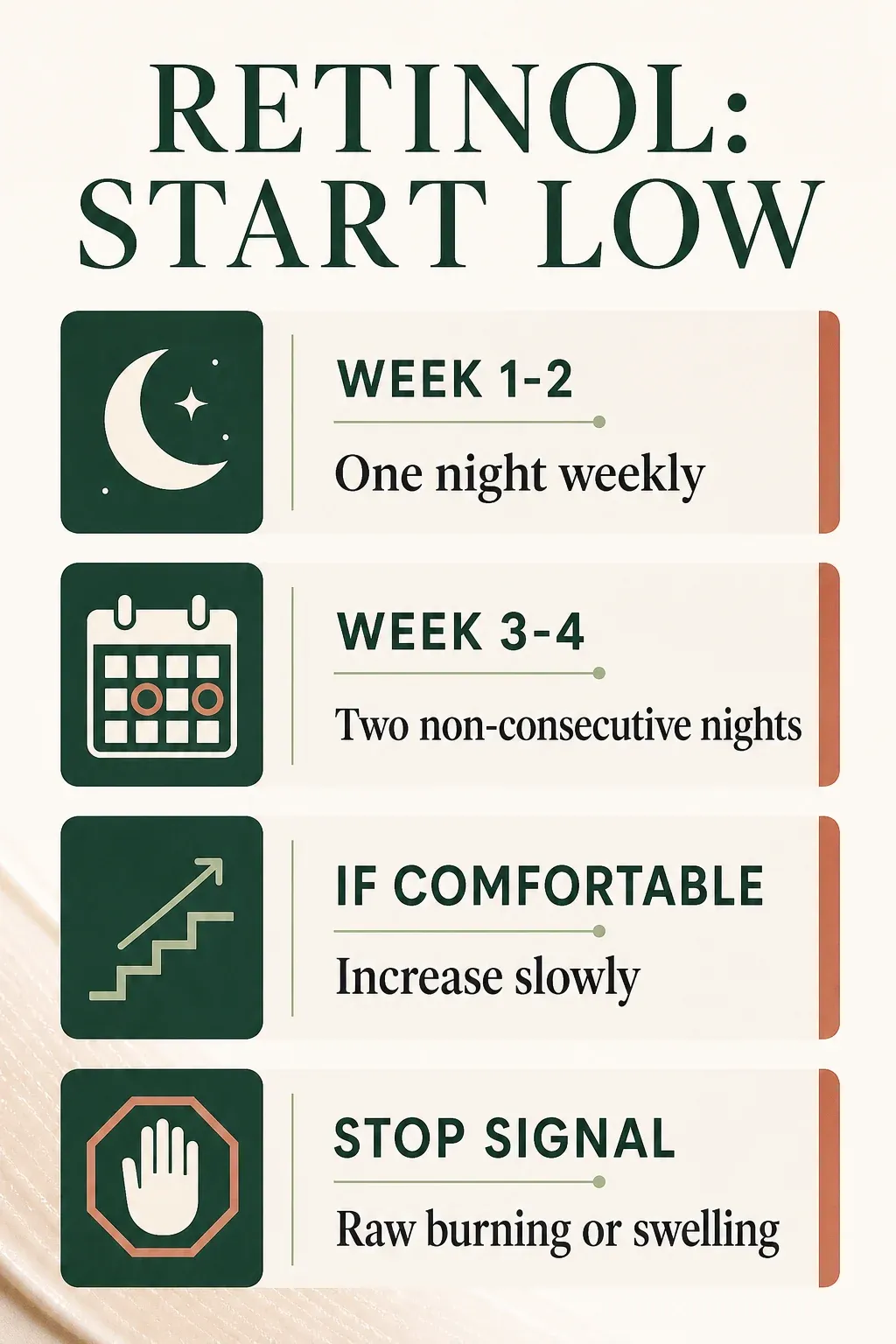
| Weeks 1-2 | One night weekly | Continue only if basic products do not sting |
| Weeks 3-4 | Two non-consecutive nights | Hold frequency when dryness rises |
| Weeks 5-8 | Two or three nights weekly | Increase only after several calm weeks |
| Maintenance | Lowest useful frequency | Do not chase daily use as a badge |
Prepare the base routine first
For two weeks, keep cleanser, moisturizer and sunscreen unchanged. Stop scrubs and unnecessary exfoliating toners. If the face remains comfortable, the routine has a stable baseline against which a retinol reaction can be recognized.
Our slow skincare guide gives a controlled one-product-at-a-time method. The damaged skin barrier guide helps distinguish ordinary temporary dryness from widespread stinging, shiny-raw patches and painful peeling.
Use a small amount on dry skin
Follow the current product directions. For many facial retinol products, a pea-size amount is enough for the whole face. Keep it away from the eyelids, lip corners and creases beside the nose at first because those areas collect product and irritate easily.
Applying to completely dry skin can reduce the sting created by wet-skin penetration. There is no universal requirement to wait exactly twenty minutes. The practical rule is to let the skin dry comfortably, then use the amount the label directs.
Moisturize before or after according to tolerance
A moisturizer before retinol can buffer contact for sensitive beginners. A moisturizer afterward can reduce dryness. Using both is sometimes called the sandwich method, but it should be presented as a comfort technique, not as a precisely quantified guarantee.
If your routine involves prescribed tretinoin rather than a cosmetic retinol serum, use our tretinoin moisturizer buying guide to compare supporting formulas while keeping treatment instructions with your clinician.
Choose a bland cream that already works. Our anti-aging moisturizer guide separates barrier support from exaggerated lifting claims, while the day and night moisturizer guide explains when a richer evening texture is useful.
Protect every morning
Use broad-spectrum SPF 30 or higher every morning, regardless of whether it is a retinol night. Sun protection matters because cumulative UV exposure drives photoaging and because irritated skin tolerates additional exposure poorly. Shade, hats and clothing add protection when outdoor exposure is prolonged.
The anti-aging sunscreen guide compares wearable textures. A sunscreen you can apply in an adequate amount is more useful than a theoretically perfect formula that pills over six morning layers.
Two Retinol Products With Different Starting Roles
These are not ranked by popularity or marketplace stars. One is a lighter fragrance-free serum aimed at a cautious cosmetic start. The other is an established RoC serum for a reader who wants a treatment-focused formula and accepts that the brand does not publish a simple percentage comparison.
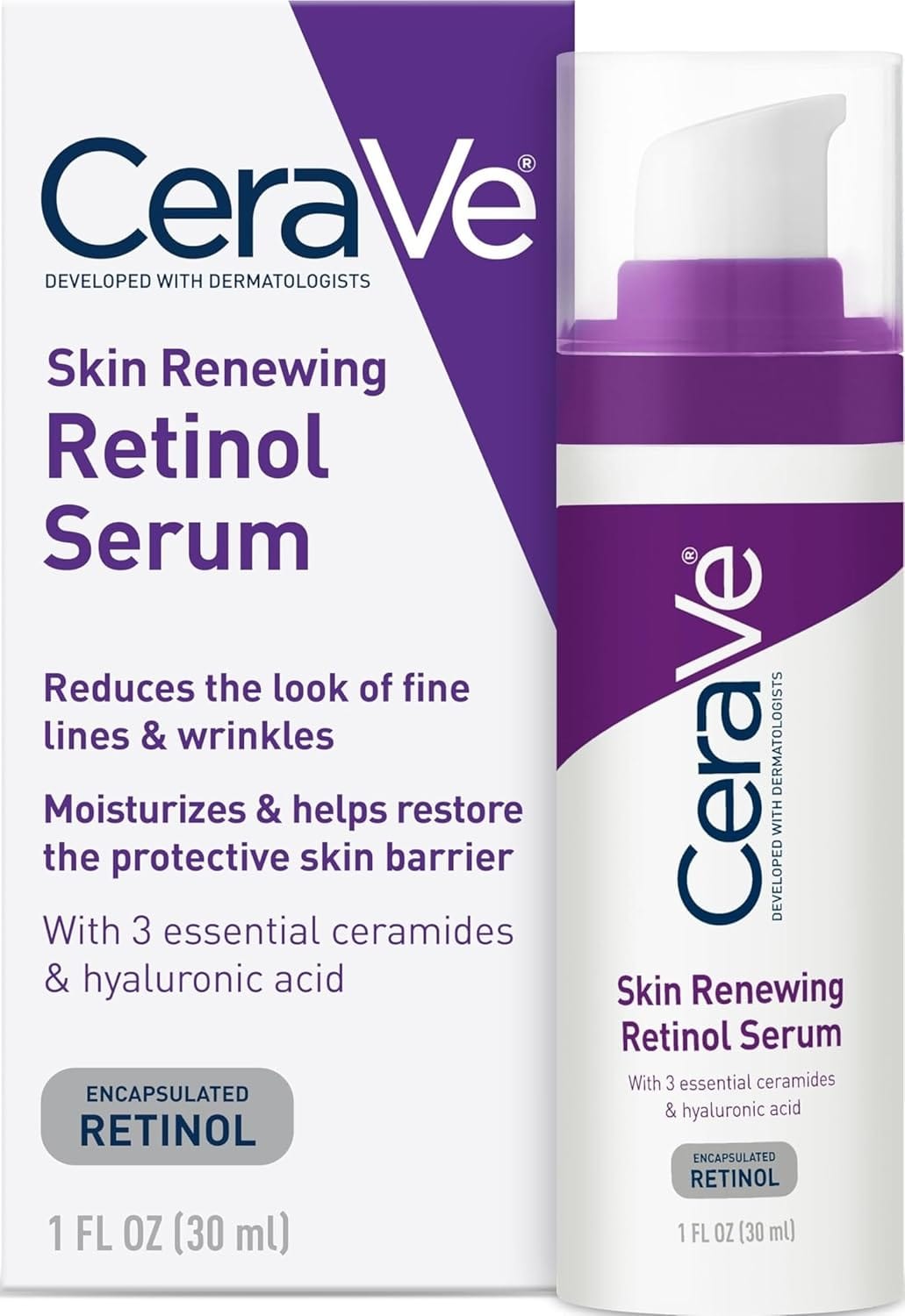
CeraVe Skin Renewing Retinol Serum
A retinol beginner who wants a fragrance-free serum with ceramides and hyaluronic acid in the supporting formula.
It gives the nighttime routine one clear retinol slot without adding exfoliating acids or fragrance as extra variables.
Watch-out: The brand does not make it irritation-proof. Avoid retinoids during pregnancy and do not combine it with another retinoid.
View on AmazonAs an Amazon Associate, SkinOptimizer may earn from qualifying purchases. Prices, sellers and availability can change.
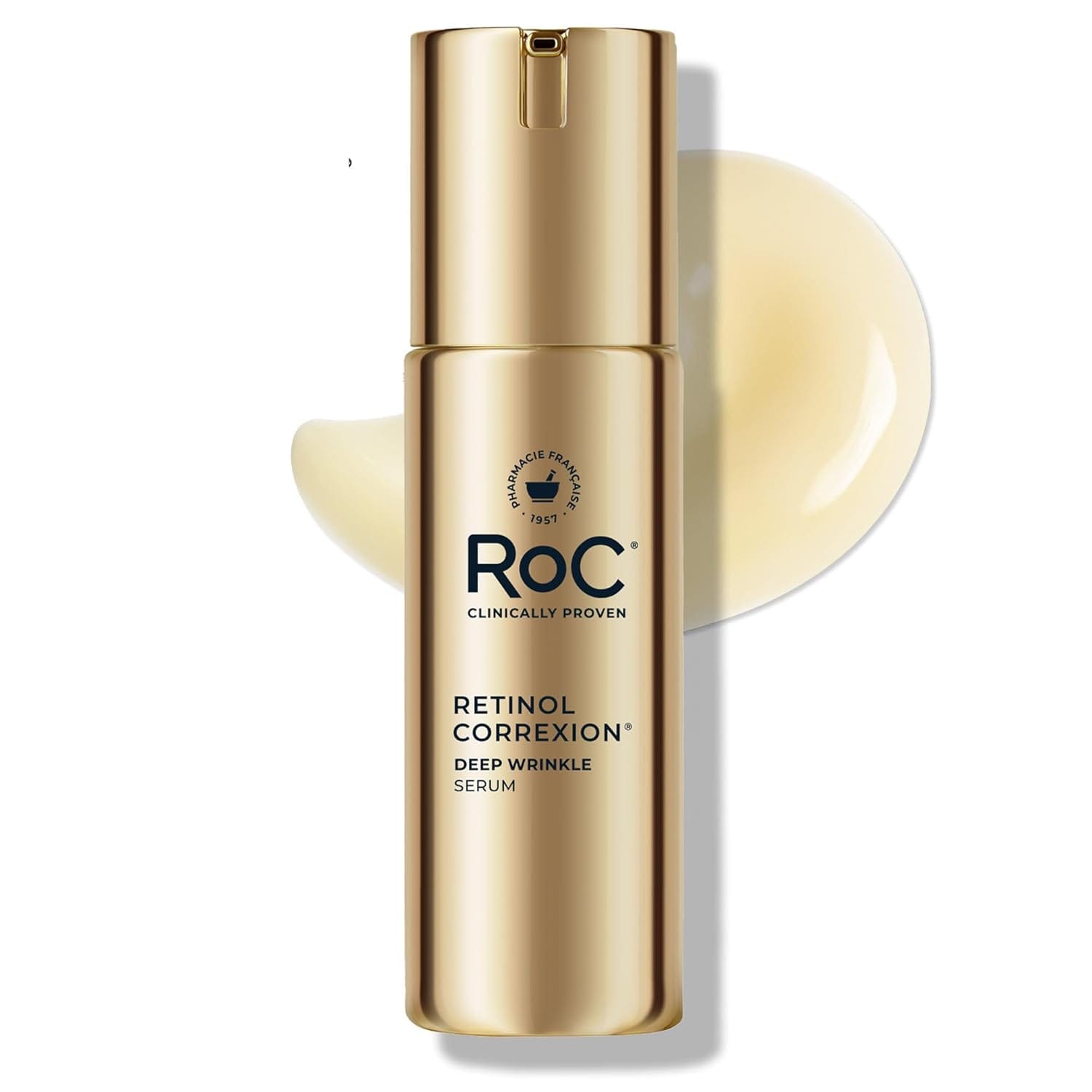
RoC Retinol Correxion Deep Wrinkle Serum
Someone with a stable moisturizer-SPF routine who wants an established retinol serum for visible fine lines and texture.
RoC identifies retinol and a mineral complex as key formula elements and directs users to build tolerance gradually.
Watch-out: The exact retinol percentage is not clearly published on the official page. Do not infer strength from reviews or use it every night immediately.
View on AmazonAs an Amazon Associate, SkinOptimizer may earn from qualifying purchases. Prices, sellers and availability can change.
The current RoC product page advises building tolerance and identifies the formula rather than offering a universal retinol-strength ladder. Verify the seller, size, ingredient list and directions on the package before ordering.
What to Use on Non-Retinol Nights
Use cleanser and moisturizer only. Extra recovery serums are optional, not mandatory. Glycerin, ceramides, dimethicone, petrolatum and squalane can all support comfort when they appear in a formula that suits the skin.
Avoid using a scrub, strong peel or high-frequency exfoliating acid on the first non-retinol night. The skin does not need a second active to compensate for a night off. Read hydration versus moisturization when watery serums leave the skin tight because they are not sealed with an adequate cream.
Retinol Side Effects: Adjust, Pause or Get Help
Adjust
Mild dryness or a small amount of flaking: hold the current frequency, use moisturizer and remove other exfoliants.
Pause
Persistent burning, raw shine or painful peeling: stop retinol and return to a bland routine until comfortable.
Get help
Swelling, hives, blistering, severe pain or a spreading rash: stop the product and seek qualified medical advice.
A temporary increase in dryness is common, but “retinol uglies” should not be treated as a required rite of passage. Irritant dermatitis can worsen discoloration, especially in skin tones prone to post-inflammatory marks. Slower use is often more productive than repeatedly stopping after an aggressive week.
Purging is also overused as an explanation. Retinoids can bring existing microcomedones forward in acne-prone areas, but a new itchy rash, swelling or breakouts in unusual places should not be dismissed indefinitely as purging.
When to Expect Results
Surface feel may change before fine lines. Give a tolerable cosmetic retinol routine at least eight to twelve weeks before comparing texture, and several months before judging its place in a long-term anti-aging plan. Compare photographs in the same neutral light, distance and facial expression.
Hydration can temporarily soften lines within hours, while retinoid-related changes take longer. The fine-line skincare guide explains how to separate dehydration lines, expression lines and lines that remain visible at rest.
Do not increase frequency because a mirror looks unchanged after ten days. Consistency, sun protection and tolerability matter more than a dramatic early sensation. Deep folds, sagging and volume loss are not realistic topical-retinol outcomes.
How to Decide Whether to Continue, Switch or Stop
Continue the current formula when the skin is comfortable, sunscreen still applies evenly and photographs show gradual texture improvement after a fair trial. There is no need to switch because a new product advertises a higher percentage. A stable routine has value that a stronger label cannot guarantee.
Switch the vehicle, not automatically the strength, when the main problem is texture. An oily serum may feel too heavy, while a quick-drying gel may sting or pill. Change only one variable and restart at low frequency so the new response can be interpreted.
Stop and simplify when burning persists into the next day, peeling becomes painful or ordinary moisturizer suddenly stings. Wait until basic products feel normal before considering another retinoid attempt. Repeatedly restarting on irritated skin extends the cycle.
Ask a dermatologist about prescription options when a well-tolerated cosmetic routine has been used consistently but the goal remains unmet. A clinician can assess whether tretinoin, another procedure or simply different expectations fit the concern. This is especially important when discoloration, acne or another condition is part of the picture.
Keep the old bottle until the new formula has passed a short tolerance trial, but do not alternate two retinoids. Changing brand, strength and frequency simultaneously makes a reaction difficult to trace. Record the start date and weekly frequency instead of relying on memory.
Common Retinol Mistakes
- Starting nightly: irritation appears before a sustainable routine exists.
- Using more than directed: extra product increases exposure, not certainty of faster results.
- Stacking acids and scrubs: several turnover-focused steps can destabilize the barrier.
- Applying around eyes and lip corners first: thin, folded areas collect product and sting easily.
- Skipping sunscreen: photoaging prevention remains the foundation of the plan.
- Comparing percentages across brands: delivery, stability and complete formula also matter.
- Using during pregnancy: retinoids should be avoided unless a qualified clinician directs otherwise.
The Bottom Line
Retinol can improve mild fine lines, uneven tone and photoaged texture, but it works best as one slow nighttime treatment inside a stable routine. Begin once weekly, moisturize, protect the skin every morning and judge progress over months. Avoid retinoids during pregnancy, stop for significant irritation and do not expect a cosmetic serum to erase deep wrinkles or replace structural treatment.
Frequently Asked Questions
How often should a beginner use retinol for anti-aging?
Start one night weekly for two weeks. If the skin remains comfortable, move to two non-consecutive nights and hold that frequency before considering another increase.
What percentage of retinol should a beginner use?
A low published concentration can be a useful screen, but percentages are not directly comparable across formulas. Stability, delivery and the complete product matter, so choose a beginner-positioned formula and start slowly.
Can I use retinol every night?
Some experienced users tolerate nightly use, but it is not a required goal. Use the lowest frequency that produces a sustainable routine without persistent burning, raw peeling or disrupted sunscreen use.
Can I use vitamin C with retinol?
Yes, they can exist in one routine. A common simple plan uses vitamin C in the morning and retinol on scheduled nights, but introduce them separately so irritation can be traced.
How long does retinol take to improve wrinkles?
Texture may change after eight to twelve weeks, while visible fine-line improvement often requires several months of consistent, tolerable use. Deep folds and volume loss are not realistic topical outcomes.