Can You Use Body Lotion on Your Face? Evidence-Based Guide to Facial vs Body Moisturizers
Evidence-based guide to using body lotion on your face. Learn the comedogenic scale, ingredient risks, and when it is safe to use body lotion on facial skin.
In this guide
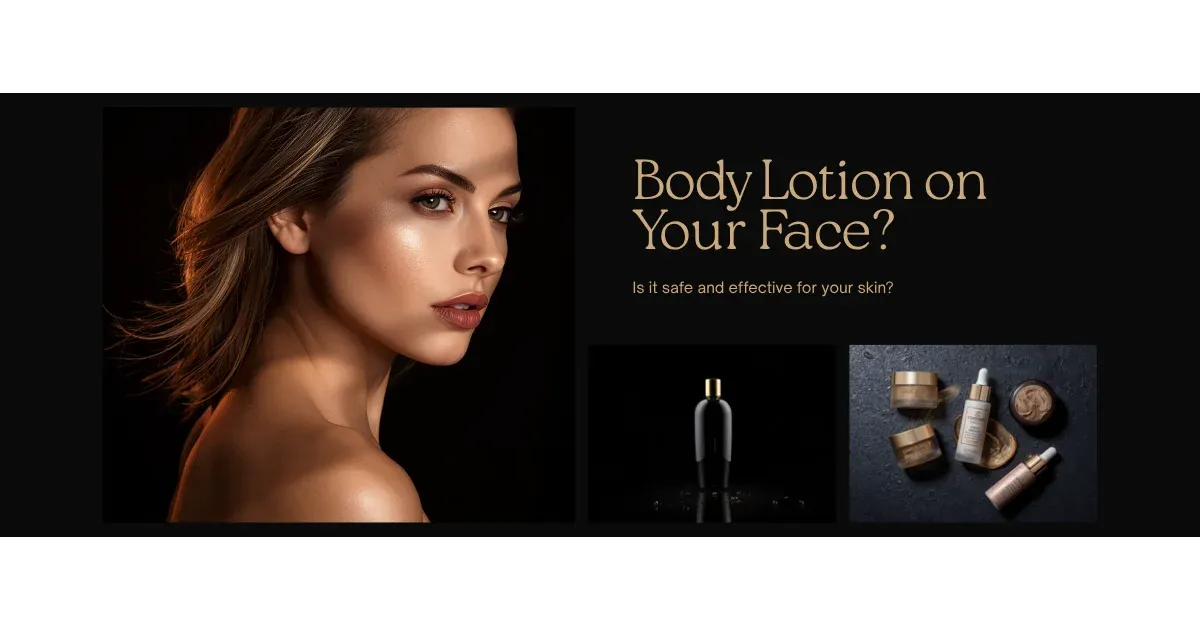
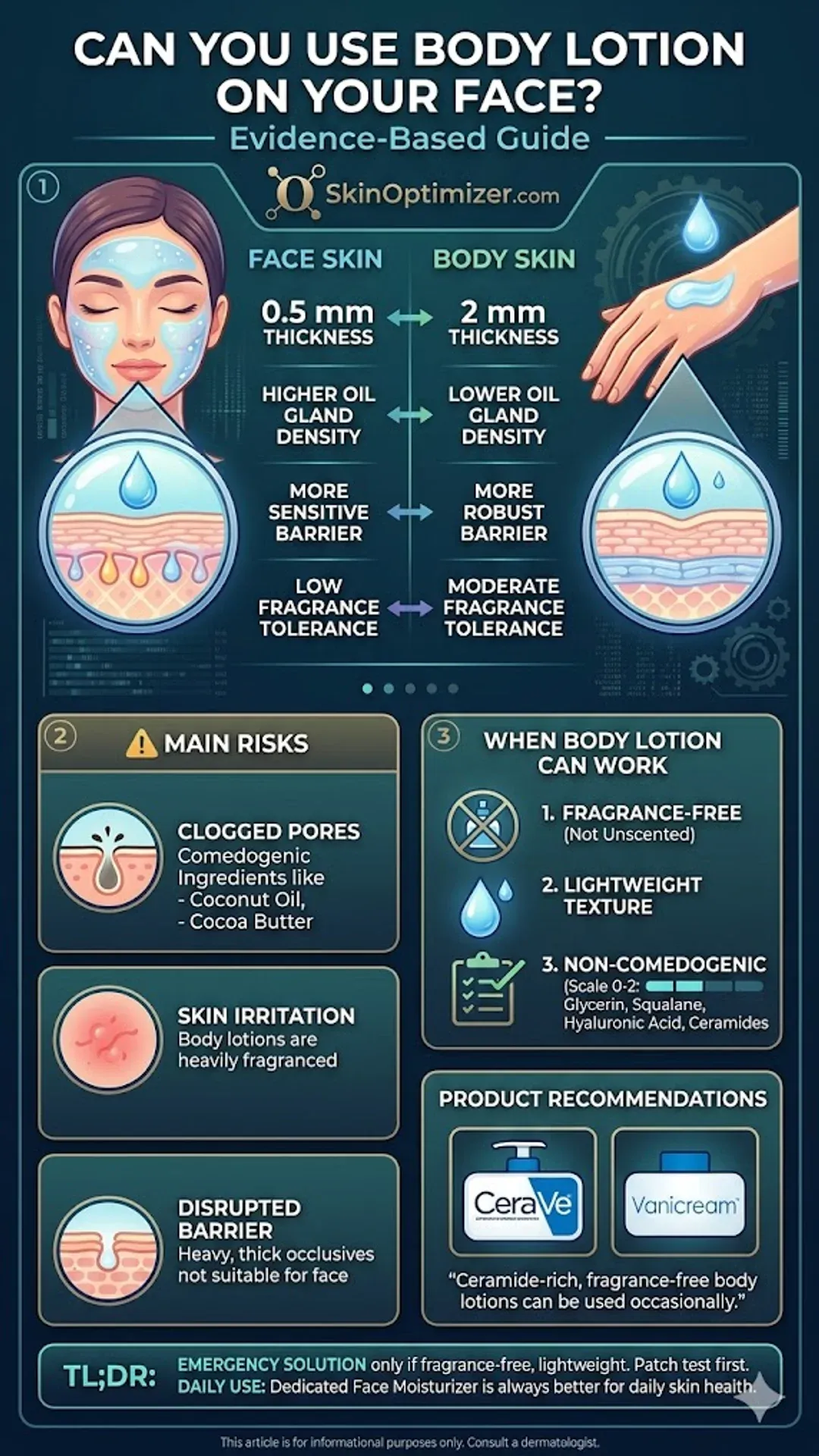
Facial skin and body skin are not the same. Facial skin is approximately 0.5 millimeters thick compared to 2 millimeters on the body. It contains a higher density of sebaceous glands and hair follicles, and its barrier function is more susceptible to disruption by heavy occlusives and fragrances.
The question is not whether body lotion can moisturize your face. It can. The question is whether the formulation is appropriate for the specific biological characteristics of facial skin. In most cases, the answer is no. The heavy oils, thicker emollients, and fragrance blends that make body lotions effective on arms and legs can clog pores, disrupt the barrier, and trigger irritation when applied to the face.
This guide explains the science behind the difference, identifies which body lotion ingredients are safe for facial use, and provides product recommendations for both scenarios.
⏹ TL;DR — Body Lotion on Your Face
- Facial skin is 4x thinner than body skin and has more oil glands. Formulations designed for the body are often too heavy for the face.
- The comedogenic scale matters. Ingredients rated 3-5 (coconut oil, cocoa butter, lanolin) are likely to clog facial pores. Body lotions frequently contain these.
- Fragrance is the most common irritant. Body lotions are often heavily fragranced. Facial skin is more reactive to fragrance than body skin.
- Some body lotions can work on faces if they are fragrance-free, non-comedogenic, and lightweight. Look for glycerin, squalane, or ceramide-based formulas.
- In an emergency, a lightweight body lotion is better than nothing. But a dedicated face moisturizer is always the better choice for daily use.
Need a face-safe body lotion option first? Jump directly to the product card.
Jump to face-safe lotion pick🧪 The Skin Insider
The term "non-comedogenic" is not regulated by the FDA. A product labeled non-comedogenic can still contain ingredients rated 3 or higher on the comedogenic scale. The only way to know if a product will clog your pores is to read the actual ingredient list and check each component against the standardized comedogenic rating. A 2021 study on comedogenicity assessment confirmed that individual ingredient testing is more reliable than finished product labeling.
Why Body Lotion Is Different from Face Lotion
| Factor | Face Skin | Body Skin |
|---|---|---|
| Thickness | ~0.5 mm | ~2 mm |
| Sebaceous glands | High density (~900/cm²) | Low density (~100/cm²) |
| TEWL rate | Higher (loses water faster) | Lower |
| Fragrance tolerance | Low (frequent irritation) | Moderate |
| Comedogenic risk | Higher (more follicles) | Lower |
As DermNet explains, emollients and moisturizers serve different purposes depending on their formulation. Body lotions are optimized for the thicker, less reactive skin of the arms, legs, and torso (DermNet, Emollients and Moisturisers).
Comedogenic Ingredients: What to Avoid
The comedogenic scale rates ingredients from 0 (non-comedogenic) to 5 (highly comedogenic). Body lotions frequently contain ingredients rated 3-5.
- Rating 5: Coconut oil, cocoa butter - common in body lotions, highly likely to clog facial pores
- Rating 4: Lanolin, wheat germ oil - heavy emollients for dry body skin, problematic for faces
- Rating 3: Isopropyl myristate, acetylated lanolin - often added for spreadability in body formulations
- Rating 0-1 (safe for face): Glycerin, squalane, hyaluronic acid, mineral oil, dimethicone
When Body Lotion Can Work on the Face
Not all body lotions are dangerous for the face. The modern market includes body lotions that are fragrance-free, non-comedogenic, and formulated with face-safe ingredients. If you need a dual-purpose product, look for these characteristics:
- Fragrance-free (not just unscented)
- Oil-free or gel-based texture
- Short ingredient list without heavy butters or oils
- Contains humectants (glycerin, hyaluronic acid) rather than heavy occlusives
💡 The Optimizer's Edge
The conventional advice says body lotion should never go on your face. The more nuanced truth is that some body lotions are closer to face moisturizers than traditional body lotions. Brands like CeraVe and Vanicream produce body lotions that are fragrance-free, non-comedogenic, and contain ceramides. These can be used on the face without issues. The key variable is not whether the bottle says "body" or "face" but the ingredient list. A fragrance-free, ceramide-rich body lotion is a better choice for your face than a face moisturizer loaded with essential oils and fragrance.
Face-Safe Body Lotion Recommendations
Fragrance-Free Body Lotion (Face-Safe)
A lightweight, ceramide-rich body lotion that is also suitable for facial use.
Face + body safe pick
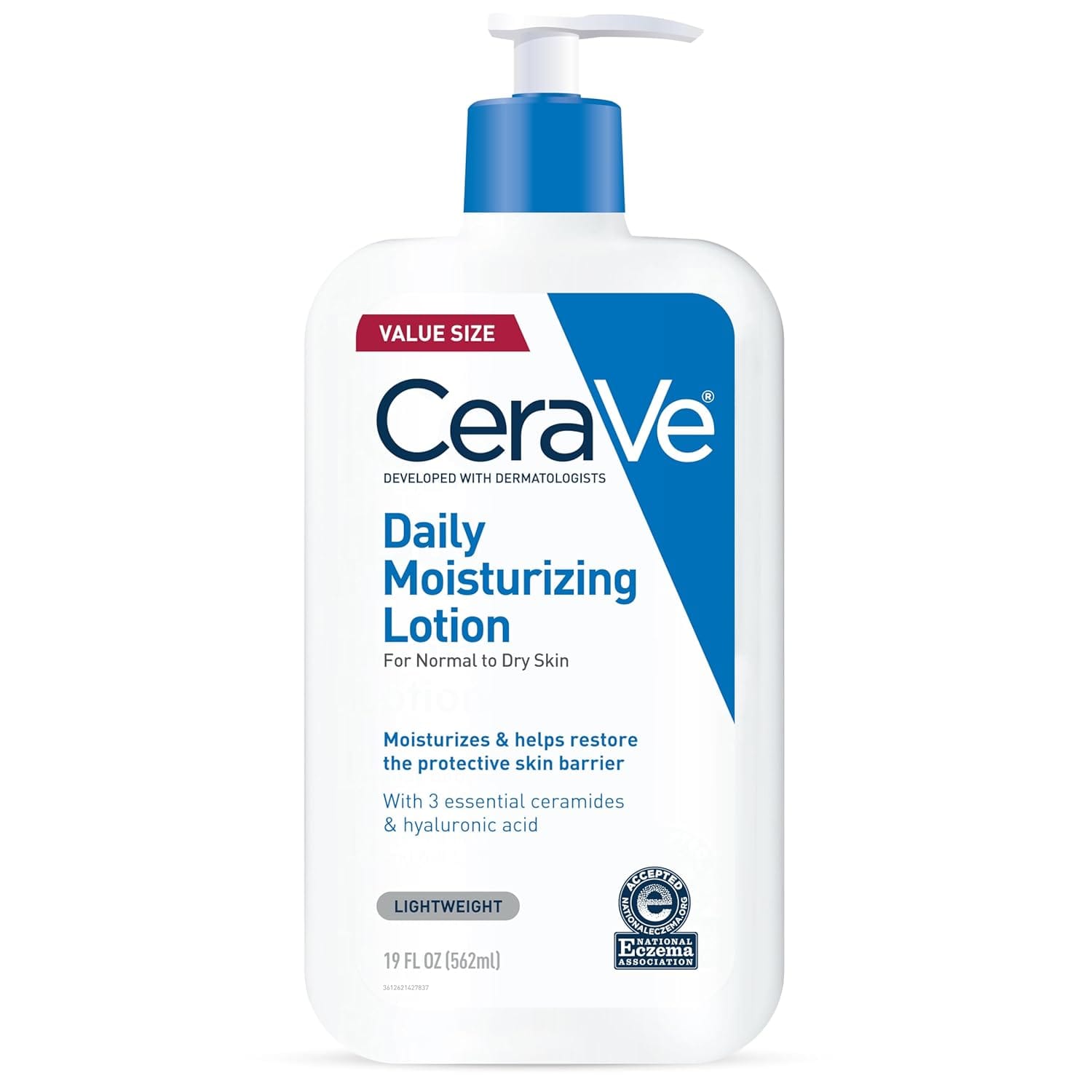
CeraVe Daily Moisturizing Lotion
Why it fits: This face-and-body lotion fits readers who need a fragrance-free, lightweight ceramide moisturizer that can work on the face in a pinch without the heavy oils common in body lotions.
Watch-out: Use a thin layer and patch test if you are acne-prone or very sensitive. A dedicated facial moisturizer is still the better daily default if this feels heavy.
View Product on AmazonAs an Amazon Associate, we earn from qualifying purchases.
For the best face-specific moisturizers organized by skin type, read our guide to choosing the right moisturizer. For lightweight options, see our best gel moisturizers for every skin type.
✔ Your Clear Skin Checklist
- Step 1: Check your body lotion ingredient list for coconut oil, cocoa butter, lanolin, or isopropyl myristate. If present, do not use on your face.
- Step 2: Choose fragrance-free over unscented. Unscented products may contain masking fragrances that irritate facial skin.
- Step 3: If using body lotion on your face temporarily, patch test on your jawline for 3 days before full application.
- Step 4: Apply a thin layer only. Body lotions are more concentrated and require less product than face moisturizers.
- Step 5: Stop immediately if you notice breakouts, stinging, or redness. Switch to a dedicated face moisturizer.
- Step 6: Invest in a dedicated face moisturizer for daily use. Body lotion is an emergency solution, not a long-term strategy.
Frequently Asked Questions About Body Lotion on the Face
Can I use body lotion on my face in an emergency?
What ingredient should I avoid in body lotions for the face?
Is CeraVe body lotion safe for the face?
Can body lotion cause acne on the face?
Is baby lotion safe for the face?
This article is for informational purposes only and does not replace professional dermatological advice.