Do You Need Sunscreen Indoors? The Complete Guide to Indoor vs Outdoor Sun Protection
Do you need sunscreen indoors? Science-based guide to UVA through windows, blue light from screens, SPF requirements, and the best sunscreens for every scenario.
In this guide
Most people believe sunscreen is only necessary when they step outside. This is not accurate. UVA radiation penetrates window glass, and high-energy visible (HEV) blue light from screens and indoor lighting has been shown to trigger pigmentation and oxidative stress in the skin. The question is not whether you need sunscreen indoors. The question is which formulation you need and when to use it.
For a broader decision beyond indoor sunscreen, follow our layered UV protection guide. It shows how windows, the UV Index, shade, clothing and reapplication change the plan.
The distinction between indoor and outdoor sun protection is not a marketing invention. It is based on different UV exposure patterns. Indoors, the primary threat is UVA (which penetrates glass) and HEV blue light (from screens and LED lighting). Outdoors, the threat includes UVA, UVB (which causes sunburn), and increased UVA intensity from direct exposure. Each scenario requires a different formulation strategy.
This guide explains the difference between indoor and outdoor sun protection based on the current dermatological evidence. It covers UVA penetration through glass, the role of blue light, SPF requirements for different environments, and the specific products that provide the right protection for each scenario.
⏹ TL;DR — Indoor vs Outdoor Sunscreen
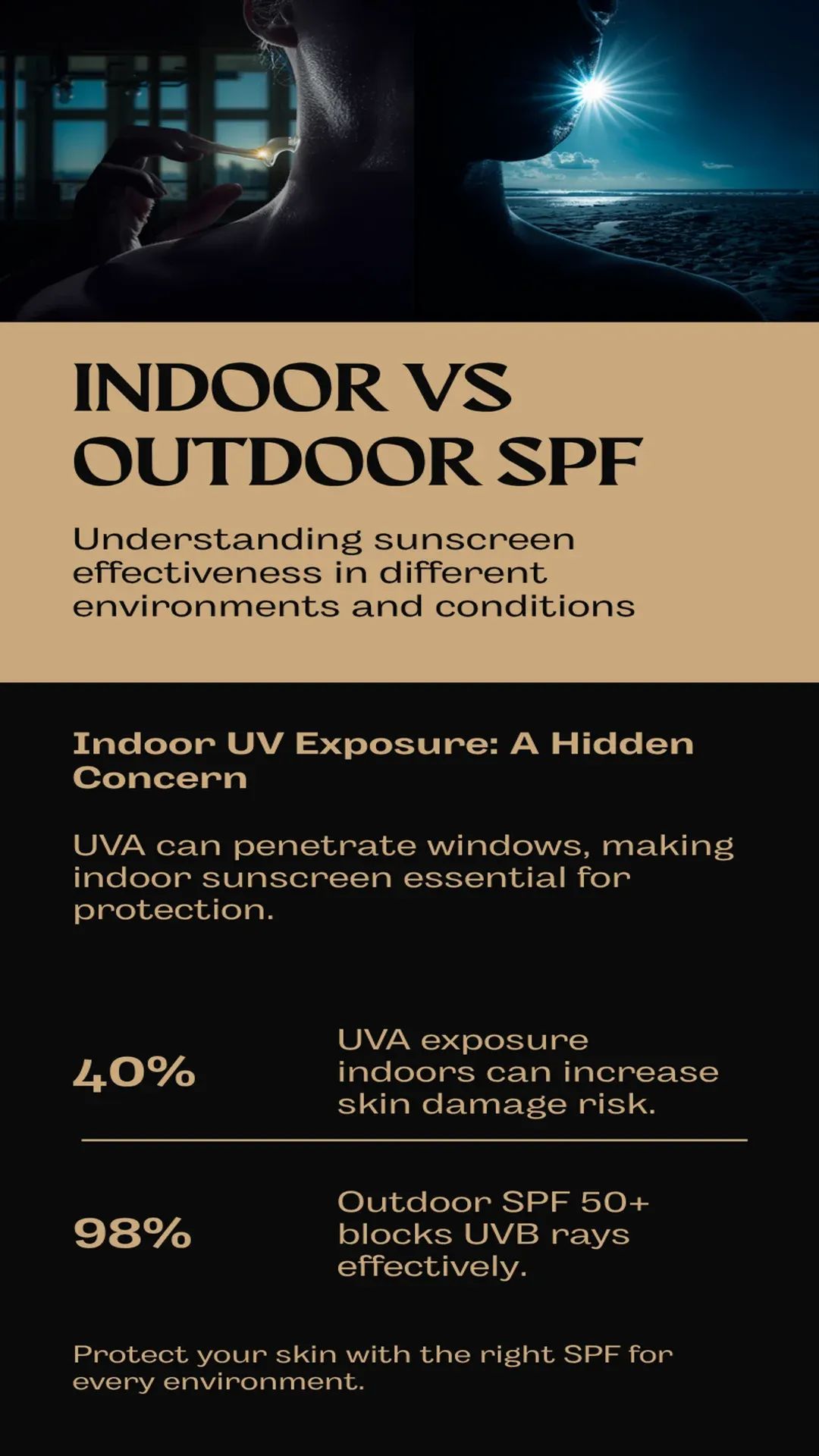
- Indoors does not mean UV-free. UVA rays penetrate window glass and contribute to photoaging and hyperpigmentation. UVB is blocked by glass, but UVA is not.
- Blue light (HEV) from screens is a real concern for pigmentation, especially in darker skin tones. Standard sunscreens do not block HEV. Iron oxides in tinted sunscreens do.
- SPF 30 is the minimum for daily indoor use. SPF 50 is recommended for outdoor or prolonged window exposure. Higher SPF provides marginally more UVB protection but significantly longer protection duration.
- Reapplication matters. Indoors every 4 hours. Outdoors every 2 hours. Sunscreen degrades on the skin regardless of UV exposure.
- No single sunscreen is perfect for every scenario. A lightweight daily SPF 30 for indoors and a water-resistant SPF 50 for outdoor activities is the most practical approach.
Want the product picks first? Jump to the indoor tinted SPF and outdoor water-resistant sunscreen.
Jump to sunscreen picks🧪 The Skin Insider
Sunscreen labels and photoprotection guidance reveal a common misunderstanding: SPF measures UVB protection, not total UVA protection. Compare broad-spectrum status, use amount, exposure and reapplication instead of judging by SPF alone.
Understanding UV Exposure Indoors
UVA radiation has a longer wavelength (315 to 400 nm) than UVB (280 to 315 nm). This longer wavelength allows UVA to pass through standard window glass. UVB is blocked by glass. This means that sitting next to a window for several hours exposes your skin to UVA rays that penetrate deep into the dermis, where they break down collagen and elastin over time.
A 2022 review in PMC examined the damaging effects of UVA1 (340 to 400 nm) and confirmed that chronic UVA exposure through windows contributes to photoaging, hyperpigmentation, and immunosuppression, even in people who spend most of their time indoors (PMC, Damaging Effects of Long UVA Rays). UVA1 is the longest and most penetrating UVA subtype. It reaches the deepest layers of the skin where it generates reactive oxygen species that degrade collagen and elastin over years of accumulated exposure.
This is particularly relevant for people who work near windows, drive frequently, or spend time in rooms with large glass surfaces. A study on bus drivers found asymmetrical photoaging on the side of the face exposed to the window, confirming that UVA exposure through glass produces measurable skin changes over time.
Blue Light and Screen Exposure
High-energy visible (HEV) blue light with wavelengths between 400 and 450 nm has been shown to induce pigmentation in skin, particularly in Fitzpatrick skin types III through VI. A 2020 study published in Photodermatology, Photoimmunology & Photomedicine demonstrated that blue light irradiation causes measurable pigmentation changes within 24 hours (PMC, Pigmentation Effects of Blue Light).
Standard sunscreens containing only zinc oxide and titanium dioxide provide limited protection against HEV light. A study on iron oxides found that incorporating them into sunscreen formulations significantly attenuates blue light transmission and reduces pigmentation. Iron oxides are the pigment agents in tinted sunscreens, which means tinted sunscreens are the most effective option for blue light protection (PubMed, Iron Oxides Attenuate Blue Light).
If you spend more than four hours per day in front of screens and are prone to hyperpigmentation or melasma, a tinted sunscreen containing iron oxides is the most evidence-based choice for indoor protection.
SPF Requirements: Indoor vs Outdoor
| Scenario | Recommended SPF | Key Features | Reapplication |
|---|---|---|---|
| Indoors, no window proximity | SPF 30 | Broad-spectrum, lightweight | Every 6-8 hours |
| Indoors near windows | SPF 30-50 | Tinted (iron oxides for HEV) | Every 4 hours |
| Outdoors, brief (under 30 min) | SPF 30 | Broad-spectrum | Before leaving |
| Outdoors, extended or direct sun | SPF 50+ | Water-resistant, PA++++ | Every 2 hours |
Best Sunscreens for Indoor and Outdoor Use
Daily Indoor Sunscreen (Tinted)
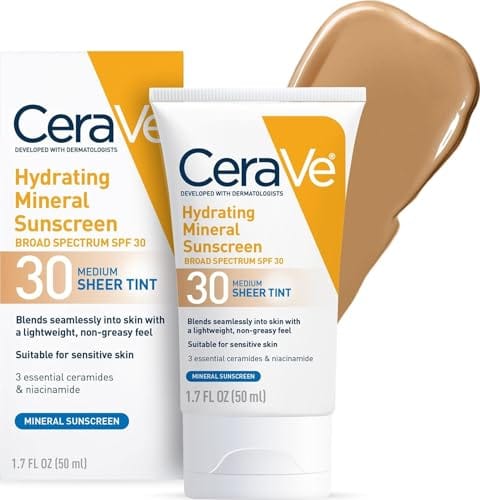
A tinted sunscreen with SPF 30 and iron oxides provides UVA protection and blue light attenuation in one product. It doubles as a light foundation for most skin tones and eliminates the need for a separate SPF step under makeup.
Best for indoors
CeraVe Hydrating Mineral Sunscreen Sheer Tint SPF 30
Why it fits: A tinted mineral SPF 30 makes sense indoors when window UVA and visible-light pigmentation are the main concerns, especially for melasma-prone or post-acne-mark-prone skin.
Watch-out: The tint is not universal for every skin tone. Use enough product for real SPF coverage and choose a different shade or formula if the finish looks orange, gray, or patchy.
View Product on AmazonAs an Amazon Associate, we earn from qualifying purchases.
Outdoor Sport Sunscreen (Water-Resistant)
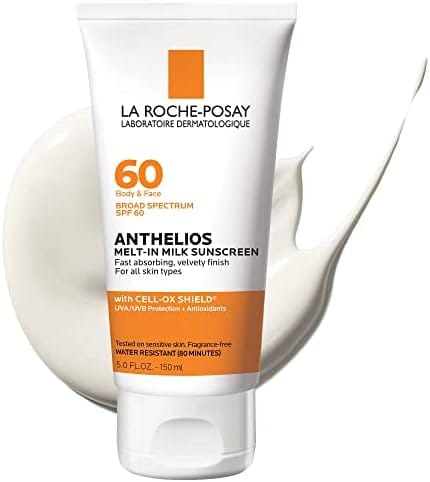
For outdoor activities, swimming, or direct sun exposure, a water-resistant SPF 50+ sunscreen with PA++++ is necessary. It should withstand sweat and water for at least 40 minutes and be reapplied every two hours.
Best for outdoors
La Roche-Posay Anthelios Melt-In Milk SPF 60
Why it fits: A higher-SPF, broad-spectrum sunscreen with 80-minute water resistance fits outdoor days, sweat, beach time, and long direct-sun exposure better than a light indoor SPF.
Watch-out: Reapply every two hours outdoors and after swimming, sweating, or towel drying. High SPF reduces risk only when the amount and reapplication are realistic.
View Product on AmazonAs an Amazon Associate, we earn from qualifying purchases.
💡 The Optimizer's Edge
Most sunscreen guides treat SPF as a single variable. The missing insight is that UVA protection and UVB protection are independent variables. A sunscreen can have SPF 50 (high UVB protection) and PA++ (moderate UVA protection). For indoor use, where UVB is blocked by glass but UVA passes through, a PA++++ rating is more important than a high SPF number. Always check for both numbers. If a sunscreen does not list either broad spectrum or a PA rating, it likely provides minimal UVA protection regardless of the SPF number on the bottle.
Chemical vs Mineral Sunscreen for Indoor and Outdoor Use
The choice between chemical and mineral sunscreen matters for both indoor and outdoor protection. Chemical sunscreens absorb UV radiation and convert it to heat. Mineral sunscreens sit on the skin surface and reflect/scatter UV rays. For indoor use, mineral sunscreens with zinc oxide provide the broadest UVA protection and are less likely to cause irritation. For outdoor use, modern chemical sunscreens offer better cosmetic elegance and are more practical for reapplication.
Mineral sunscreens have the advantage of working immediately after application. Chemical sunscreens require approximately 20 minutes for the filters to bind to the skin and become effective. If you apply sunscreen only when you are about to leave the house, a mineral formula provides instant protection.
Another consideration is the environmental impact. Certain chemical filters including oxybenzone and octinoxate have been shown to cause coral reef bleaching and are banned in several regions including Hawaii and Key West. Mineral sunscreens using non-nano zinc oxide are generally considered reef-safe.
For a deeper comparison of the two types see our complete guide to chemical vs mineral sunscreen.
How to Properly Apply Sunscreen for Maximum Protection
Product selection is only half the equation. Application technique determines whether you actually get the SPF listed on the bottle. Most people apply 25 to 50 percent of the required amount.
The correct amount for the face and neck is one-quarter teaspoon (approximately 1.25 ml). For the entire body, a full shot glass (30 ml) is required. Applying half the required amount reduces SPF 30 to approximately SPF 15 and SPF 50 to approximately SPF 25.
Application order matters. Sunscreen should be the last step in your morning skincare routine, applied after moisturizer and before makeup. If you use a chemical sunscreen, apply it 20 minutes before sun exposure to allow the filters to bind to the skin. Mineral sunscreens work immediately and do not require wait time.
Common areas that are frequently missed:
- Ears (tops and behind)
- Back of the neck
- Tops of feet (when wearing open shoes)
- Scalp or hair part line
- Lips (use an SPF lip balm)
- Around the eyes (use a mineral stick to avoid stinging)
How to Choose the Right Sunscreen for Your Environment
- For office workers near windows: Tinted SPF 30+ with PA++++ and iron oxides. Apply once in the morning, reapply before lunch if you sit within 1 meter of a window.
- For drivers: SPF 50 with PA++++ on the left side of the face and left arm (the side exposed to the window). UVA accumulates over time and causes asymmetrical aging.
- For outdoor workouts: Water-resistant SPF 50+, applied 15 minutes before going outside. Reapply every 2 hours or immediately after sweating heavily.
- For beach or pool days: Water-resistant SPF 50+. Use a full shot-glass amount for the body. Reapply every 80 minutes or after toweling off.
- For makeup wearers: Apply a tinted SPF 30 under makeup. Do not rely on makeup SPF alone, as makeup is rarely applied thick enough to reach the labeled SPF.
For a comprehensive overview of chemical vs. mineral sunscreen options, read our guide on chemical vs mineral sunscreen. For specific recommendations for sensitive skin, see our best sunscreen for sensitive skin guide.
What the Research Says
The American Academy of Dermatology recommends daily sunscreen use for everyone, regardless of time spent outdoors. They specifically note that UVA rays can penetrate clouds and windows making protection necessary year-round even on overcast days and during winter months.
A 2024 study in PMC on melanoma awareness highlighted that UVA penetrates window glass recommending that people spending long periods near windows use additional sun protection. The study also noted that blue light from screens is an emerging concern particularly for hyperpigmentation-prone skin (PMC, Melanoma Awareness and UV).
For more on daily SPF habits in your skincare routine see our morning skincare routine guide.
Common Sunscreen Myths Debunked
- Myth: Dark skin does not need sunscreen. While melanin provides some natural protection (approximately SPF 13), it does not protect against UVA-induced photoaging or immunosuppression. Everyone regardless of skin tone needs daily sunscreen.
- Myth: Higher SPF means you can stay in the sun all day. SPF 50 blocks approximately 98 percent of UVB rays compared to 97 percent for SPF 30. The difference is marginal. What matters more is correct application and reapplication frequency.
- Myth: Sunscreen is only for sunny days. UV rays are present year-round regardless of temperature or cloud cover. Snow reflects up to 80 percent of UV radiation increasing exposure on winter days.
- Myth: Sunscreen causes vitamin D deficiency. Most people produce sufficient vitamin D through incidental sun exposure on hands and arms during daily activities. The amount of sunscreen typically applied to the face does not significantly impact overall vitamin D synthesis.
✔ Your Clear Skin Checklist
- Step 1: Determine your primary UV exposure scenario. Is it indoor near windows, driving, or outdoor activities? Each requires a different formulation.
- Step 2: Choose a tinted SPF 30+ with PA++++ for indoor or daily use. The tint provides iron oxides that block blue light from screens.
- Step 3: Keep a separate water-resistant SPF 50+ for outdoor activities. Do not use your indoor sunscreen for long sun exposure.
- Step 4: Apply 1/4 teaspoon to your face and neck. Most people apply half the required amount.
- Step 5: Set reapplication reminders: every 4 hours for indoor, every 2 hours for outdoor.
- Step 6: If you work near a window, apply sunscreen to the exposed side of your face and hands even if you stay inside all day.
Frequently Asked Questions About Indoor vs Outdoor Sunscreen
Do I really need sunscreen indoors?
Yes, if you spend time near windows or in front of screens. UVA rays penetrate glass and contribute to photoaging and hyperpigmentation. Blue light from screens can also trigger pigmentation, particularly in darker skin tones. A tinted SPF 30 is sufficient for most indoor scenarios.
Can I use the same sunscreen indoors and outdoors?
You can, but it is not ideal. A lightweight daily sunscreen (SPF 30) is comfortable for indoor wear but may not provide enough protection for extended outdoor exposure. A water-resistant SPF 50+ is better for outdoor activities but can feel heavy for daily indoor use.
Is SPF in makeup enough for indoor protection?
No. Most people apply makeup too thinly to reach the labeled SPF. You would need seven times the amount of foundation you normally use to achieve the SPF stated on the bottle. Always apply a separate sunscreen layer under makeup.
Does sunscreen expire?
Yes. Sunscreen active ingredients degrade over time. Most sunscreens are stable for three years from the manufacturing date. If the texture, color, or smell has changed, or if the sunscreen is past its expiration date, replace it. Expired sunscreen provides significantly less protection.
Do I need sunscreen on cloudy days?
Yes. Up to 80 percent of UV rays penetrate cloud cover. Cloudy days can be deceptive because the cool temperature reduces your awareness of UV exposure while the UVA damage continues. Daily sunscreen application should not depend on the weather forecast.
This article is for informational purposes only and does not replace professional dermatological advice.
How we research and correct content: Editorial Policy.