Caffeine Eye Creams: Do They Actually Work? Here’s the Playbook
Caffeine eye creams can reduce puffiness fast when matched to the right concern. Use this science-backed 14-day playbook to test what truly works.

In this guide
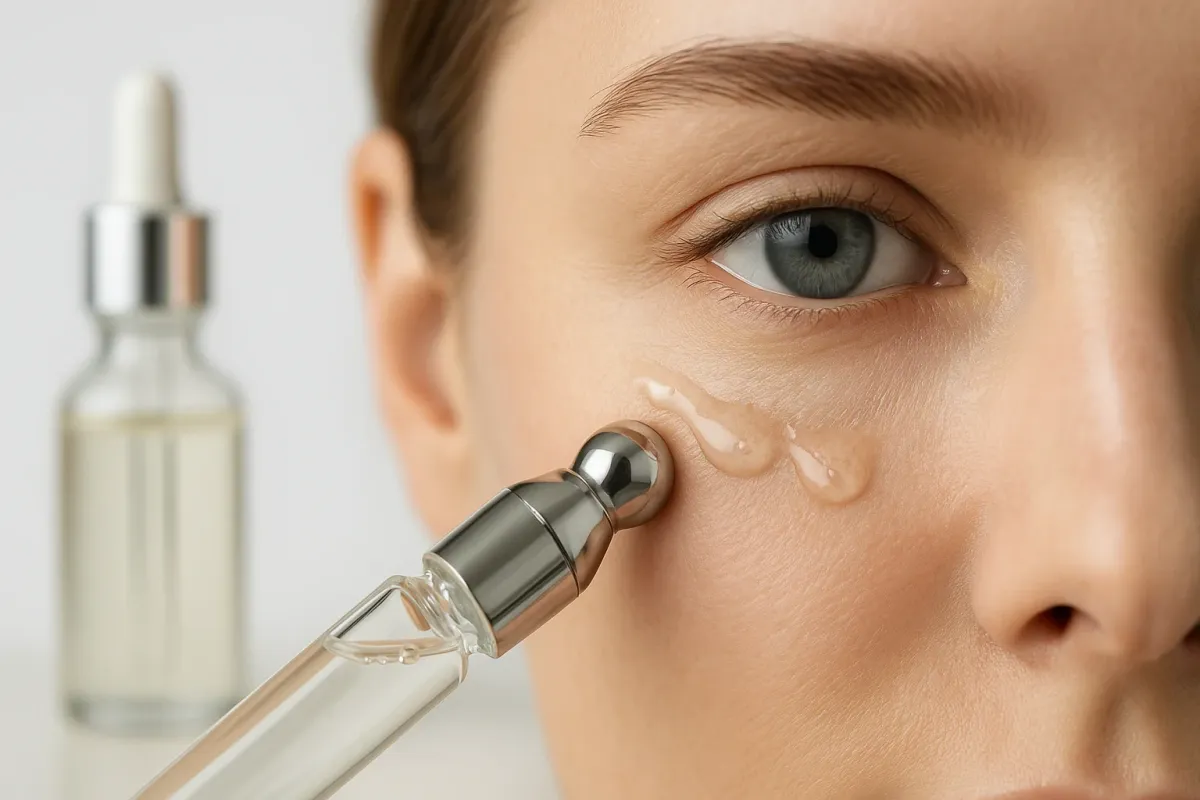
Caffeine eye creams can work, but only when you match them to the right under-eye problem and apply them with a repeatable routine. I see people waste months on the wrong formula, the wrong timing, and the wrong expectation, then conclude the ingredient is fake. In reality, caffeine is useful for a narrow job: short-term de-puffing and mild improvement in vascular-looking darkness. It is not a structural fix for tear trough hollows, fat pad bulging, or long-standing pigment from friction and inflammation.
If you have ever looked in the mirror at 7:30 AM and thought, "Why do I look exhausted before my day even starts?", this guide is for you. I built it to remove guesswork. We will cover what caffeine can realistically do, who gets the best response, which formulas are worth your time, and how to combine caffeine with barrier-safe actives so your routine stays calm and sustainable. You will also get a practical testing protocol so you can measure results in two weeks instead of relying on vibes.
My goal is not to sell you another eye cream. My goal is to help you make one clean decision: keep caffeine, stack it correctly, or move on to a better strategy.
TL;DR
- Caffeine eye creams are best for temporary morning puffiness and vascular-looking shadows.
- They are weak for genetic hollows, fat pads, and deeper brown hyperpigmentation.
- Use in the morning on clean skin, then seal with hydration and daily SPF.
- Track results with same-light photos at day 1, day 7, and day 14.
- If no visible change after 2-4 weeks, switch strategy instead of doubling products.
Want the product picks first? Jump to the caffeine eye cream and LED eye device with direct Amazon links.
Jump to product picks🧪 The Skin Insider
In editorial testing, caffeine performs best when readers treat it as a timing tool, not a cure: AM use, cold applicator, and strict sleep/salt management produce the most visible change.
What Caffeine Eye Creams Actually Do (And What They Cannot Do)
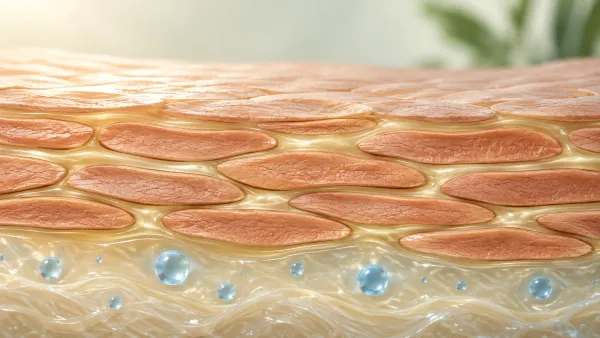
Caffeine is a vasoactive ingredient. In plain language, it can temporarily constrict superficial blood vessels and reduce visible fluid pooling. That is why people often see a better result when puffiness is highest in the morning. Some users also notice that blue-purple under-eye tones soften slightly after application. This aligns with the idea that vascular congestion, not pigment alone, drives part of their darkness.
Where people get confused is scope. Caffeine cannot rebuild volume where anatomy creates shadows. It cannot move orbital fat pads back into place. It cannot erase melanin-heavy discoloration by itself. If your under-eye concern is mostly structural or pigmentary, caffeine can still be supportive, but it should not be your lead active.
When evaluating your own results, think in layers: fluid, vessel visibility, pigment, and structure. Caffeine is strongest in the first two layers.
| Under-Eye Pattern | Caffeine Impact | Best Add-On |
|---|---|---|
| Morning puffiness / fluid retention | High (short-term) | Cooling + gentle lymphatic massage |
| Blue-purple vascular darkness | Moderate | Peptides + barrier support |
| Brown pigment / PIH tendency | Low alone | Brightening actives + strict SPF |
| Tear trough hollows / fat pad shadow | Minimal | Professional consult pathway |
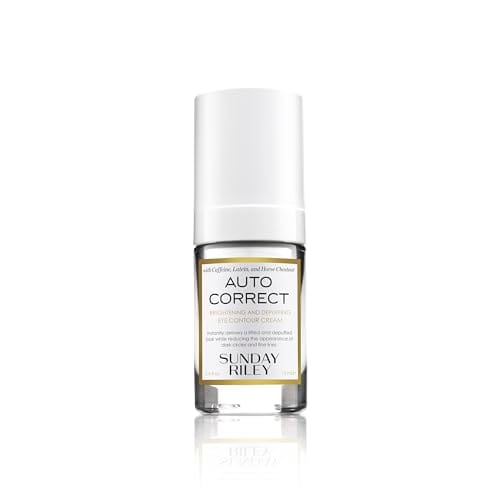
Best premium caffeine cream
Sunday Riley Auto Correct Eye Cream
Why it fits: A premium caffeine eye cream that also uses Brazilian ginseng, horse chestnut, and smoothing support for mornings when puffiness and tired-looking shadows are the main issue.
Watch-out: This is a cosmetic de-puffing product, not a fix for hollow tear troughs or deep pigment. Use a small amount and stop if the under-eye area stings or gets dry.
View Product on AmazonAs an Amazon Associate, we earn from qualifying purchases.
Why Most Caffeine Eye Cream Articles Fail Readers
Most posts flatten everything into one claim: caffeine equals dark-circle fix. That is not how under-eye biology works. Dark circles are an umbrella symptom, not a single diagnosis. You can have vascular darkness, pigment, shadowing, skin thinning, or mixed patterns. One ingredient cannot dominate all paths.
Another common mistake is no dosage and no timing guidance. Readers get told to "apply twice daily" but never learn where to place product, how much to use, or when to stop if no progress appears. This creates endless trial-and-error and product hopping.
The third gap is poor safety framing. The under-eye zone has thin skin and high irritation risk. Fragranced formulas, aggressive rubbing, and stacking too many actives can worsen the look people are trying to improve. A reliable plan must include tolerability rules, not just ingredient hype.
💡 The Optimizer's Edge
The winning move is classification first, product second: once you identify whether your main issue is fluid, vessel visibility, pigment, or structure, your routine gets faster, cheaper, and far more predictable.
A Practical Caffeine Eye Cream Protocol You Can Run for 14 Days
This protocol is built for busy people who want an answer fast. Use only one caffeine eye product during the test window. Do not rotate three products and then guess what worked.
Step 1: Standardize Your Application Window
Apply every morning within 30 minutes of cleansing. Use a rice-grain amount per eye. Dot along the orbital bone, then tap gently from inner to outer under-eye. No pulling. No rubbing.
Step 2: Lock in Hydration and UV Protection
After caffeine absorbs, apply a lightweight moisturizer if needed, then SPF. Daily sun protection matters because UV exposure worsens pigmentation and collagen breakdown over time.
Step 3: Control the Big Confounders
If your sleep varies wildly or sodium spikes every night, your photo comparison becomes noisy. Keep bedtime, hydration, and sodium reasonably stable during the test period.
Step 4: Measure Correctly
Take photos on day 1, day 7, and day 14. Same mirror, same distance, same lighting, same time of morning, no beauty filter. If there is no visible difference by week 2 to week 4, switch strategy.
| Formula Choice | How Often | Who It Fits |
|---|---|---|
| Light caffeine gel | Daily AM | Puffiness-prone, makeup users, oilier under-eyes |
| Caffeine + peptide serum | Daily AM | Early fine lines plus fluid-related fatigue look |
| Caffeine cream (richer base) | AM, optional PM if tolerated | Dryer under-eyes needing comfort and de-puff support |
How to Combine Caffeine With the Rest of Your Eye Routine
Most good routines are combinational. Caffeine handles immediate fluid and vessel visibility. Other actives handle longer-term texture and tone.
For brightening support, pair your morning caffeine with gentle antioxidants and barrier-friendly ingredients. For line-focused goals, use carefully dosed evening retinoid strategies in separate steps, especially if you already tolerate retinal/retinol around the orbital region.
Use SkinOptimizer guides to layer safely instead of stacking blindly:
- The Complete Eye Care Encyclopedia
- Eye Care Guide: Stop Wasting Money
- Best Eye Creams for Puffiness
- Dark Circle Strategy Guide
- Retinol for Eyes: Safe Use Plan
- Eye Cream vs Face Cream Around Eyes
- Eye Wrinkles: Beyond Eye Cream
Caffeine Eye Creams and Evidence: What We Know, What We Still Do Not Know
The evidence base is not huge, but it is not empty either. Small clinical and review-level literature supports caffeine as a helpful adjunct for puffiness and certain appearance metrics, especially when used in blended formulas. A frequently cited small trial with caffeine plus vitamin K found improvement in under-eye appearance over weeks. That does not mean every caffeine product on the shelf will perform equally, but it does support mechanism plausibility and realistic benefit in selected users.
What remains uncertain is long-term standalone impact on mixed-cause dark circles. That is why I treat caffeine as one module in a broader system, not the whole system.
For external context, review these evidence-oriented resources:
- Clinical evaluation of caffeine and vitamin K eye pads (PMC)
- Cleveland Clinic overview of dark-circle causes and treatment pathways

Best device pairing
Lumin Luminator LED Eye Mask
Why it fits: A targeted LED eye mask for users who already have a steady caffeine routine and want a device step for under-eye texture, puffiness, and fine-line support.
Watch-out: Treat it as an optional premium add-on, not a first purchase. Follow the device directions and avoid use over irritated or photosensitive skin.
View Product on AmazonAs an Amazon Associate, we earn from qualifying purchases.
When to Stop Buying More Caffeine Products
If you have tested a well-formulated caffeine product for 2-4 weeks with stable habits and still see no practical change, stop buying similar formulas. This is the point where "more of the same" becomes expensive procrastination.
Instead, move to the pathway that matches your dominant issue:
- Pigment-heavy circles: prioritize brightening plus strict sunscreen behavior.
- Structural hollows: consult for procedural options and realistic outcomes.
- Irritated, thin-looking skin: rebuild barrier first and reduce active load.
- Allergy-driven puff: address trigger management with your care provider.
| If You Notice... | Then Do This | Stop Doing This |
|---|---|---|
| Puff improves for 2-4 hours only | Keep caffeine AM; optimize sleep/salt timing | Expecting permanent all-day correction |
| No change after 14-28 days | Switch to cause-specific strategy | Buying another similar caffeine product |
| Stinging, dryness, crepey look | Reduce frequency and reinforce barrier care | Layering multiple strong actives at once |
My Recommended 24-Hour Caffeine Eye Cream Playbook
Morning (high-impact window)
Cleanse, caffeine eye product, light hydration, SPF, then makeup if used. Keep your touch gentle and your quantity small. This is where caffeine gives you the highest visible return.
Midday (optional reset)
If puffiness rebounds, use a cold compress for 60-90 seconds. Do not keep reapplying rich eye product over makeup unless your skin tolerates it well.
Evening (repair window)
Use barrier-friendly hydration and your secondary active strategy (for example, peptides or carefully tolerated retinoid pathways). Night is for repair, not chasing instant de-puff effects.
✅ Your Clear Skin Checklist
- Step 1: Identify your dominant under-eye pattern (fluid, vascular, pigment, or structure) before you buy.
- Step 2: Run one caffeine product for 14 days with fixed AM timing and photo tracking.
- Step 3: If improvement is weak, pivot early to a cause-specific routine instead of adding random products.
How Caffeine Eye Creams Behave Across Skin Types and Age Bands
One reason results look inconsistent online is that people compare outcomes across very different skin states. A 22-year-old with travel puffiness is not running the same biology as a 45-year-old with volume loss, periocular dryness, and chronic sun history. Both may apply caffeine, but the visible endpoint is different.
Caffeine eye creams in your 20s and early 30s
In this range, caffeine eye creams often perform best because puffiness and vascular tone tend to dominate over structural volume loss. If your sleep is short, sodium intake is high, or screen fatigue is constant, morning de-puffing can look dramatic. Keep formulas light and avoid over-layering to prevent milia and product migration.
If you wear makeup daily, texture compatibility matters as much as active selection. A thin, fast-drying caffeine gel under sunscreen and concealer usually performs better than a rich cream for daytime wear. Your strategy here is speed plus consistency, not aggressive anti-aging stacks.
Caffeine eye creams in your late 30s and 40s
This is the transition zone where mixed concerns appear: fluid, fine lines, early laxity, and occasional pigment. Caffeine still helps in the morning, but your long-term improvement depends on what you pair with it. Peptides, barrier lipids, and careful nighttime turnover strategies become more relevant.
At this stage, many users make the mistake of increasing caffeine strength when the real gap is collagen support and UV control. Keep caffeine as your morning visibility tool, then build evening care around skin resilience. If crepey texture worsens, reduce irritant load first before adding new actives.
Caffeine eye creams after 45+
After 45, structural and volume-related shadowing usually carries more weight. Caffeine can still reduce fluid and improve perceived freshness, but it will not outcompete anatomy. You can absolutely keep it for visible de-puffing, especially before work, social events, or camera-heavy days, but set realistic expectations.
For this group, routine comfort and barrier integrity are non-negotiable. If a caffeine product feels drying, switch vehicle before abandoning the category entirely. A better base plus consistent SPF often outperforms a \"stronger\" formula that irritates thin under-eye skin.
Ingredient Pairing Rules: What to Combine, What to Separate
The fastest way to sabotage caffeine eye creams is bad pairing logic. More actives do not automatically mean better outcomes. The under-eye area responds better to sequencing than stacking.
High-confidence pairings with caffeine eye creams
Caffeine + peptides: useful when you want de-puffing plus smoother texture over time. Keep concentrations moderate and focus on daily compliance.
Caffeine + niacinamide: helpful for users with mixed tone and barrier fragility. This combo is often better tolerated than stronger brightening stacks.
Caffeine + humectant support: if your under-eye gets tight by noon, add hydration support so caffeine does not feel overly drying.
Pairings that require caution
Caffeine + strong acids: usually unnecessary near the eye and increases irritation risk. If exfoliation is needed, keep it minimal and indirect.
Caffeine + aggressive retinoid layering in the same window: this can work for advanced users, but beginners often overdo frequency and damage comfort first.
Caffeine + fragranced eye products: fragrance-heavy formulas are a common trigger for stinging and chronic low-grade inflammation, which can worsen appearance over time.
Frequency progression model
Start once daily in the morning for 10-14 days. If your skin stays calm and you want extra support, test a second light application on select days. If irritation appears, return to once-daily use and reinforce hydration instead of forcing the schedule.
This progression sounds basic, but it is exactly what keeps routines sustainable. The best routine is the one you can execute every day without creating a new problem.
Common Failure Patterns (And Fast Corrections)
Failure pattern 1: Product hopping every week. Correction: commit to one formula for a fixed test window with controlled variables.
Failure pattern 2: Using too much product. Correction: rice-grain per eye is enough; excess increases migration and irritation risk.
Failure pattern 3: Ignoring sleep, sodium, and allergies. Correction: treat lifestyle inputs as part of the treatment, not background noise.
Failure pattern 4: No photo proof. Correction: use standardized images so your decision is evidence-based, not mood-based.
Failure pattern 5: Chasing permanent results from a temporary tool. Correction: use caffeine eye creams for what they do well, then add targeted modules for pigment, lines, or structural concerns.
Conclusion: Should You Keep Caffeine Eye Creams in Your Routine?
If your main concern is morning puffiness and tired-looking vascular darkness, caffeine is worth keeping. It is fast, relatively low-risk, and practical when used correctly. If your concern is mostly pigment or structure, caffeine can stay as a supporting step, but your progress will depend on stronger primary strategies.
The real win is not finding a miracle tube. The win is building a routine that matches biology, respects the skin barrier, and gives you measurable progress with less waste. That is what long-term skin optimization looks like.
Frequently Asked Questions About Caffeine Eye Creams
Do caffeine eye creams work immediately?
Many users see temporary de-puffing within 15-30 minutes, especially in the morning. Long-term appearance shifts still require consistent routine support.
Can caffeine eye creams remove dark circles permanently?
No. They can improve some vascular-looking darkness temporarily, but they cannot permanently correct structural hollows or deep pigment causes.
How often should I use caffeine eye creams?
Start once daily in the morning. Increase only if your skin tolerates it and if your product instructions allow more frequent use.
Are caffeine eye creams safe with retinol eye products?
Yes, usually when separated by time (caffeine in AM, retinoid in PM) and introduced gradually to avoid irritation.
What should I do if caffeine eye creams are not working for me?
Stop after a structured 2-4 week test and switch to a targeted pathway based on your dominant issue: pigment, structure, allergy, or barrier compromise.
This article is for informational purposes only and does not replace professional dermatological advice.