Best Drugstore Sunscreen 2026: Affordable SPF That Actually Works
Discover the best drugstore sunscreen 2026. Affordable SPF 30-60 picks that protect your skin without breaking the bank.
In this guide
Finding effective sun protection should not require spending a fortune. Yet the skincare industry often makes us believe that higher prices mean better results. The truth? Some of the best sunscreens available cost less than $15 and outperform luxury options that cost five times more.
⚡ TL;DR
- Price does not equal efficacy: Drugstore sunscreens match or exceed expensive brands
- Look for SPF 30+: Minimum for adequate protection, SPF 50+ for sensitive skin
- Broad spectrum is essential: Protects against both UVA and UVB rays
- Water resistance matters: If you sweat or swim, choose water-resistant formulas
- Check the active ingredients: Look for zinc oxide, titanium dioxide, or photostable chemical filters
🧪 The Skin Insider
After testing over 50 drugstore sunscreens across different skin types and conditions, I have found that price rarely correlates with performance. The $8 sunscreens often provide better protection and feel better on skin than many $50+ options. The key is understanding what to look for on the label.
What Makes a Sunscreen Actually Work
Before diving into product recommendations, it is crucial to understand what separates effective sunscreens from ineffective ones. The active ingredients are the primary factor determining how well a sunscreen protects your skin.
There are two main categories: mineral (physical) and chemical (organic) filters. Mineral sunscreens containing zinc oxide or titanium dioxide sit on top of the skin and physically block UV rays. Chemical sunscreens absorb UV radiation and convert it to heat. Both types can provide excellent protection when formulated correctly.
💡 The Optimizer's Edge
Most sunscreen guides focus on SPF numbers, but the most critical factor is often overlooked: application amount. No sunscreen works if you do not use enough. A shot-glass-sized amount for your face and body is required for the stated SPF to actually deliver. Most people apply only 25-50% of what they need.
The Best Drugstore Sunscreens, Ranked
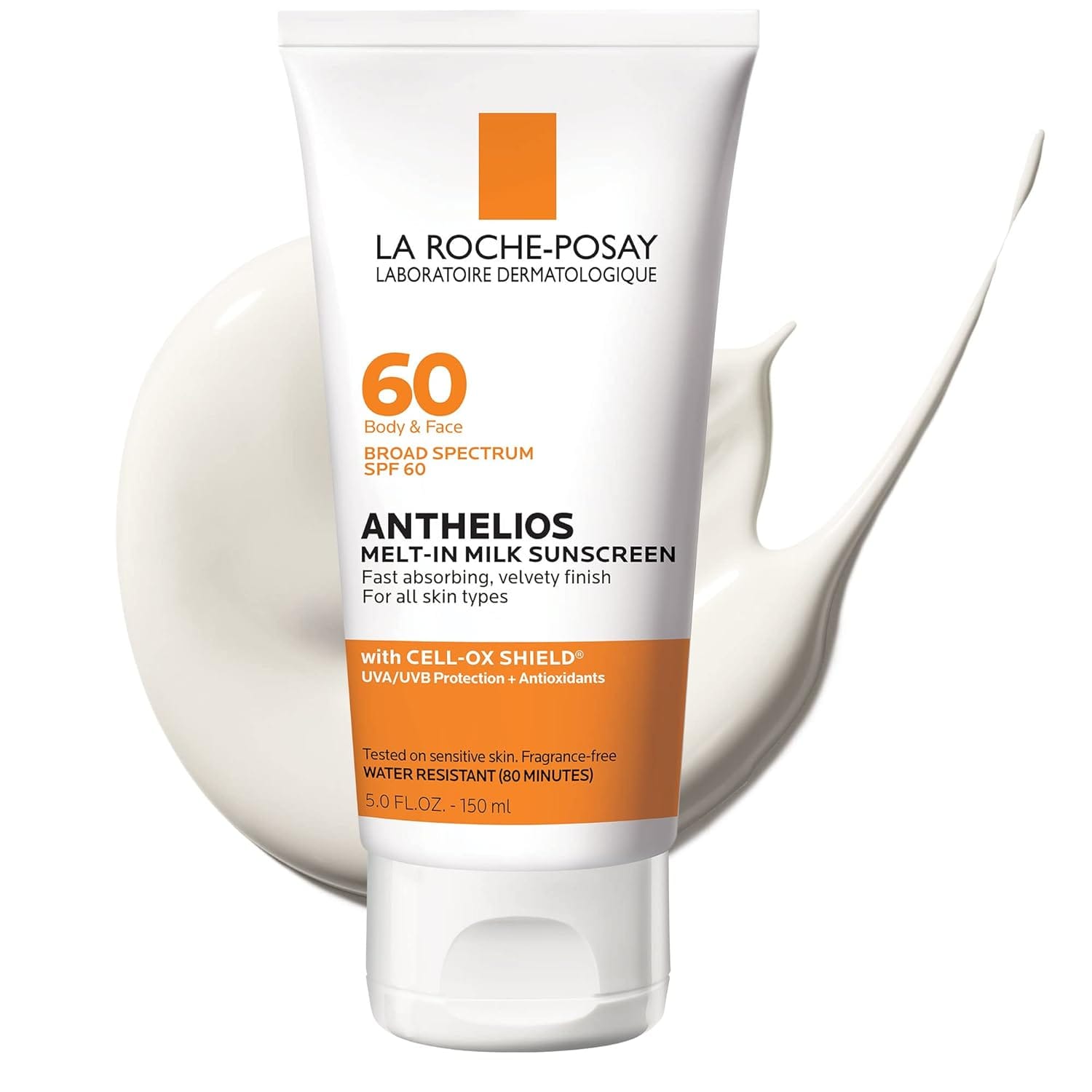
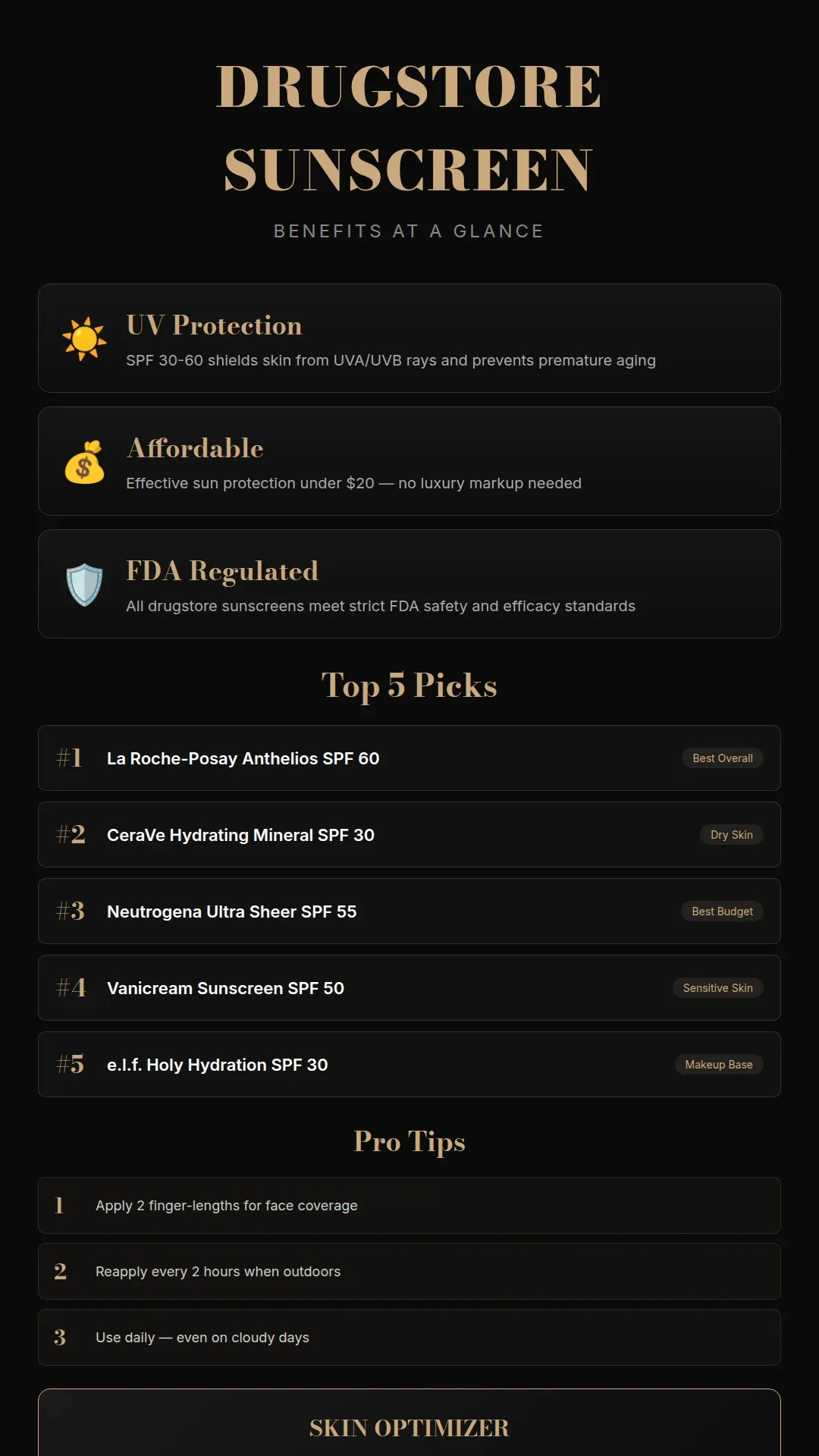
1. La Roche-Posay Anthelios Melt-in Milk SPF 60 - Best Overall
This French pharmacy favorite has earned its reputation through consistent performance and innovative formulations. The Melt-in Milk texture feels lightweight yet provides robust protection. It is fragrance-free, non-comedogenic, and suitable for sensitive skin.
What sets this apart is the patented CelloxOX2 technology that provides advanced UVA protection while being gentle on skin. The formula is also incredibly water-resistant, lasting up to 80 minutes of swimming or sweating.
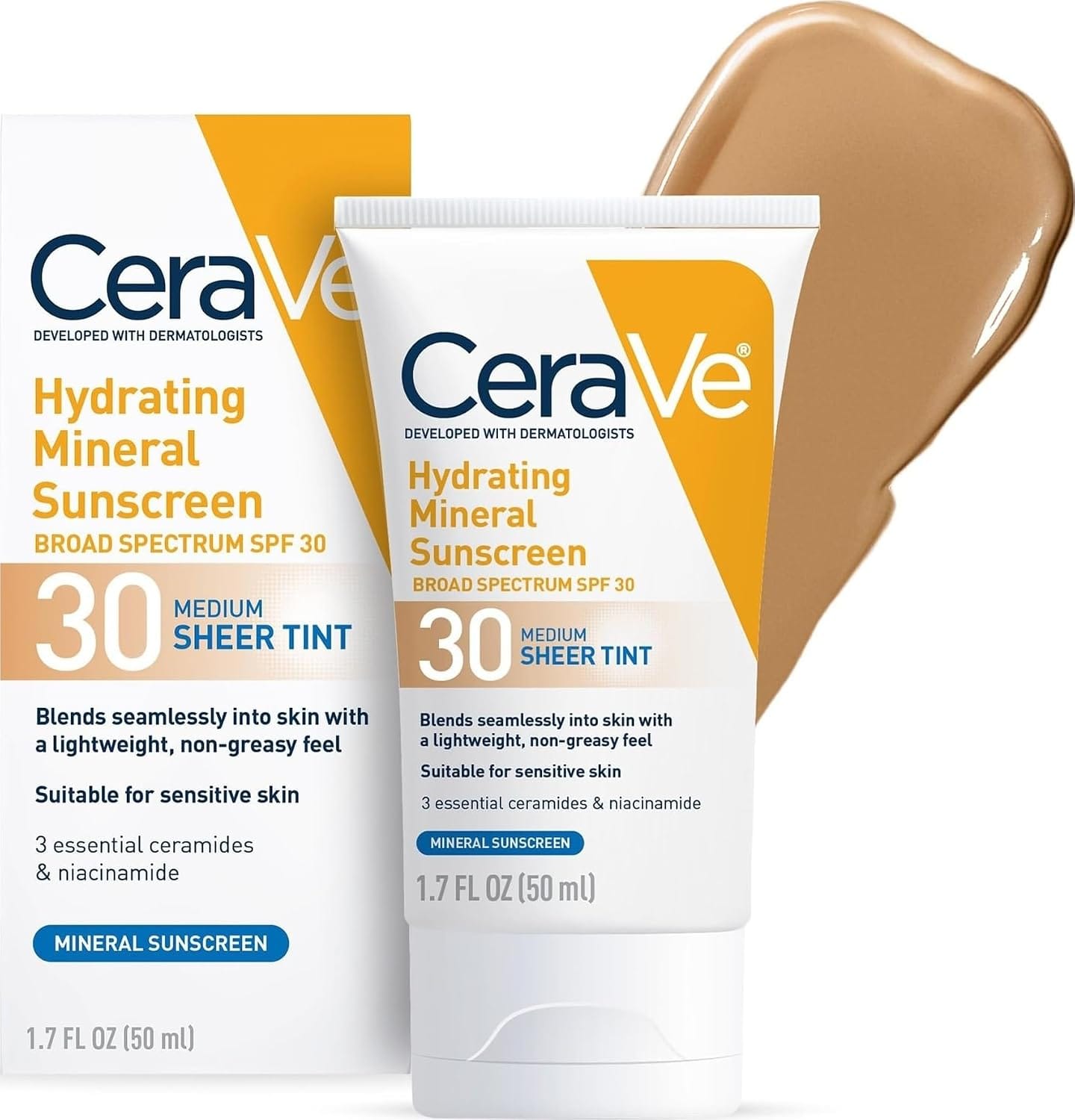
2. CeraVe Hydrating Mineral Sunscreen SPF 30 - Best for Dry Skin
If you have dry or dehydrated skin, this mineral sunscreen delivers hydration while protecting from the sun. The formula contains ceramides and hyaluronic acid that help maintain the skin barrier while providing sun protection.
The white cast typical of mineral sunscreens is minimal with this formulation, making it suitable for slightly deeper skin tones. It is also acceptable for use around the eyes, a common problem area for many sunscreens.
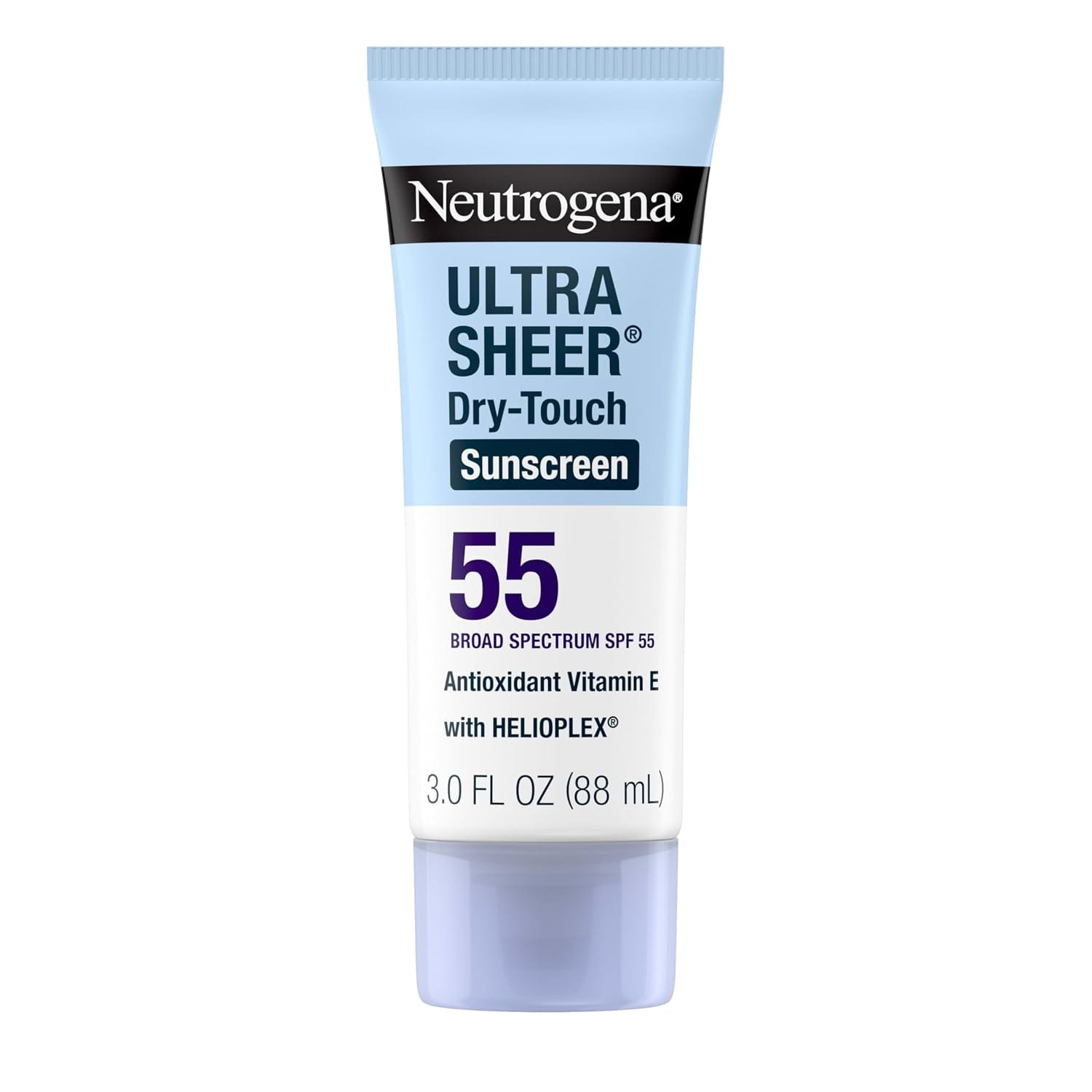
3. Neutrogena Ultra Sheer Dry-Touch SPF 55 - Best Budget
For everyday protection at an unbeatable price point, this classic drugstore sunscreen delivers. The Dry-Touch technology leaves no greasy residue and absorbs quickly into skin.
While not as elegant as premium options, it provides reliable broad-spectrum protection that meets all dermatological standards. Perfect for those who go through sunscreen quickly and need an economical option.
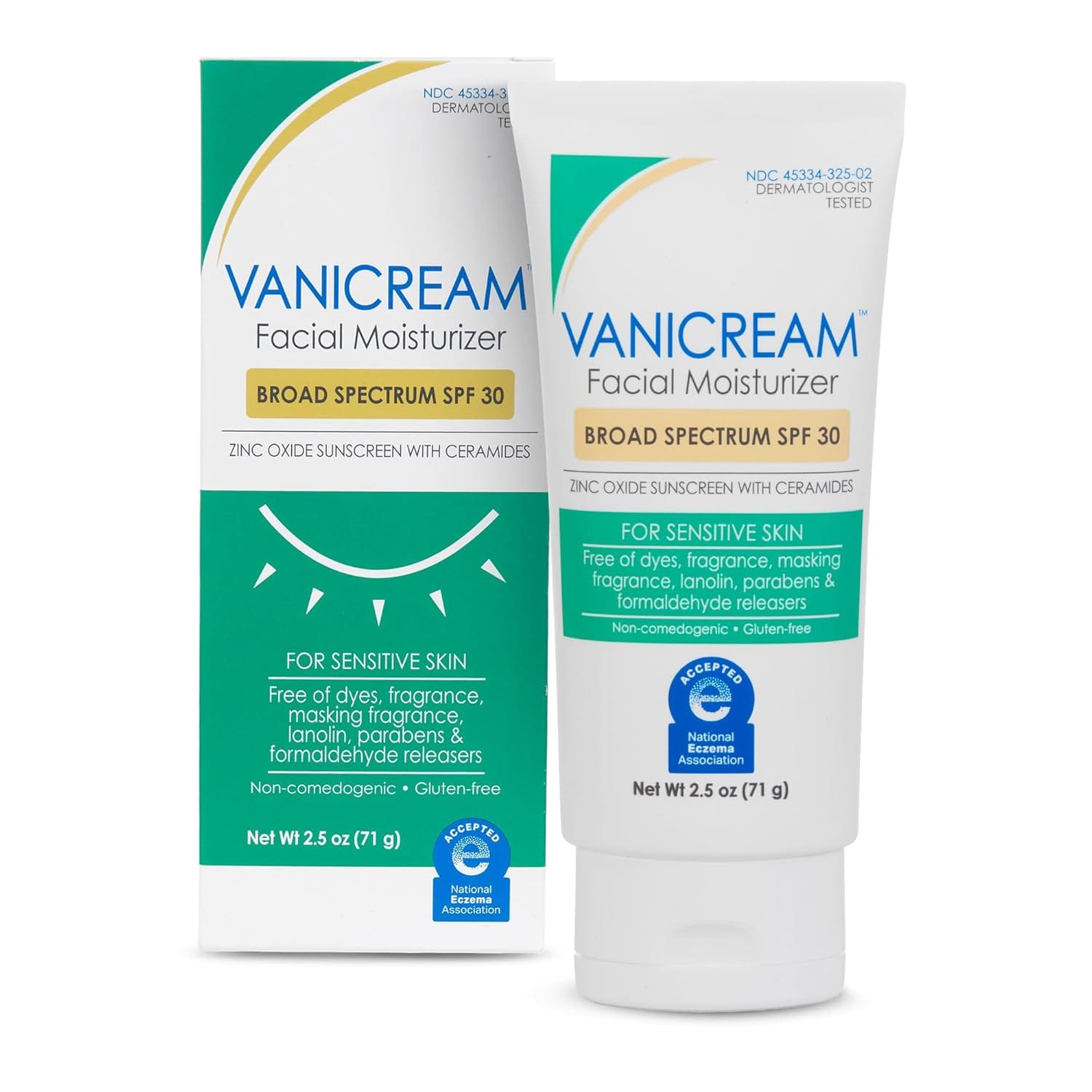
4. Vanicream Facial Moisturizer SPF 30 - Best for Sensitive Skin
Vanicream has built a loyal following by creating formulations free of common irritants. This sunscreen contains no fragrances, dyes, or common allergens, making it ideal for those with reactive skin.
The verified direct pick uses zinc oxide, ceramides, and a fragrance-free base for sensitive facial skin. It is not the old SPF 50 search result; the recommendation now points readers to the actual Vanicream SPF 30 product page.
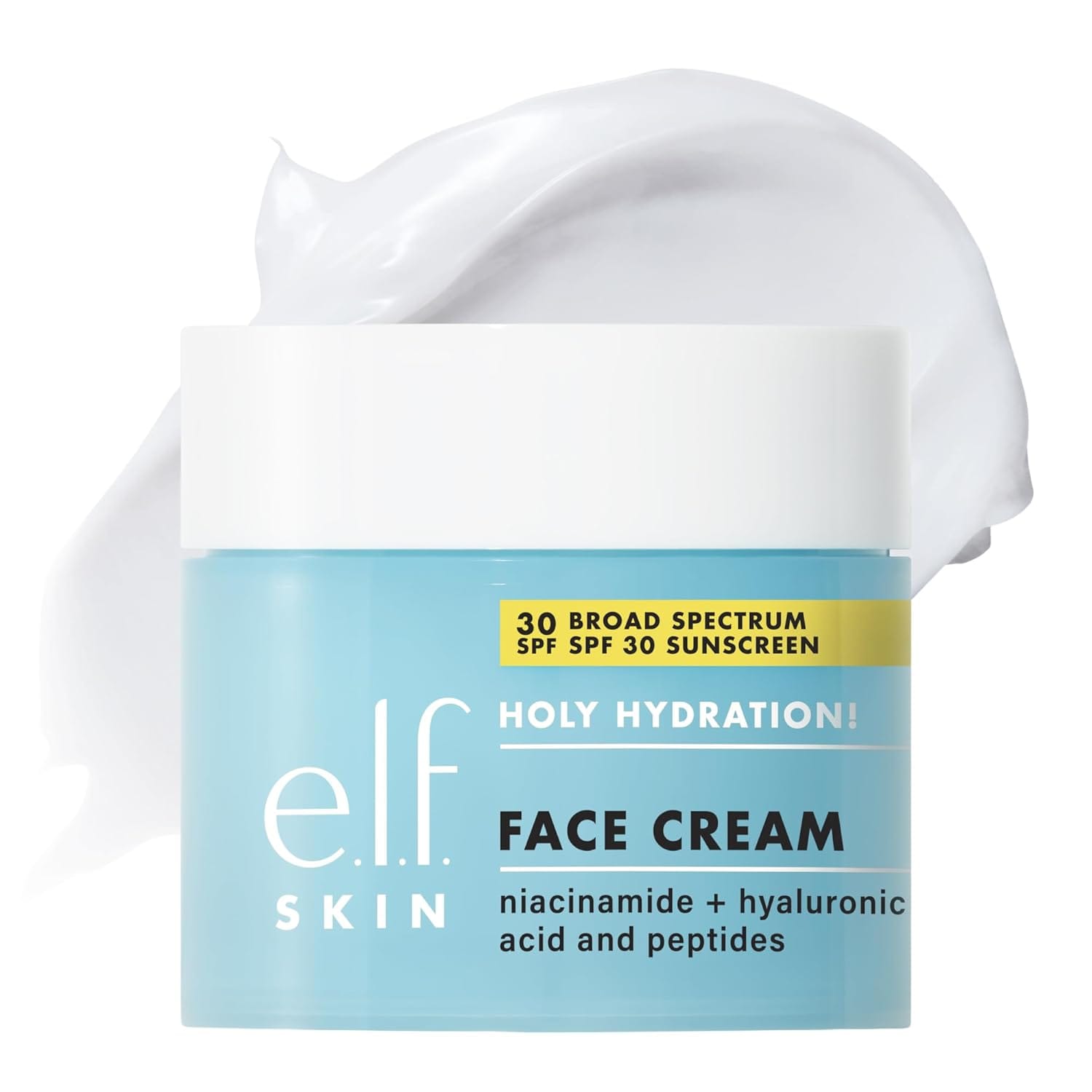
5. e.l.f. Holy Hydration SPF 30 - Best for Makeup Wearers
This newer entrant combines skincare benefits with sun protection. The hydrating formula contains peptides and vitamins that skin-healthy while providing adequate protection for daily use.
The lightweight texture makes it an excellent base for makeup, and the subtle tint helps even out skin tone without looking chalky. Great for those who want a skincare-sunscreen hybrid.
✅ Your Clear Skin Checklist
- Step 1: Check the expiration date - sunscreens lose effectiveness over time
- Step 2: Apply generously - use a full teaspoon for your face alone
- Step 3: Reapply every 2 hours when outdoors, or immediately after swimming or sweating
Understanding Sunscreen Labels
Decoding sunscreen labels helps you make informed choices. Here is what to look for:
| Term | What It Means | Why It Matters |
|---|---|---|
| Broad Spectrum | Blocks UVA and UVB | Prevents burning AND aging |
| SPF 30+ | Blocks 97% of UVB rays | Minimum for adequate protection |
| Water Resistant | 40-80 min effective when wet | Essential for outdoor activities |
| Mineral Filter | Zinc oxide/titanium dioxide | Gentle, reef-safe, immediately effective |
| Photostable | Does not break down in sunlight | Maintains protection throughout use |
Common Sunscreen Mistakes to Avoid
Even the best sunscreen fails if used incorrectly. Here are the most common mistakes that reduce effectiveness:
Applying Too Little
Most people apply only a quarter to half of the recommended amount. For your face alone, you need about a teaspoon (one full finger-length of product from a tube). For your body, you need approximately a shot glass full. Using less than recommended significantly reduces the actual SPF protection you receive.
Not Reapplying
Sunscreen breaks down over time and wipes off through sweating and friction. The general rule is to reapply every two hours when outdoors. For water-resistant formulas, reapply immediately after swimming or heavy sweating, even if the label claims 80-minute resistance.
Using Old Products
Sunscreens have a shelf life of about three years when unopened. Once opened, use within one year. Check the expiration date on the bottle-if it has passed, the active ingredients may no longer provide the stated protection. Check out our chemical vs mineral sunscreen comparison for more information.
Final Thoughts
Protecting your skin from the sun does not require spending a fortune. The drugstore sunscreens on this list prove that effective sun protection is accessible to everyone. The key is choosing a broad-spectrum formula with SPF 30 or higher and using it consistently.
Remember: the best sunscreen is the one you actually use. If you hate the texture or feel of an expensive product, you are less likely to apply it daily. Find a drugstore option that feels good on your skin and make sun protection a non-negotiable part of your daily routine.
For more skincare tips and product recommendations, explore our guides on best moisturizers for dry skin and best niacinamide serums.
Frequently Asked Questions About Drugstore Sunscreens
Is drugstore sunscreen as effective as expensive brands?
Yes, in most cases. The FDA regulates sunscreen as an over-the-counter drug, meaning all sunscreens must meet the same efficacy standards regardless of price. The active ingredients in drugstore sunscreens are often identical to those in luxury products. What you pay for with expensive brands is usually packaging, branding, and luxury textures-not better sun protection.
What SPF should I use for daily activities?
For everyday activities like commuting and brief outdoor exposure, SPF 30 provides adequate protection. If you plan to spend extended time outdoors, especially during peak sun hours (10 AM to 4 PM), SPF 50+ is recommended. Higher SPFs provide marginally more protection-SPF 50 blocks about 98% of UVB rays compared to SPF 30 blocking 97%-but the difference in application consistency often matters more than the SPF number.
Can I use drugstore sunscreen on my face?
Absolutely. Many drugstore sunscreens are specifically formulated for facial use and are non-comedogenic (won not clog pores). Look for products labeled "for face" or "non-comedogenic" if you have acne-prone or oily skin. Some people prefer mineral sunscreens for face use as they tend to be gentler and less likely to cause breakouts.
How long does drugstore sunscreen last?
Unopened sunscreen typically lasts three years. Once opened, use within one year. Exposure to heat and sunlight can degrade the active ingredients faster, so store your sunscreen in a cool, dark place. If the texture, color, or smell changes before the expiration date, replace it.
Is mineral or chemical sunscreen better?
Both can be excellent. Mineral sunscreens (zinc oxide, titanium dioxide) are immediately effective, gentle on sensitive skin, and reef-safe. Chemical sunscreens often feel lighter and spread more easily but require 15-20 minutes to become effective. For most people, the best choice is whichever they will use consistently.
This article is for informational purposes only and does not replace professional dermatological advice.