The Science of Coffee Scrubs: Beyond Mechanical Exfoliation
Discover the science of coffee scrubs. A beauty editor's guide to caffeine benefits, mechanical exfoliation risks, and safe DIY recipes for body vs. face.


We need to talk about the coffee scrub phenomenon with a level of clinical honesty that is often missing from social media trends.
For years, coffee scrubs have been marketed as the ultimate DIY miracle—a cure for cellulite, a solution for acne, and a universal exfoliant. As we often discuss at SkinOptimizer, natural ingredients can be powerful, but "natural" does not automatically mean "gentle" or "safe."
TL;DR — The Executive Summary
- Vasoconstriction is Real: Topical caffeine can temporarily tighten skin and reduce puffiness by constricting blood vessels, but it does not permanently remove cellulite.
- Particle Shape Matters: Unlike jojoba beads, coffee grounds have irregular, jagged edges. This makes them excellent for the body but potentially damaging (micro-tears) for the face.
- Fresh vs. Used: Fresh grounds contain more caffeine and antioxidants but are harder and more abrasive. Used grounds are softer but less chemically active.
- Barrier First: Never scrub inflamed or sunburned skin. Mechanical exfoliation requires a healthy lipid barrier to prevent infection.
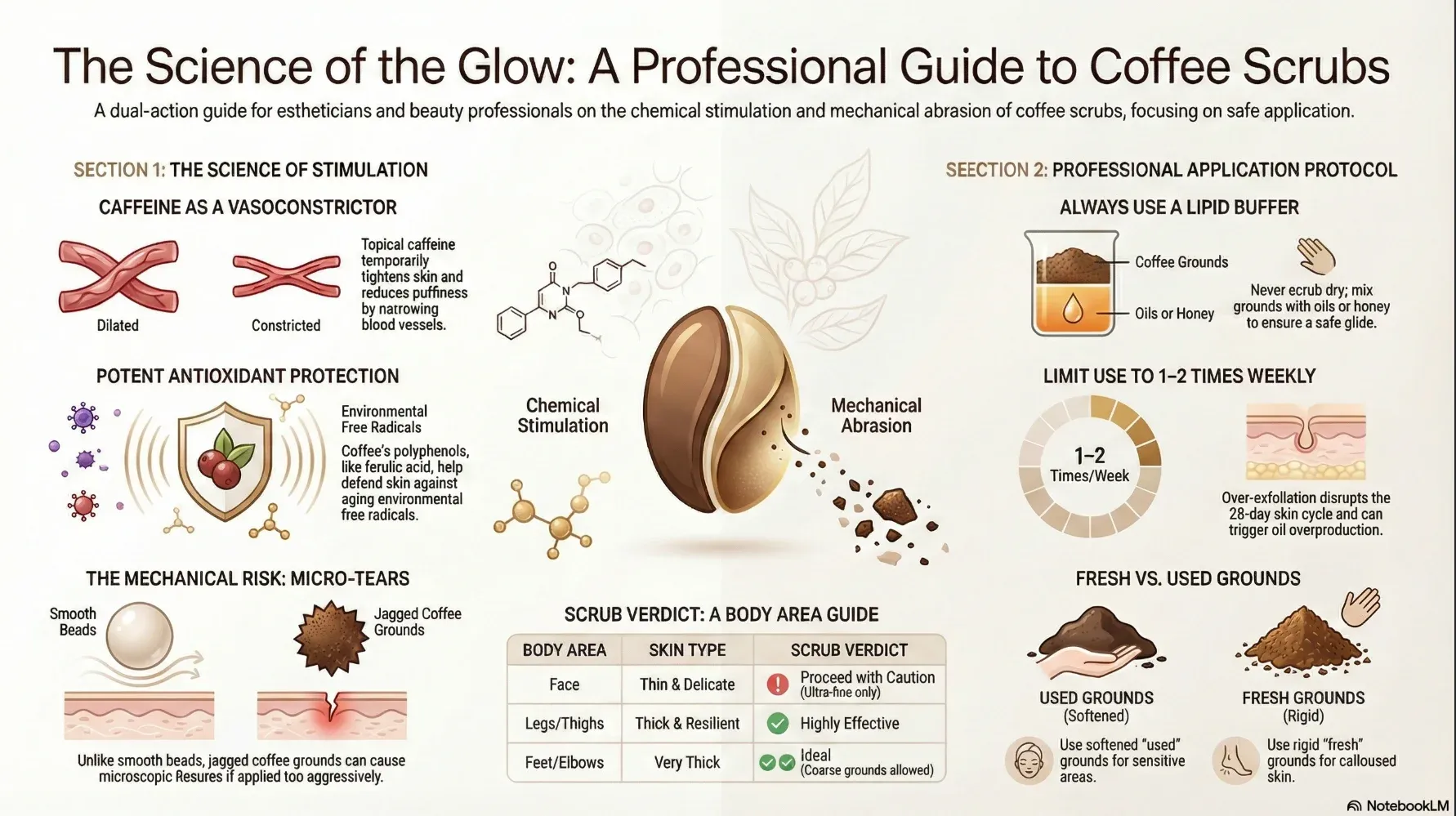
Coffee is a complex biological material. It contains caffeine (a potent vasoconstrictor), antioxidants (like ferulic acid), and rigid physical particulates.
When you apply this to your skin, you are engaging in two distinct processes simultaneously: chemical stimulation and mechanical abrasion.
Understanding the difference between the two is the key to getting the glow you want without compromising your skin barrier health.
In this guide, we are moving beyond the hype. We will analyze the particle physics of coffee grounds, the absorption rates of topical caffeine, and the strict boundaries you must set between treating the resilient skin on your body versus the delicate tissue of your face.
🧪 The Skin Insider
In my time evaluating formulations, I’ve noticed a common misconception: people scrub harder to "erase" cellulite. Realistically, the visible improvement from a coffee scrub comes 50% from the caffeine's temporary tightening effect and 50% from the massage increasing lymphatic drainage. The scrubbing pressure itself doesn't break down fat cells.
The Biochemistry of Caffeine: Why It’s in Your Skincare
Before we discuss the "scrub" aspect, we must understand the "coffee" aspect. Caffeine is a methylxanthine, a class of alkaloid that has profound effects on the body's physiology. When ingested, it stimulates the central nervous system. When applied topically, it functions primarily as a vasoconstrictor and an antioxidant.
1. Vasoconstriction and Depuffing
Vasoconstriction refers to the narrowing of blood vessels. When caffeine penetrates the epidermis, it restricts the flow of blood to the immediate area (crucially, it does not dissolve adipose fat tissue).
This is why caffeine is a star ingredient in many eye creams for puffiness. By reducing blood flow, it minimizes the accumulation of fluid (edema) that causes under-eye bags or the swollen look of morning skin.
2. Antioxidant Protection
Coffee is rich in polyphenols, specifically chlorogenic acid and ferulic acid. These compounds fight free radicals—unstable atoms caused by UV exposure and pollution that accelerate aging. While eating antioxidant-rich foods is the best way to protect your system, topical application provides a secondary line of defense.
The Mechanics of Exfoliation: Jagged vs. Round
This is where the safety of coffee scrubs becomes a critical discussion. Exfoliation falls into two categories: chemical (acids like AHAs/BHAs) and physical (scrubs). Coffee is a physical exfoliant, but not all physical exfoliants are created equal.
Under a microscope, a bead of jojoba oil or a synthetic microbead appears perfectly round. It rolls over the skin, dislodging dead cells without scratching the living tissue underneath. A coffee ground, however, looks like a shard of glass or a jagged rock. It has sharp angles and uneven edges.
The Micro-Tear Risk
If you apply significant pressure with a jagged particle, you risk creating micro-tears in the stratum corneum (the outermost layer of the skin). These microscopic fissures can:
- Allow bacteria to enter, leading to breakouts.
- Cause trans-epidermal water loss (TEWL), leading to dehydration.
- Trigger inflammation, which exacerbates redness and aging.
This does not mean you should never use coffee scrubs. It means you must be strategic about where you use them. The skin on your legs, for example, is significantly thicker and more resilient than the skin on your cheeks.
Anatomy of Safe Scrubbing
| Body Area | Skin Thickness | Coffee Scrub Verdict | Recommended Method |
|---|---|---|---|
| Face | Thin, delicate | Proceed with Caution | Use ultra-fine grounds only; mix with heavy oil buffer; do not press hard. |
| Legs/Thighs | Thick, resilient | Highly Effective | Standard grounds acceptable; firm circular motions to stimulate flow. |
| Décolletage | Thin, prone to damage | Avoid | Chemical exfoliation (like lactic acid) is safer here. |
| Feet/Elbows | Very thick (calloused) | Ideal | Coarse grounds; vigorous scrubbing allowed. |
💡 The Optimizer’s Edge
The Fresh vs. Used Debate: If you are making a DIY scrub, the state of the coffee matters. Fresh grounds are structurally rigid and retain higher acidity, offering maximum caffeine but higher scratch risk. Used grounds have been steeped in hot water, softening their jagged edges and neutralizing some acidity. For sensitive skin, the softer texture of used grounds is non-negotiable.
Recommended: Frank Body Original Coffee Scrub
If you prefer a pre-formulated option, this is the industry standard. It balances Robusta coffee grinds with Sweet Almond Oil to minimize scratch risk while maximizing hydration.
Check Price on Amazon →Protocol: Integrating Coffee Scrubs into Your Routine
To use coffee scrubs effectively, you must treat them as a treatment step, not a daily wash. Over-exfoliation is a primary cause of barrier dysfunction. If you exfoliate too much, the skin compensates by overproducing oil, leading to a cycle of dryness and acne.
1. Frequency and Timing
Limit physical scrubbing to 1–2 times per week. The skin cycle (turnover) takes roughly 28 days. You are assisting this process, not forcing it. Evening application is preferred, as exfoliation can leave the skin slightly more photosensitive.
2. The Carrier Medium
Never scrub with dry grounds. You need a "buffer"—a lipid-rich medium that allows the grounds to glide rather than drag. Excellent carriers include:
- Coconut Oil: Highly occlusive, good for body, potentially comedogenic for the face. Read more on coconut oil risks here.
- Yogurt: Contains lactic acid for mild chemical exfoliation. (Safety Note: Single-use batches only; do not store).
- Honey: A natural humectant that creates a soft, cushioning texture.
3. The "Plumbing" Reality Check
A practical note often ignored in beauty editorials: Coffee grounds do not dissolve. If you are using a heavy oil-based scrub in the shower, the combination of oil and grounds can wreak havoc on your plumbing.
Always use a drain catcher. Furthermore, if you store a DIY scrub in a jar, never dip wet fingers into it. Water introduces bacteria and mold. Use a clean dry spoon to scoop out what you need before entering the shower.
Essential Tool: TubShroom Drain Protector
We highly recommend using a drain catcher to stop grounds from settling in your P-trap and causing expensive clogs.
Check Price on Amazon →The Safety Profile: Who Should Avoid Coffee Scrubs?
While coffee scrubs are generally safe for the body, certain skin conditions require a strict "hands-off" policy regarding physical exfoliation.
Acne-Prone Skin
If you have active pustules or cystic acne, scrubbing is detrimental. You risk rupturing the bacteria-filled follicle and spreading the infection to surrounding pores. For this skin type, gentle enzyme exfoliants or chemical peels are superior options.
Rosacea and Sensitive Skin
Rosacea is characterized by a compromised vascular system and a thin barrier. The friction and heat generated by scrubbing, combined with the stimulating effects of caffeine, can trigger a severe flare-up. If you struggle with sensitivity, focus on barrier repair rather than abrasion.
✅ Your Clear Skin Checklist
- Step 1: Check the Grind. Ensure grounds are fine, not coarse. Rub a pinch between your fingers; if it hurts, it's too sharp for your skin.
- Step 2: Buffer Up. Mix grounds with a heavy ratio of oil or cream (2:1 oil to coffee) to reduce friction.
- Step 3: The Light Hand. Let the product do the work. Use minimal pressure and circular motions.
- Step 4: Immediate Hydration. Apply a moisturizer immediately on damp skin after rinsing to lock in hydration.
Post-Scrub Care: The Critical Step
Once you have removed the layer of dead skin cells, your fresh skin is vulnerable. It is more permeable, which is great for serum absorption but bad for moisture loss. Following a scrub, you must apply a high-quality occlusive or emollient.
For the body, look for ingredients like Shea Butter or Ceramides. For recommendations, consult our guide on top body moisturizers.
Furthermore, because that fresh layer of skin has less natural protection against UV radiation, rigorous sunscreen application the following morning is non-negotiable. See our guide on preventing sun damage to choose the right SPF.
Conclusion
Coffee scrubs occupy a valid place in a skincare routine, specifically for body care and circulation stimulation. The combination of caffeine's vascular effects and the mechanical removal of dull skin can result in a smoother, tighter appearance.
However, they are not a one-size-fits-all solution. The transition from "healthy glow" to "micro-tears and irritation" is determined by the pressure of your hand, the coarseness of the grind, and the resilience of your specific skin type.
Use them wisely, prioritize your skin barrier, and remember that no scrub can replace a healthy lifestyle and hydration.
Frequently Asked Questions About Coffee Scrubs
Can coffee scrubs permanently remove cellulite?
No. Cellulite is caused by fibrous bands connecting the skin to the muscle, with fat trapped in between. Coffee scrubs can temporarily reduce the appearance of cellulite through caffeine-induced vasoconstriction (tightening) and massage-induced lymphatic drainage, but the effect is cosmetic and temporary, usually lasting only a few hours to a day.
Is it safe to use a coffee scrub on my face every day?
Absolutely not. Daily physical exfoliation is too aggressive for facial skin and will likely lead to a damaged moisture barrier, increased sensitivity, and potentially more breakouts. Limit use to once a week at most, using ultra-fine grounds.
Do coffee scrubs clog drains?
Yes, they can. Coffee grounds do not dissolve in water. Over time, they can accumulate in the P-trap of your plumbing, especially if mixed with oils that solidify at room temperature (like coconut oil). Always use a fine mesh drain catcher when using these products.
Can I use instant coffee for a scrub?
Instant coffee is not recommended for scrubbing. It is designed to dissolve in water, so it will melt away quickly upon contact with wet skin, providing little to no exfoliation. Traditional brewed or fresh grounds are necessary for the mechanical benefit.
How long should I leave a coffee scrub on my body?
To get the chemical benefits of the caffeine, you can leave the scrub on for 2–5 minutes as a mask before rinsing. This gives the caffeine time to penetrate the epidermis and exert its vasoconstrictive effects.